Japandi
Japandi combines the clarity of Japanese aesthetics with Scandinavian cosiness: natural materials, muted colours, low furniture and a few good things. Here are all our ideas for Japandi style.
Popular styles:Scandinavian styleBoho styleMinimalist decoration ideasModern style
Japandi Interiors: The Style Between Scandinavia and Japan
The features
- Reduction: only what’s needed or meaningful. Free space is intentional – the Japanese principle of ma, the deliberate space in between.
- Natural materials: wood (light and dark mixed), bamboo, rattan, linen, paper, stone and ceramics.
- Muted colours: beige, sand, greige, warm white, earth tones, sage and black accents.
- Low, clean-lined furniture: sofas, beds and tables often lower than usual, with visible wood grain.
- Craft: handmade ceramics, irregular glazes – the principle of wabi-sabi finds beauty in imperfection.
- Nature indoors: one large branch or a sculptural plant instead of many small pots.
The detailed introduction with a shopping list is in our post how to do Japandi.
Japandi in the bedroom
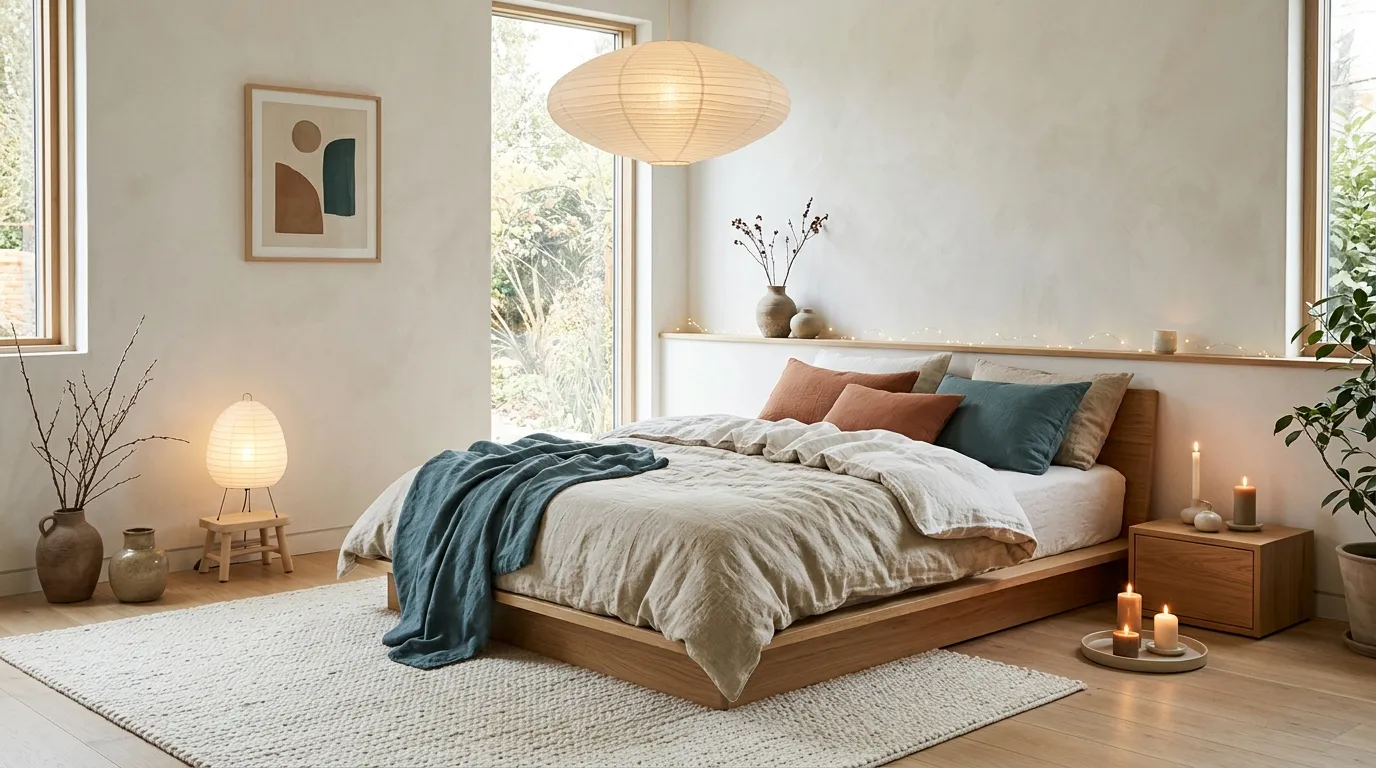
The bedroom is where the style shows its greatest strength: a low wooden bed, linen bedding, a paper lamp and hardly anything else. It feels like a calm retreat without distractions – more in the Japandi bedroom.
Japandi in the living room
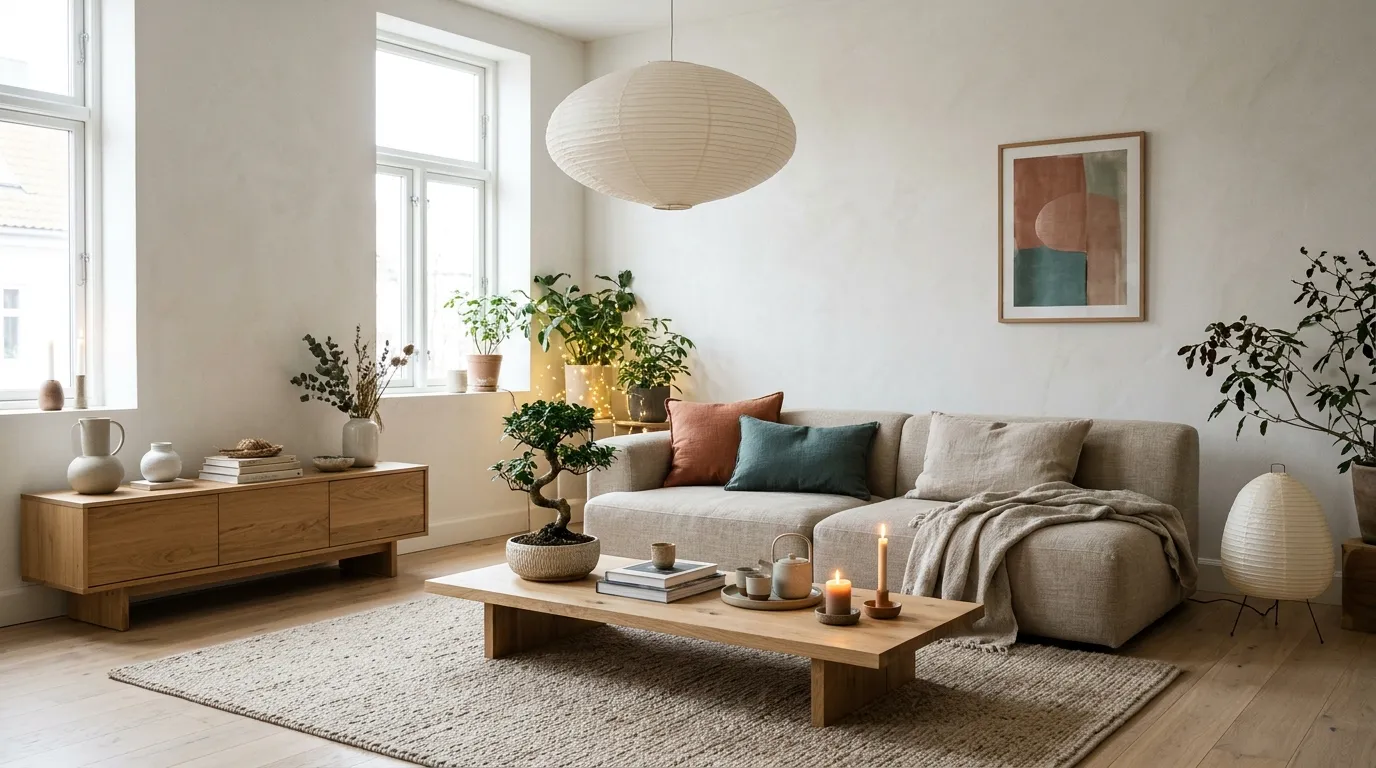
A low sofa in linen or bouclé, a solid wood table, a jute or wool rug and a paper lamp form the base. Decor is limited to three to five objects: a ceramic vase with a branch, a few books, a bowl.
Colours for Japandi
Walls stay warm and light – greige, sand or warm white. If you’re braver, choose a muted sage or earthy brown for a feature wall. Ideas in greige: the wall colour that goes with everything and how to combine sage green.
Common mistakes
- Too much decor: Japandi thrives on emptiness.
- Too cold: without wood, textiles and warm light the style looks sterile.
- Japan clichés: fans, Buddha figures and cherry blossoms don’t make it Japandi.
Japandi and Scandi
Both styles share a love of wood, light and function. Japandi, however, is earthier and stricter and mixes in dark woods and black, while Scandinavian style is lighter and uses more textiles. Many homes combine both – a good way to start.
Getting started in five steps
- Declutter – Japandi starts with leaving things out.
- Natural-toned linen for bed and sofa.
- A paper lamp instead of the ceiling light.
- A ceramic vase with one large branch.
- Seagrass baskets for everything that shouldn’t be on show.
Frequently asked questions
What does Japandi mean?
Japandi is a blend of Japanese and Scandinavian interiors: pared back, natural, calm and still cosy.
Which colours suit Japandi?
Warm neutrals like beige, sand, greige and warm white, plus earth tones, muted green and black accents.
Which furniture is typical of Japandi?
Low furniture with clean lines in wood, often with visible grain – platform beds, low sofas and solid wood tables.
Is Japandi expensive?
Not necessarily. The style is about leaving things out. Linen, baskets, a paper lamp and ceramics are enough to start.
Does Japandi work in small flats?
Yes, very well: few pieces of furniture and lots of free space make small rooms feel calm and spacious.