Japandi Interiors: The Style Between Scandinavia and Japan
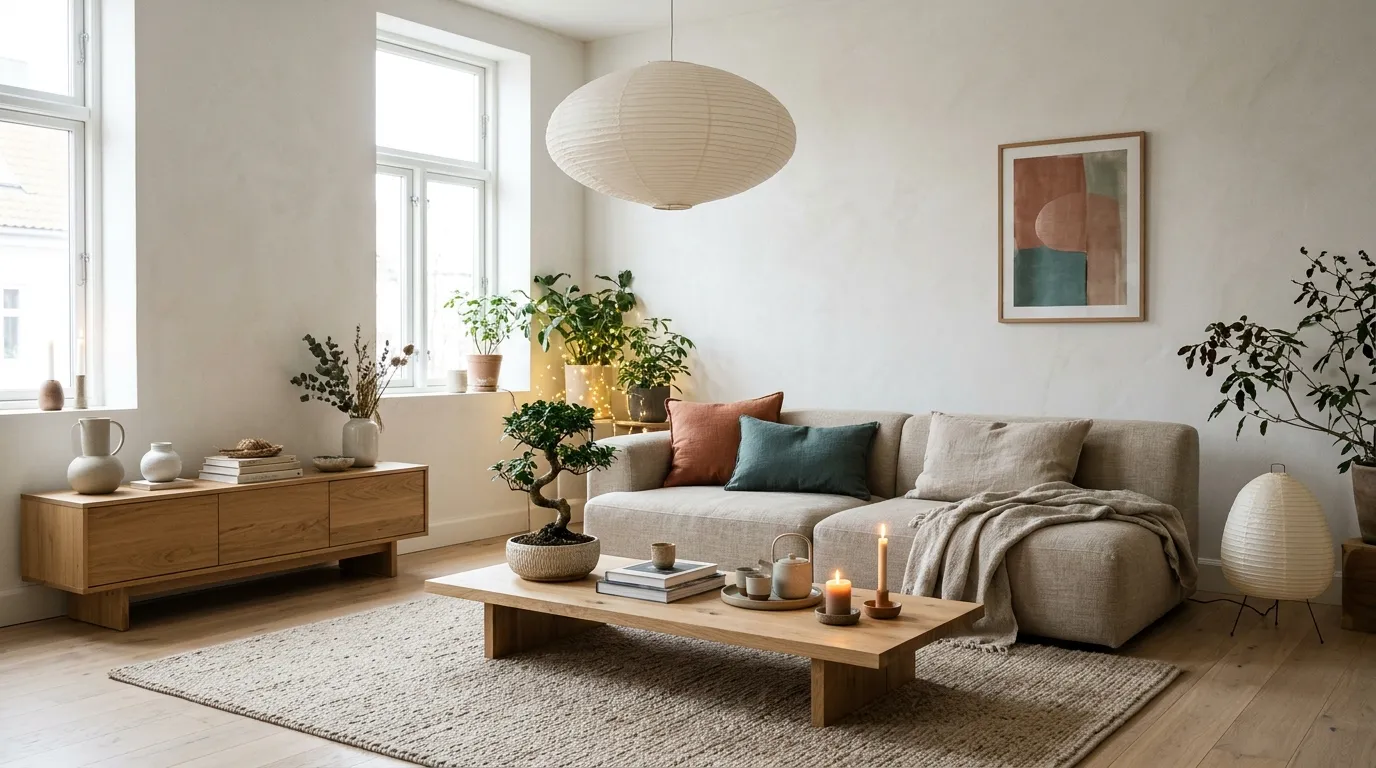
Japandi has been one of the most popular interior styles of recent years – and it has what it takes to become a classic. The name combines Japan and Scandinavia, and that's exactly what the style is: the warmth and cosiness of the North meets the calm and clarity of Japanese aesthetics. The result is rooms that feel tidy, natural and deeply relaxing.
The features
Reduction. A few well-chosen pieces of furniture and objects. Every piece has a function or a meaning. Free space and emptiness are intentional – Japanese even has its own concept for it: ma, the deliberate space in between.
Natural materials. Wood (light like oak and ash or dark like walnut), bamboo, rattan, linen, cotton, paper, stone and ceramics. Plastic and high gloss don't fit.
Muted colours. Warm neutrals like beige, sand, greige and cream, plus earth tones, muted green and accents in black or dark wood.
Low, clean-lined furniture. Sofas, beds and tables are often lower than usual, with clean lines and visible wood grain.
Craft and imperfection. Handmade ceramics, irregular glazes, visible grain. The Japanese principle of wabi-sabi finds beauty in the imperfect and transient.
Nature in the room. One large, sculptural branch, a plant with a clear shape or a bonsai instead of many small pots.
Room by room
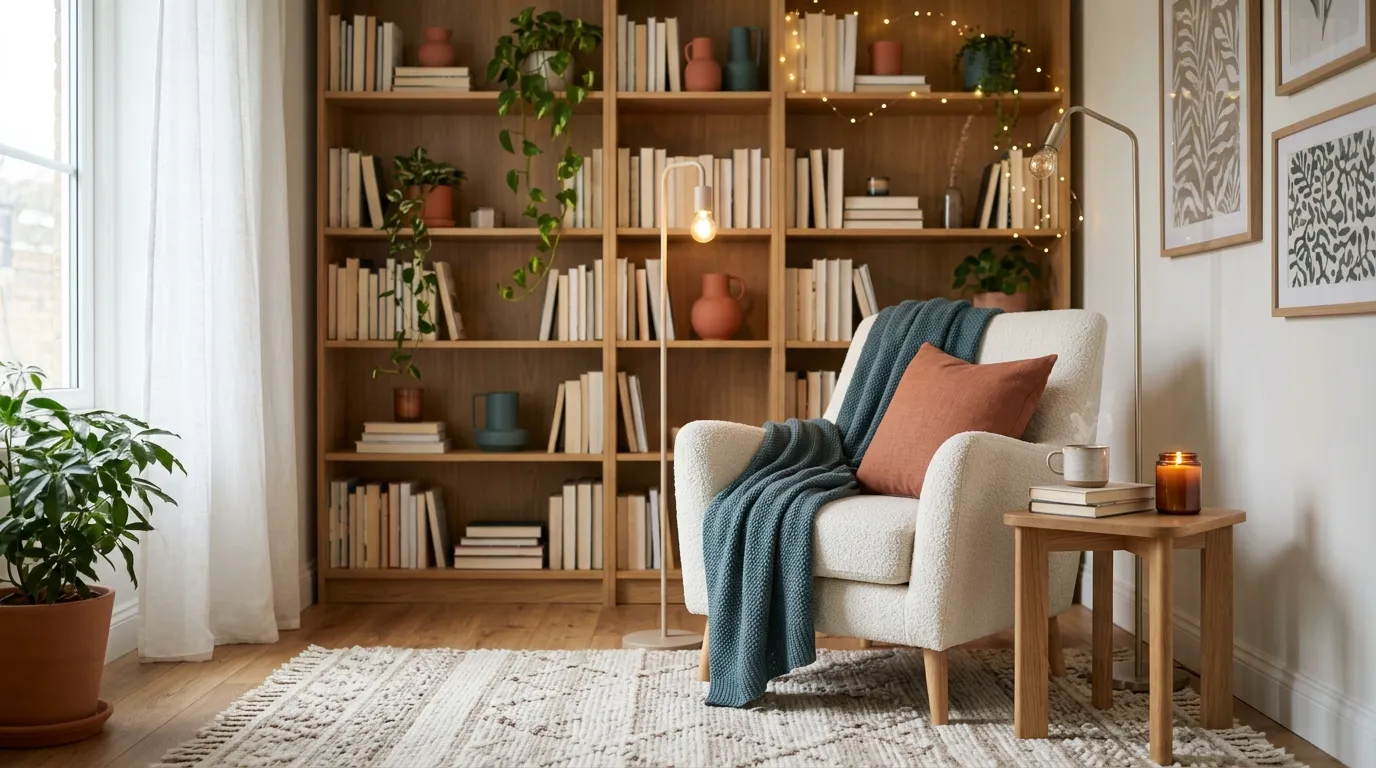
Living room: a low sofa in linen or bouclé, a solid wood coffee table, a rug in natural tones, a paper lamp. On the wall, a single picture or calligraphy.
Bedroom: a low wooden bed, linen bedding, a bedside table with a ceramic lamp, and hardly anything else. More in the Japandi bedroom.
Dining area: a wooden table with visible grain, wooden or woven chairs, handmade crockery.
Shopping list to get started
You don't have to buy everything new. These pieces bring the style into your home quickly:
- A paper or rice-paper lamp (for example in the style of Akari lights)
- Linen: cushion covers, curtains or bedding in sand or greige
- Handmade ceramics: a vase, a bowl, a tea set
- A large branch in a simple floor vase
- A rug in jute, wool or cotton in natural tones
- A wooden tray or board
- Baskets in seagrass or rattan for order
And above all: declutter. Japandi starts with leaving things out.
How it differs from Scandi
Japandi and Scandinavian style are closely related but not the same:
| Scandinavian | Japandi | |
|---|---|---|
| Colours | light, lots of white | warmer, more beige and earth tones, black accents |
| Wood | mostly light | light and dark mixed |
| Furniture | more playful, more textiles | lower, stricter, cleaner |
| Decor | cosy, hygge | very pared back, single objects |
If you prefer the light, cosy look, you'll find ideas in Scandinavian living room decor. For a more strongly Asian-influenced style: Asian-style living room decor.
Common mistakes
- Too much decor: Japandi thrives on emptiness. Three objects on the sideboard are enough.
- Too cold: without wood and textiles, the style quickly looks sterile.
- Too many Japan clichés: fans, Buddha figures and cherry-blossom motifs don't make it Japandi.