How to Furnish a Living Room: A Step-by-Step Plan
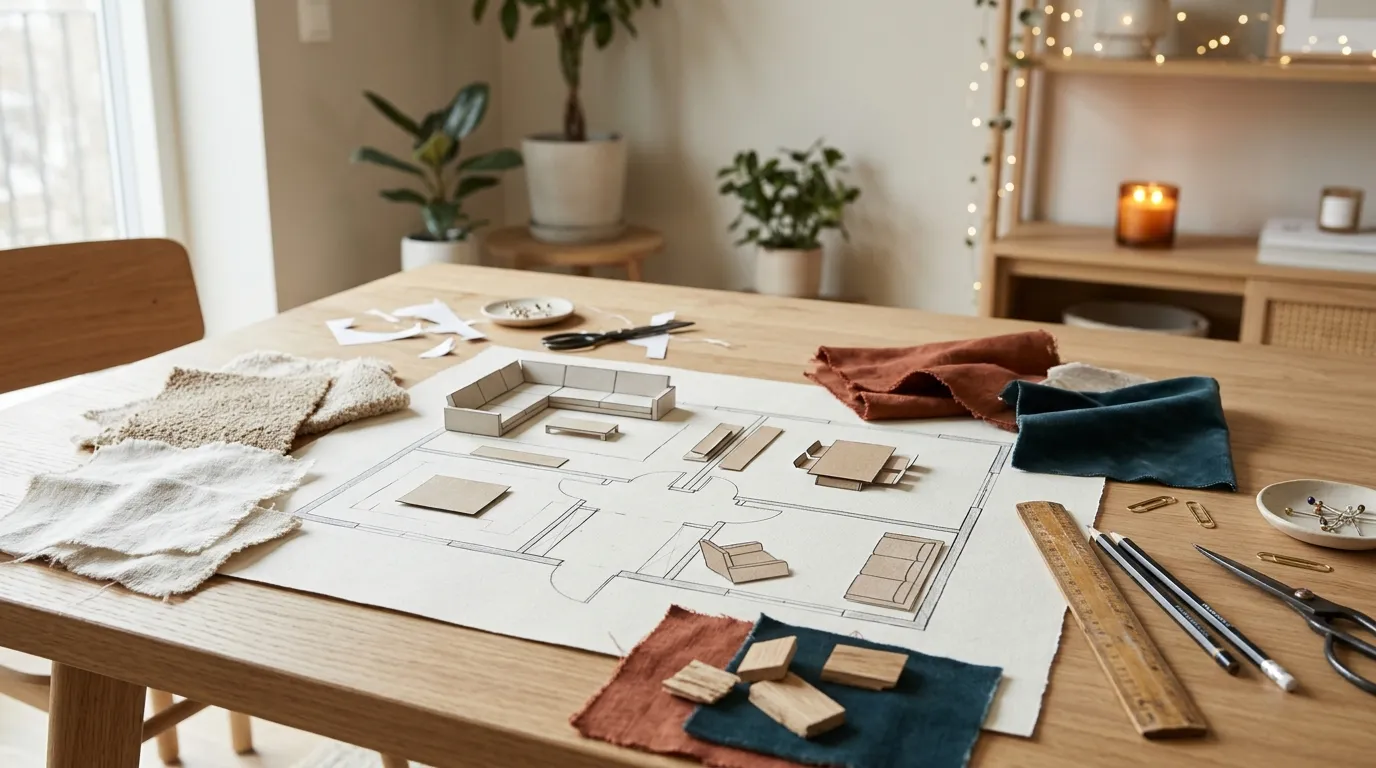
Furnishing a living room can be overwhelming: where do you start? Which sofa fits? How big should the rug be? Most bad purchases happen because people start with the decor rather than the floor plan. With a six-step plan, you'll end up with a living room that works and looks good – whether you've just moved in or are redesigning.
1. Floor plan and walkways
Before buying a single piece of furniture, measure:
- Draw the room size, windows, doors, radiators and sockets on paper or in a planning app.
- Define walkways: where do people move through the room? Leave at least 80 to 90 centimetres between door, window, balcony and kitchen.
- Choose the focal point: what should take centre stage? A window with a view, a fireplace, the TV, a wall of books?
- Plan zones: seating area, dining area, reading nook, perhaps a workspace.
Tip: mark furniture on the floor with masking tape before buying. You'll see straight away whether it fits.
2. The sofa
The sofa is the biggest and most important piece of furniture – and it determines the rest.
- Size: the sofa should take up about two thirds of the wall it stands against. Too small looks lost, too big overwhelming.
- Shape: a straight sofa is flexible; a corner sofa uses corners and offers lots of space but looks bulky.
- Seat depth: 55 to 60 cm for upright sitting, 65 cm and more for lounging.
- Distance to the TV: roughly two to three times the screen diagonal.
- Don't push it against the wall: a sofa that floats in the room (with a sideboard behind it) often looks more generous.
3. The rug
The most common living room mistake: a rug that's too small.
- At least the front legs of the sofa and armchairs should sit on the rug.
- Typical sizes: 160 × 230 cm for small seating areas, 200 × 300 cm for most living rooms.
- The rug defines the zone – it ties the sofa, armchairs and coffee table together.
Which size fits: rug size guide.
4. Light
A living room needs at least three light sources:
- Ambient light: a ceiling light, ideally dimmable.
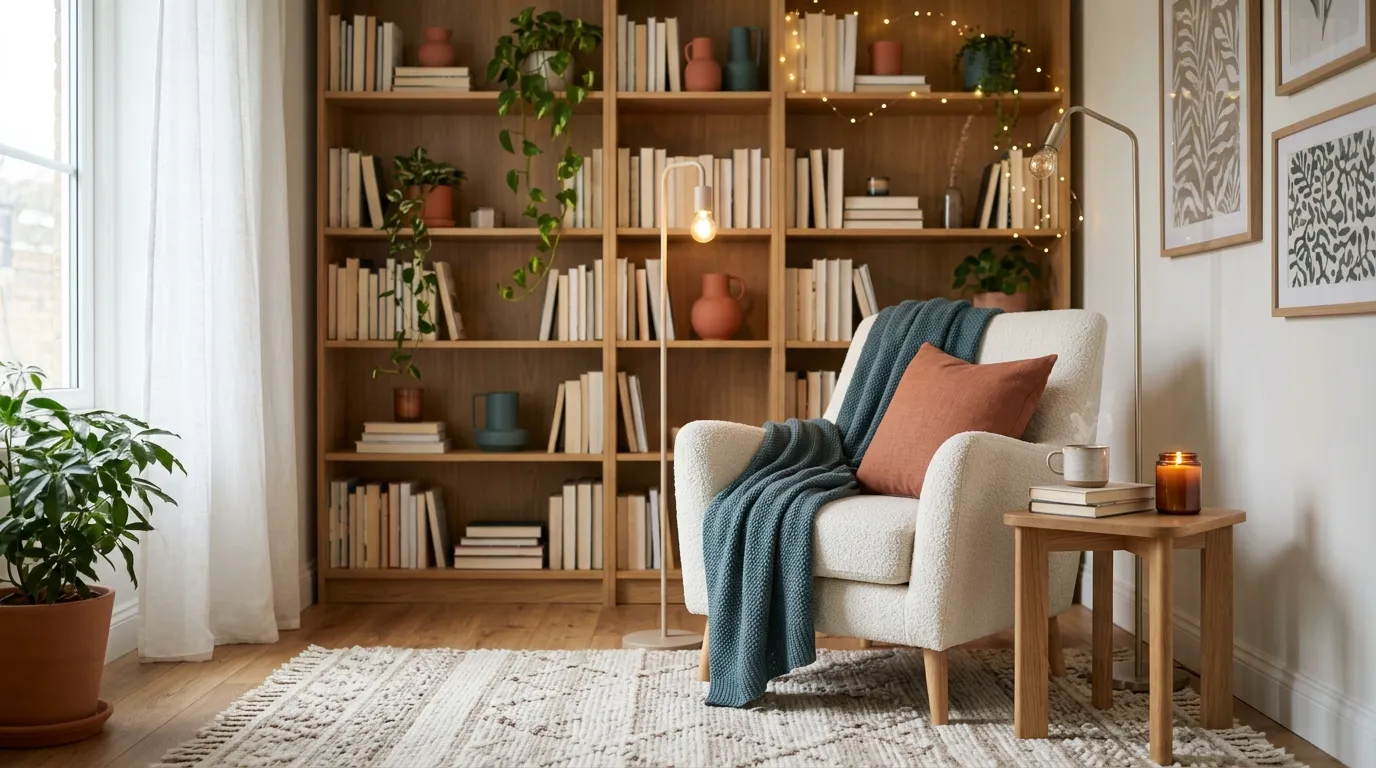
- Task light: a reading lamp next to the sofa or armchair.
- Mood light: table lamps, fairy lights, candles, indirect light.
Plan the lights together with the furniture – sockets are often the limiting factor.
5. Storage
Without storage, every living room gets messy:
- A sideboard or lowboard for tech, games and odds and ends.
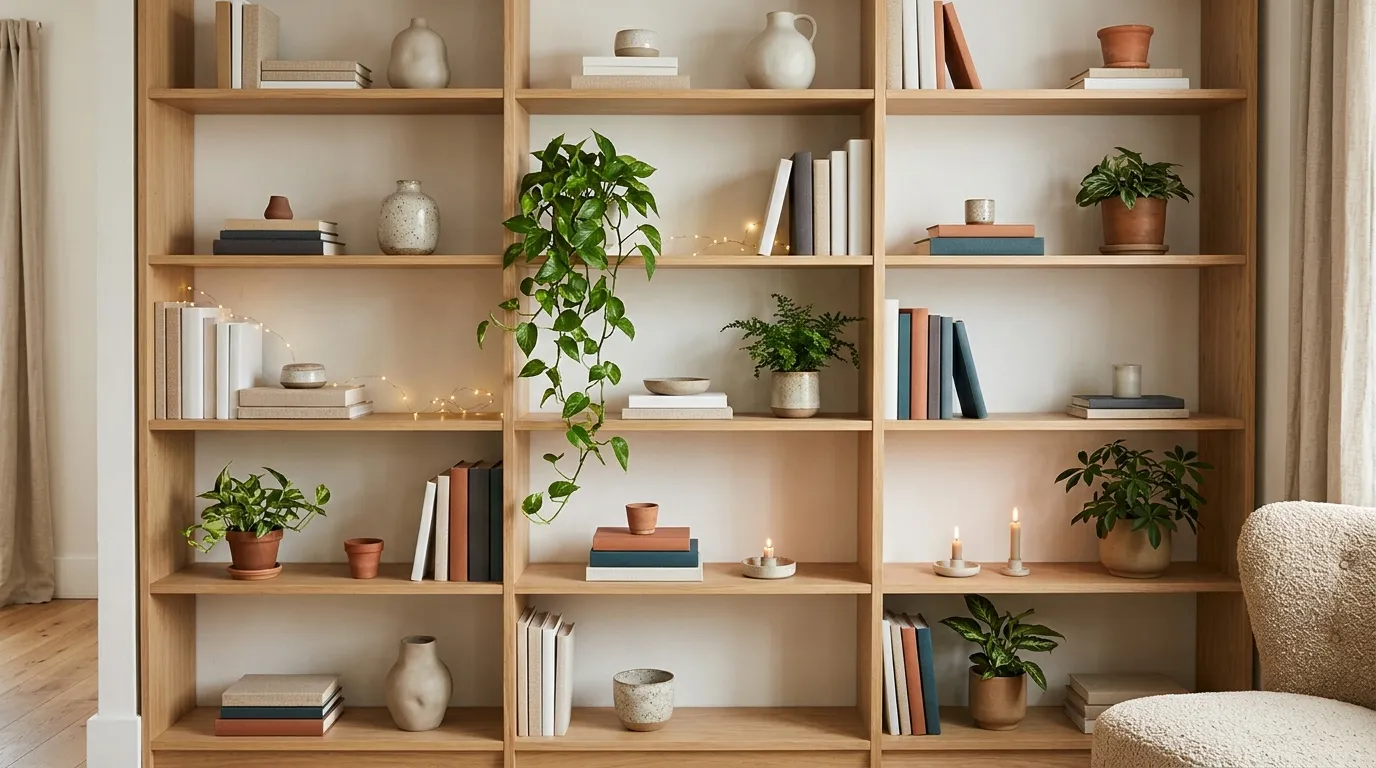
- A shelf for books and decor.
- Baskets for blankets and magazines.
- Closed storage for everything that shouldn't be seen.
Rule of thumb: more closed than open storage – open shelves need constant upkeep.
6. Decor
Decor comes last:
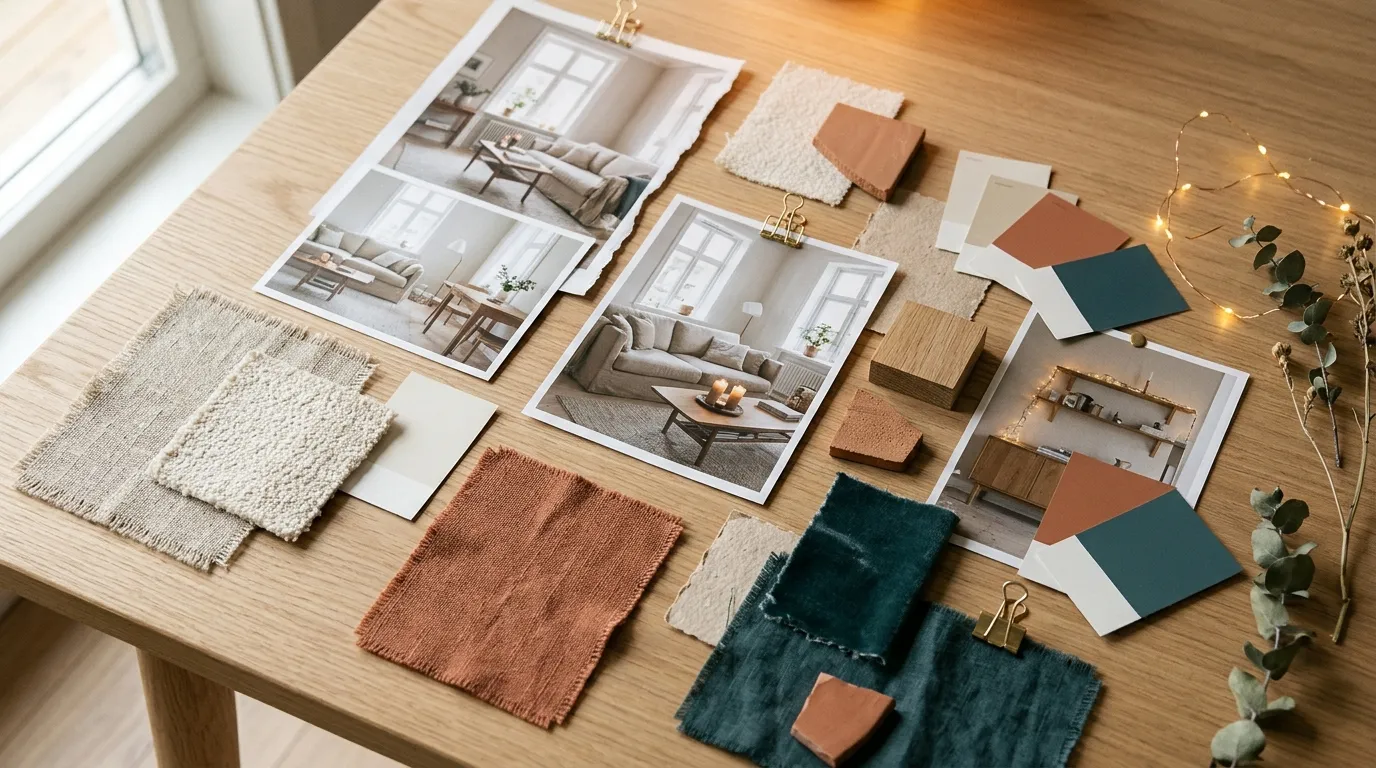
- Cushions and throws in two or three colours.
- Pictures and art on the walls – not too high; the centre of the picture at about eye level (1.50 to 1.60 m).
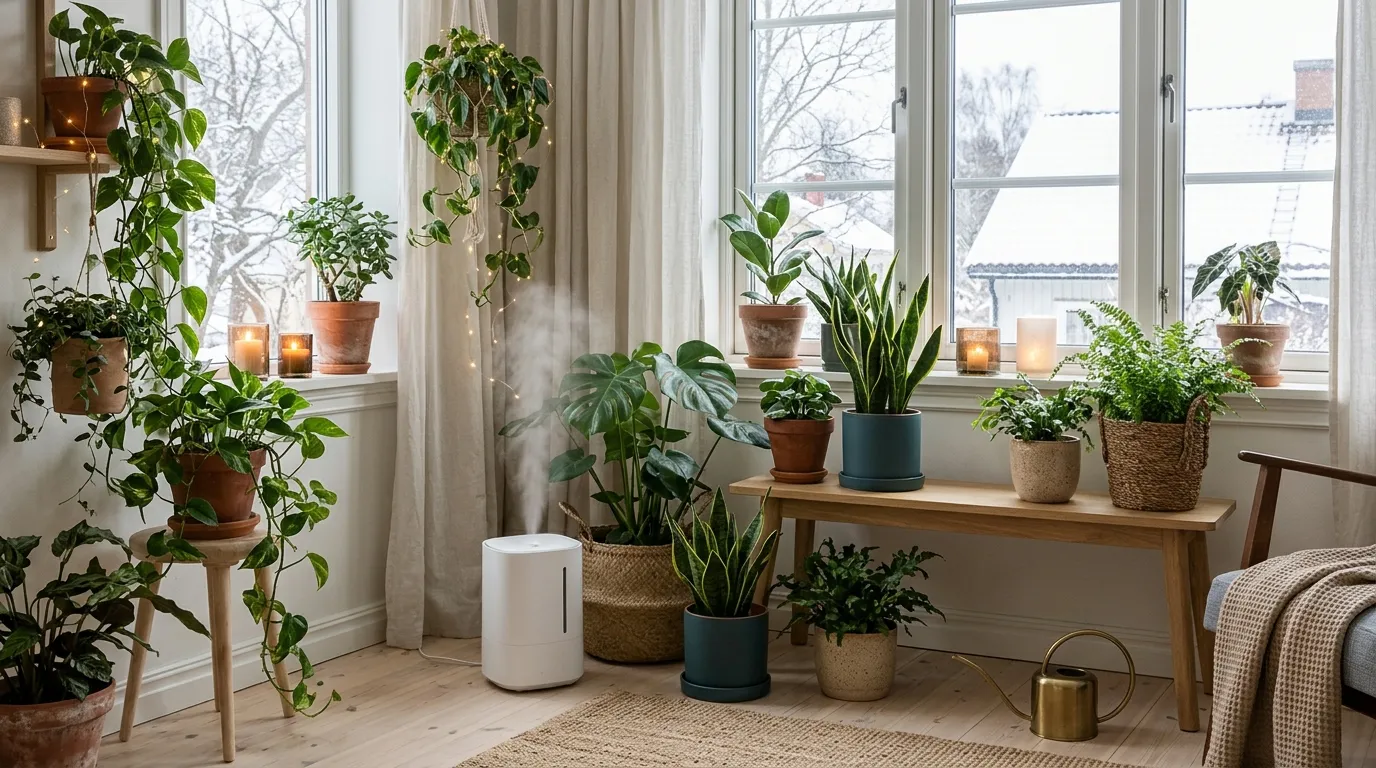
- Plants for life and nature.
- Personal things: books, keepsakes, photos.
- Curtains: hung as high and wide as possible – it makes windows look bigger.
How to make decor look good on the sideboard and coffee table: styling a sideboard and styling a coffee table.
The most common mistakes
- Pushing all the furniture against the walls.
- A rug that's too small.
- Only one ceiling light.
- Buying furniture without measuring first.
- Buying everything at once instead of step by step.