
Houseplants in Winter: Watering and Light
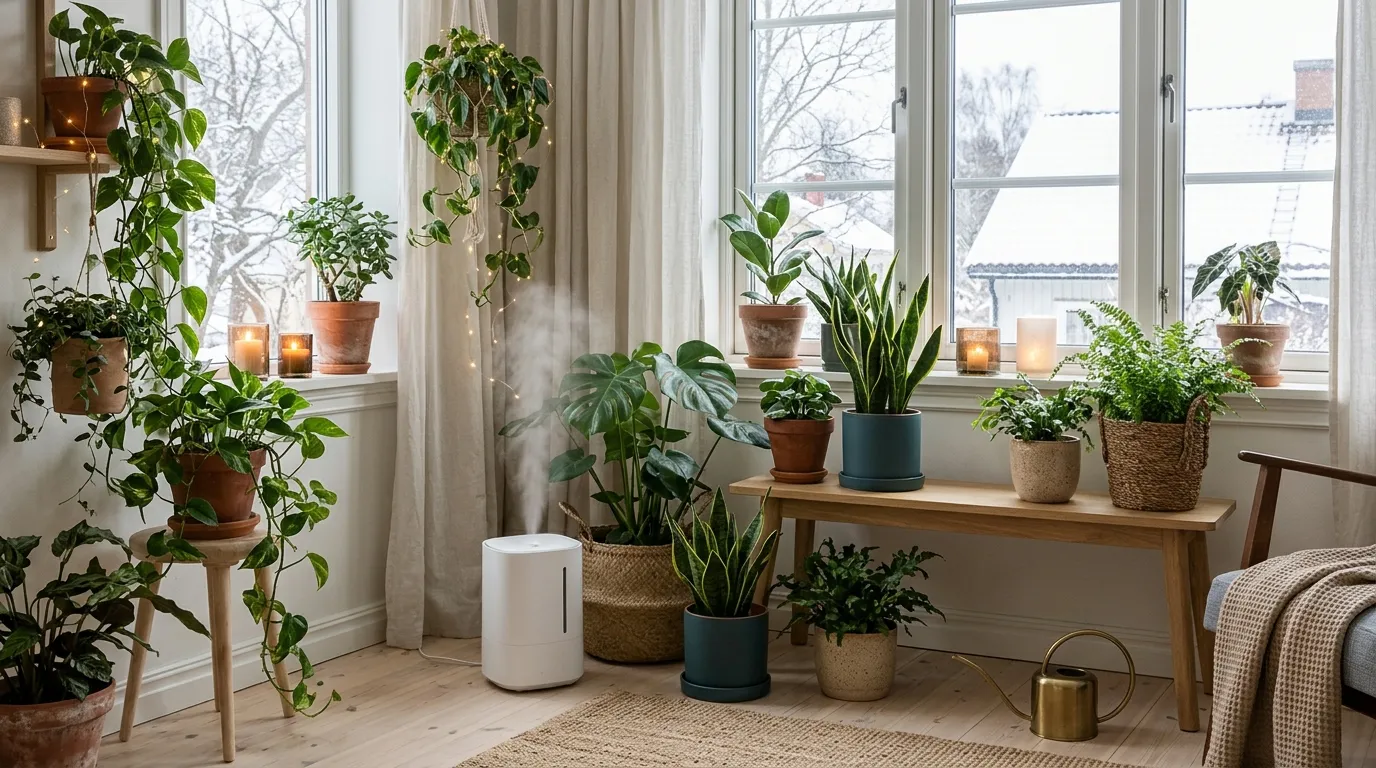
Winter is tough for houseplants: it's dark, heating dries the air and cold draughts come in at the window. Many plants drop leaves, get brown tips or die – usually not because they get too little water, but because they get too much. With a few adjustments, they'll get through the dark season just fine.
Water less
The most common mistake in winter is overwatering. Because plants get less light, they grow more slowly and use less water. If the soil stays wet, the roots rot.
- Finger test: only water when the top two to three centimetres of soil are dry.
- Less often, but thoroughly: water deeply once and tip excess water out of the outer pot after 15 minutes.
- Use room-temperature water – cold water shocks the roots.
- Succulents and cacti often need water only every three to four weeks in winter – or none at all.
- Moisture meters help if you're unsure.
More light
What plants lack most in winter is light. So:
- Move closer to the window: plants that stand further into the room in summer can go on or right in front of the windowsill in winter.
- Clean the windows: clean glass lets in noticeably more light.
- South-facing windows are ideal in winter – the sun is low and not as strong.
- Dust the leaves: dust on leaves blocks light. Wipe them with a damp cloth.
- Grow lights: for dark homes, LED grow lights are a good investment. They use little electricity and now look good too.
- Rotate: turn plants regularly so they don't grow lopsided towards the light.
Humidity
Heated air often has only 30 percent humidity or less – but many houseplants come from tropical regions with 60 percent or more. Brown leaf tips are a typical sign.
- Group plants: plants standing together create a more humid microclimate.
- Trays of water and pebbles under the pots (the pot shouldn't stand in the water).
- Mist with low-lime water – but not plants with hairy leaves.
- Put a humidifier nearby.
- Not directly above the radiator: warm, dry air rises.
No fertiliser
From November to February, most plants take a growth break. Fertiliser would only stress the roots now or cause weak, leggy shoots. Start feeding again in March. Exception: plants that flower in winter, like poinsettia, amaryllis or orchids.
Avoid draughts
- When airing, move sensitive plants off the windowsill or air briefly rather than leaving windows tilted open.
- Cold windowpanes: leaves shouldn't touch the glass.
- Doors: don't place plants right next to doors that are opened often.
Typical winter problems
- Yellow leaves: usually too much water.
- Brown tips: air too dry.
- Leaf drop: lack of light or a change of position.
- Spider mites: love dry heated air – check the undersides of leaves and shower plants off.
- Fungus gnats: soil too wet – water less and put up yellow sticky traps.
Hardy winter plants
If you're looking for easy-care plants that get through winter well: ZZ plant, snake plant, pothos, spider plant and cast-iron plant. How to show them off in the living room: plants as living room decor. And for the festive season: caring for poinsettia and amaryllis.