Wall Panelling: Wood Slats, Acoustic Panels and Moulding
A smooth white wall is practical – but rarely exciting. Wall panels give rooms structure, depth and character without a full renovation. Whether warm wooden slats, sound-absorbing acoustic panels or elegant moulding: there's a solution for almost every style. Here's an overview with tips for fitting.
Wooden slats and acoustic panels
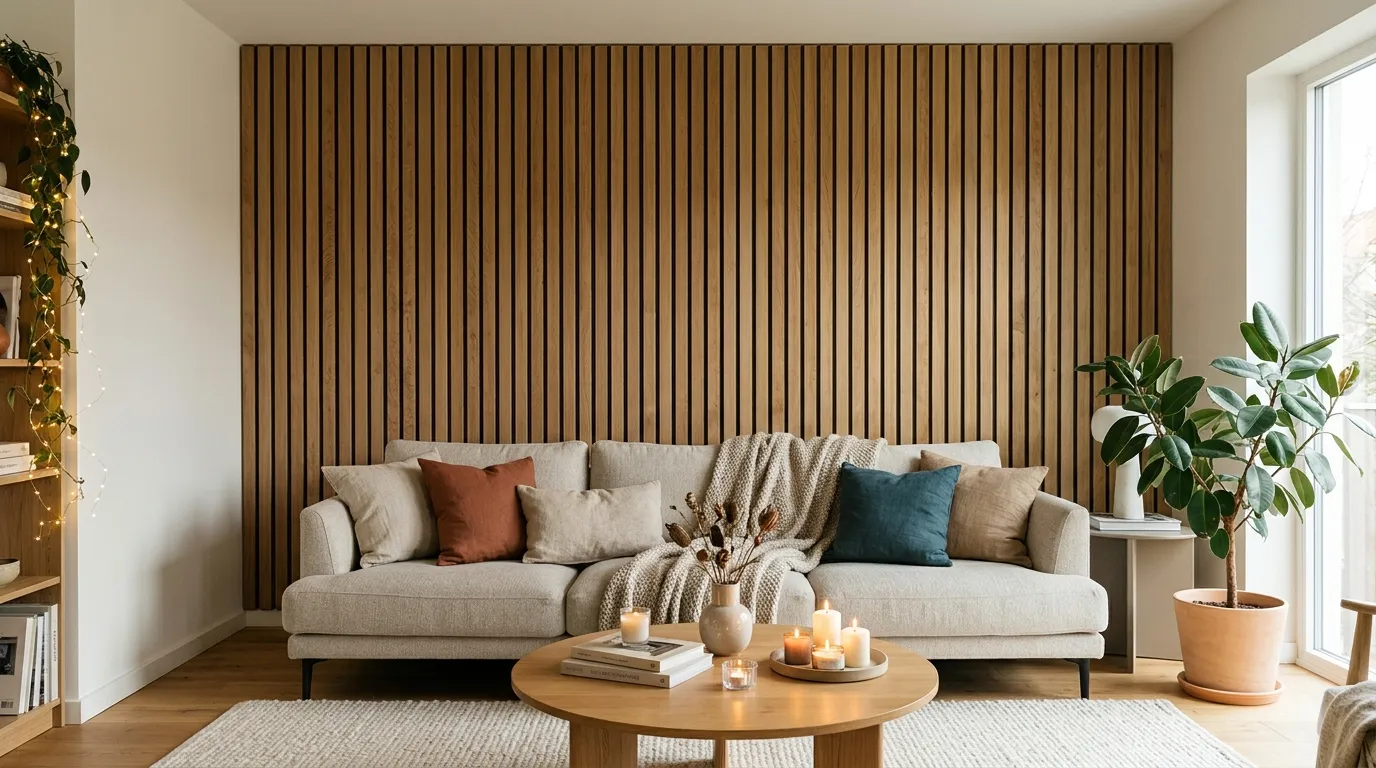
Wooden slats are narrow vertical wooden battens with gaps between them, often mounted on a felt backing. They've been the trend of recent years – and have what it takes to become a classic.
- Effect: warm, modern, natural. Vertical lines make rooms look taller.
- Acoustics: panels with a felt back absorb sound and noticeably improve acoustics in echoey rooms – ideal for living rooms with stone floors, home offices or open-plan kitchen-living areas.
- Wood types: oak (light, natural), walnut (dark, elegant), black-stained (modern, graphic).
- Use: as a feature wall behind the sofa, bed or TV, as a headboard substitute or on the ceiling.
Moulding
If you want to bring period charm to a new build, go for cornices and wall mouldings:
- Material: usually lightweight polystyrene or polyurethane foam, rarely real plaster. They're light, cheap and simply glued on.
- Panels on the wall: profile mouldings create rectangular panels on the wall. Painted in the wall colour, it looks elegant and understated.
- Cornices and ceiling roses: a moulding where the wall meets the ceiling and a rose around the light fitting.
- Effect: classic, elegant, especially combined with dark or muted wall colours.
Wainscoting
Wainscoting comes from the English and American interior tradition: the lower half or lower third of the wall is clad in panels, with smooth wall above.
- Height: about 90 to 120 cm, or a third of the room height.
- Styles: raised panels, vertical boards (beadboard) or flat panels with a top rail.
- Use: hallway (protects against scuffs), dining room, bathroom, children's room.
- Colour: the panels in a stronger colour, the wall above lighter – or everything tone on tone.
Fitting
Most panels can be fitted without a professional:
- Prepare the wall: clean, dry and sound. Remove old wallpaper that's poorly attached.
- Measure and plan: lay the panels out on the floor first. For framed panels, mark them on the wall with masking tape.
- Cut: wooden slats with a fine saw, foam mouldings with a craft knife or mitre saw.
- Attach: depending on the material, with construction adhesive, screws or both. Acoustic panels are usually screwed to the wall.
- Fill the joints: for mouldings, fill joints with acrylic caulk, then paint.
In a rented flat: screw rather than glue panels – screw holes are easier to fill than glue residue is to remove. Or mount panels on a wooden board and lean or hang that against the wall.
Colour
- Wooden slats look best natural. If you want colour: black-stained or painted in the wall colour.
- Mouldings and panels painted in the wall colour look elegant and modern. One shade darker than the wall adds depth.
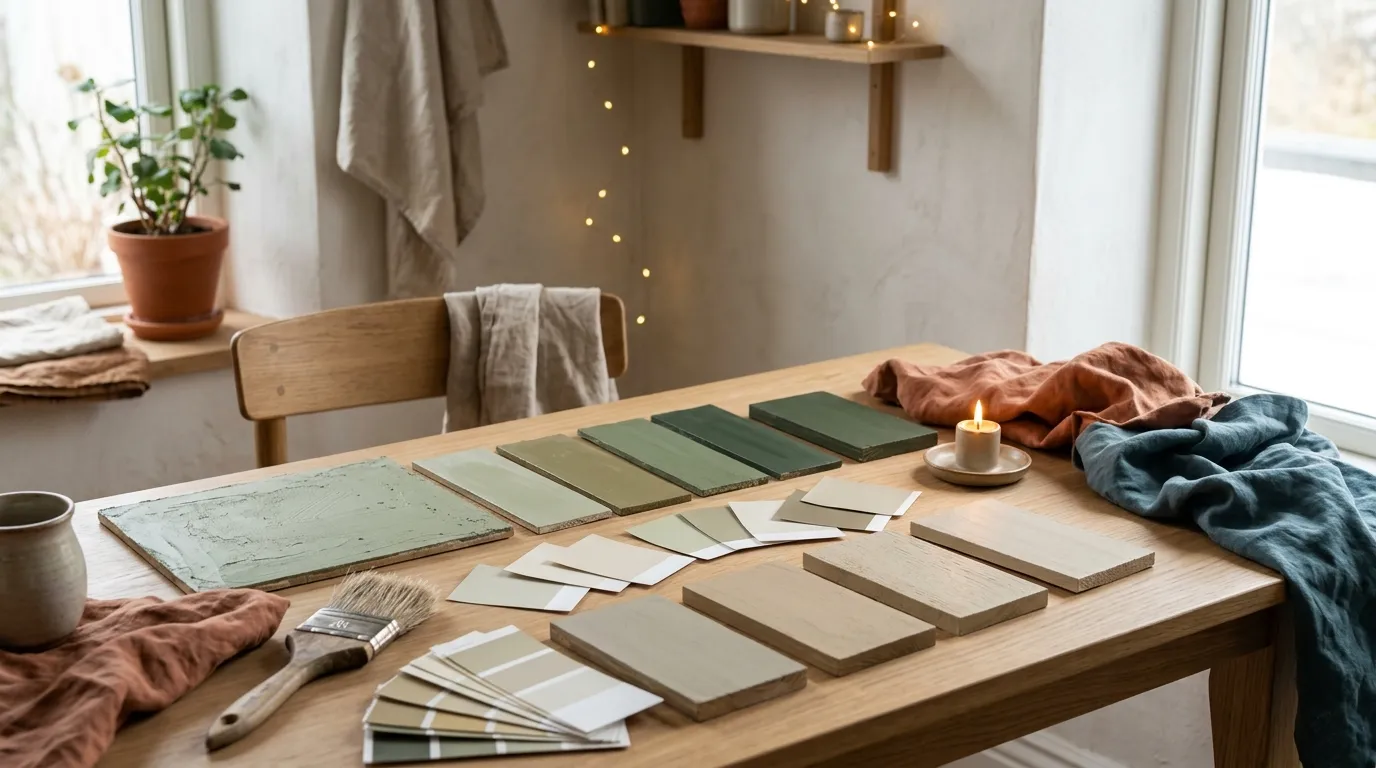
- Wainscoting often in a strong colour like dark green, petrol or sage.
One tip: if unsure, test with a feature wall. How to plan and paint one properly: painting a feature wall.