
The Power of Colors in Our Bedroom
Sleep is one of the most important pillars of our health. However, while we often discuss the right mattress, the ideal room temperature, or avoiding caffeine, one crucial factor is frequently overlooked: the psychology of colors. The choice of color for our bedroom walls is much more than a purely aesthetic decision. It directly influences our nervous system, our hormone balance, and thus the quality of our nightly rest. In this comprehensive guide, you will learn how different wavelengths of light affect our psyche, which colors are scientifically proven to extend sleep duration, and which shades you should definitely avoid in the bedroom.

How Colors Affect Our Brain
Before we dive into specific colors, we must understand why walls have an impact on our sleep at all. The human eye possesses special receptors called ganglion photoreceptors. These cells are not primarily responsible for vision but are particularly sensitive to color information to regulate our internal clock (the circadian rhythm).
These receptors send signals to the hypothalamus in the brain, which in turn regulates the production of melatonin (the sleep hormone) and cortisol (the stress hormone). A color that puts the brain on high alert will make falling asleep significantly harder, even if our eyes are already closed, as the psychological preparation for the rest phase is missing.
The Best Wall Colors for Restful Sleep
1. Blue: The Undisputed Champion
Scientific research, including a large-scale study by the hotel chain Travelodge, has shown that people in blue-painted rooms sleep the longest on average – about 7 hours and 52 minutes per night.
Blue is associated with calmness, peace, and the vast sky or the ocean. Physiologically, blue lowers blood pressure and slows down the heart rate. It signals the parasympathetic nervous system that it is time to wind down. Particularly soft shades of blue, such as pastel blue or pigeon blue, are ideal.
2. Sage Green: The Soothing Power of Nature
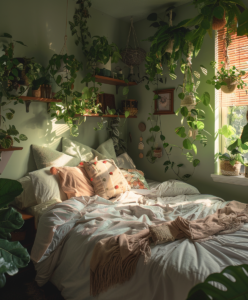
Green ranks second among sleep-promoting colors. It reminds us of nature, forests, and meadows. This evolutionary connection has an instinctively calming effect on humans. A soft sage green or a matte moss green creates an atmosphere of security without overstimulating the mind.
3. Soft Yellow: Coziness Without Agitation
While bright lemon yellow acts as a stimulant, pale, warm yellow tones can promote relaxation. They act like a gentle sunset and encourage the nervous system to calm down. According to studies, people in yellow bedrooms sleep about 7 hours and 40 minutes.
4. Earth Tones and Beige: Grounding and Security
Colors like beige, sand, or a warm terracotta convey a sense of stability and security. They are neutral enough not to distract the brain but warm enough not to radiate clinical coldness. These colors are excellent for people suffering from inner restlessness.

Colors You Should Avoid in the Bedroom
1. Red: The Color of Energy and Aggression
Red is the most unfavorable color for the bedroom. It increases blood pressure, stimulates adrenaline production, and puts the body into a "fight-or-flight" mode. In a red room, it is difficult for the brain to switch to rest mode. Studies show that people in red rooms often sleep less than 6 hours and suffer more frequently from nightmares.
2. Purple and Violet: Too Much Creativity for the Night
Although purple is often associated with luxury and spirituality, it is problematic for sleep. Purple is a very "mentally active" color. It stimulates creativity and the subconscious, which can lead to very vivid dreams or even sleep interruptions. Those prone to nighttime ruminating should avoid purple.
3. Dark Gray and Black: The Danger of Melancholy
While dark colors are trendy, they can create an oppressive atmosphere in the bedroom. Too much gray can psychologically lead to feelings of isolation and sadness, which can negatively affect serotonin levels. If you want to use gray, be sure to combine it with warm light sources and light accents.

Tips for Practical Implementation
- Prefer Matte Finishes: Glossy paints reflect light more strongly, which can keep the mind awake. Matte colors appear softer and more soothing.
- Consider Color Saturation: The more vibrant and "glowing" a color is, the more activating it acts. Always choose the more muted, pastel version of a shade for the bedroom.
- Include Lighting: A blue wall can look very different under warm white light (approx. 2700 Kelvin) than under daylight white light. Use dimmable, warm light sources for the evening.
- Use Accent Walls: If you love a bold color, paint only the wall behind the headboard of the bed. This way, you don't see the color directly when falling asleep, but you still enjoy the room's effect when entering.
Conclusion
The choice of wall color is a powerful tool for sleep hygiene. While shades of blue and green have been proven to improve sleep quality and duration, red and bold purple should rather be banned from the sleeping area. Ultimately, however, personal perception also plays a role: choose a color that makes you feel safe and secure.
Frequently Asked Questions
Which color is scientifically the best for sleeping?
Studies show that blue is the best color as it lowers the heart rate and is associated with the longest average sleep duration of nearly 8 hours.
Is white a good color for the bedroom?
Pure white can be too bright and sterile. A creamy off-white is better for creating a cozy, less reflective environment.
Why should you avoid red in the bedroom?
Red increases blood pressure and heart rate. It stimulates the nervous system, making it harder to wind down mentally and physically.
Do dark colors help with sleep?
Dark colors like navy blue can provide a sense of security, but they should be paired with warm lighting to avoid a depressing mood.
Does purple affect sleep quality?
Yes, purple stimulates creativity and the subconscious, which can lead to vivid dreams and less deep sleep.

- Creative Color Schemes in the Kitchen: Ideas for Different Styles and Moods - 5. February 2026
- Scandinavian Hallway Decor: Minimalist Interior Design Tips - 5. February 2026
- Minimalist Hallway Decor: 7 Simple Ideas for Your Entryway - 5. February 2026

0 Comments