Upcycling: Painting Old Furniture Without Sanding
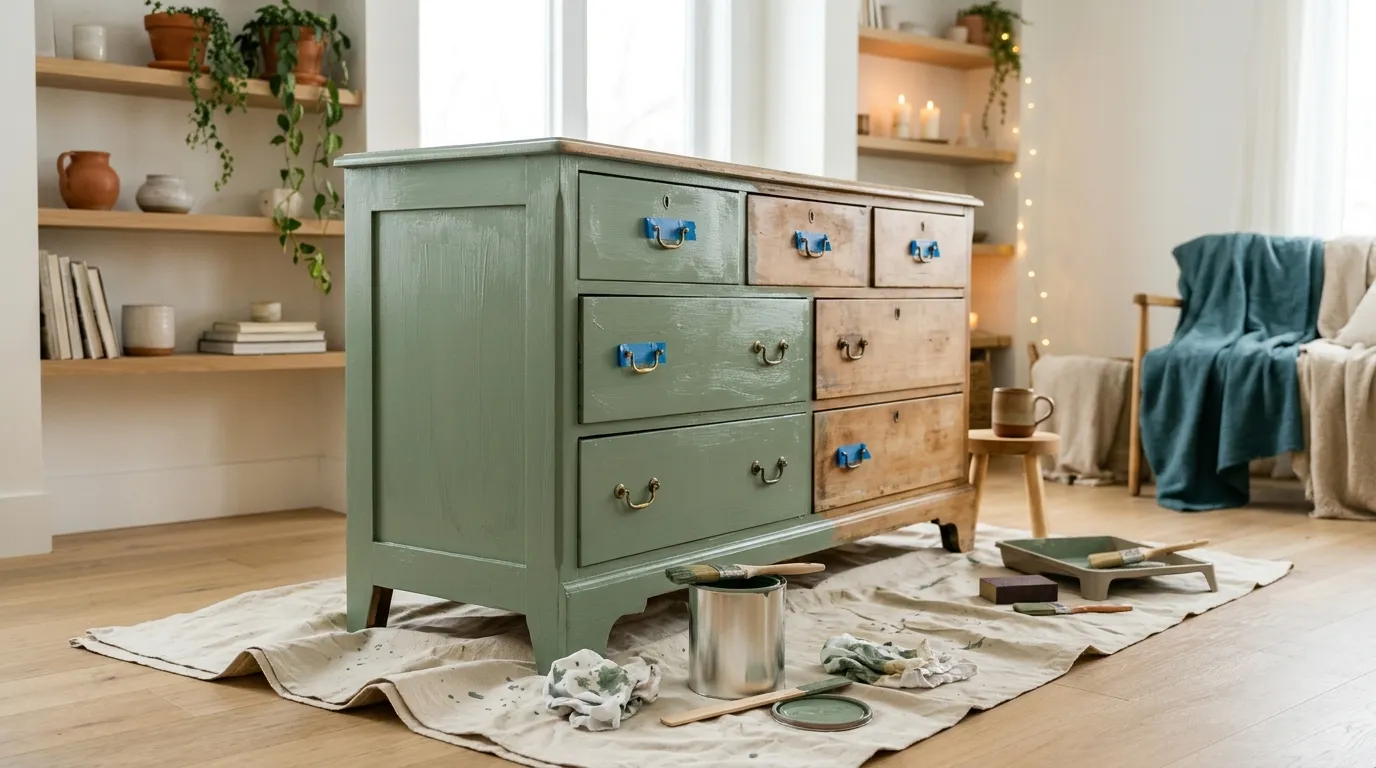
An old chest of drawers from the flea market, grandma's cupboard or a shelf you no longer like: with paint, old wood becomes a new favourite. Classic sanding is tedious, dusty and noisy – fortunately you can do without it. With the right products and the right order, the paint will still hold well.
Two approaches
1. Chalk paint. The most popular method for upcycling. Chalk paint sticks to almost any surface – varnished wood, veneered furniture, even metal and glass – without sanding or primer.
- Advantages: easy to use, good coverage, dries quickly, matt vintage look, can be thinned with water.
- Disadvantages: the surface is porous and has to be sealed with wax or clear varnish. Without sealing it marks easily.
- Ideal for: chests of drawers, chairs, picture frames, decorative furniture, shabby chic and country looks.
2. Bonding primer + paint. For heavily used furniture or a smooth, modern look.
- A bonding primer is applied to the cleaned surface and makes sure the paint adheres to smooth surfaces.
- On top goes acrylic or furniture paint in satin or gloss.
- Advantages: very durable, smooth surface, wipeable.
- Disadvantages: more steps, longer drying time.
- Ideal for: tables, kitchen cabinets, children's furniture.
The order
- Prepare: unscrew handles and fittings, take out drawers. Cover your work surface.
- Clean: the most important step when you're not sanding. Remove all grease and wax with warm water and washing-up liquid or a sugar soap. Let it dry well.
- Scuff (optional): for very smooth or glossy surfaces, lightly scuff with a sanding sponge (180–240 grit) – this isn't sanding down; it takes only a few minutes.
- Repair small damage: fill scratches and holes with wood filler.
- Prime (for the paint route) with bonding primer. For dark furniture that's going light, a stain-blocking primer stops wood tannins bleeding through.
- Paint: two thin coats are better than one thick one. Paint in the direction of the grain. Let each coat dry well.
- Seal: protect chalk paint with furniture wax or a matt clear varnish. Furniture paint usually needs no sealing.
- Let it cure: even if the paint is dry after a few hours, it only reaches full durability after one to three weeks. Use it carefully during this time.
- New handles: the easiest trick for a completely new look – brass, leather, wood or ceramic.
Tools
- Brushes: a good flat brush (synthetic bristles for water-based paints) and a small round brush for corners.
- Foam roller: for large, smooth surfaces – it leaves no brush marks.
- Sanding sponge for scuffing and for a vintage look (lightly sand the edges after painting).
- Masking tape.
- Dust sheets and rags.
- For wax: a wax brush or lint-free cloth.
Colour ideas
- Sage green or olive for a natural look – more in how to combine sage green.
- Navy or petrol with brass handles – elegant and modern.
- Warm white or greige for Scandinavian rooms.
- Black for a graphic, modern look.
- Two-tone: carcass in one colour, drawers in another.
What can't be done without sanding
- Furniture with flaking old varnish – that has to come off.
- Heavily used tabletops that see daily use – thorough preparation pays off here.
- Solid wood that's going to be oiled rather than painted.
More DIY ideas: DIY living room decor projects.