Toy Organisation in the Kids’ Room: Rotation Instead of Chaos
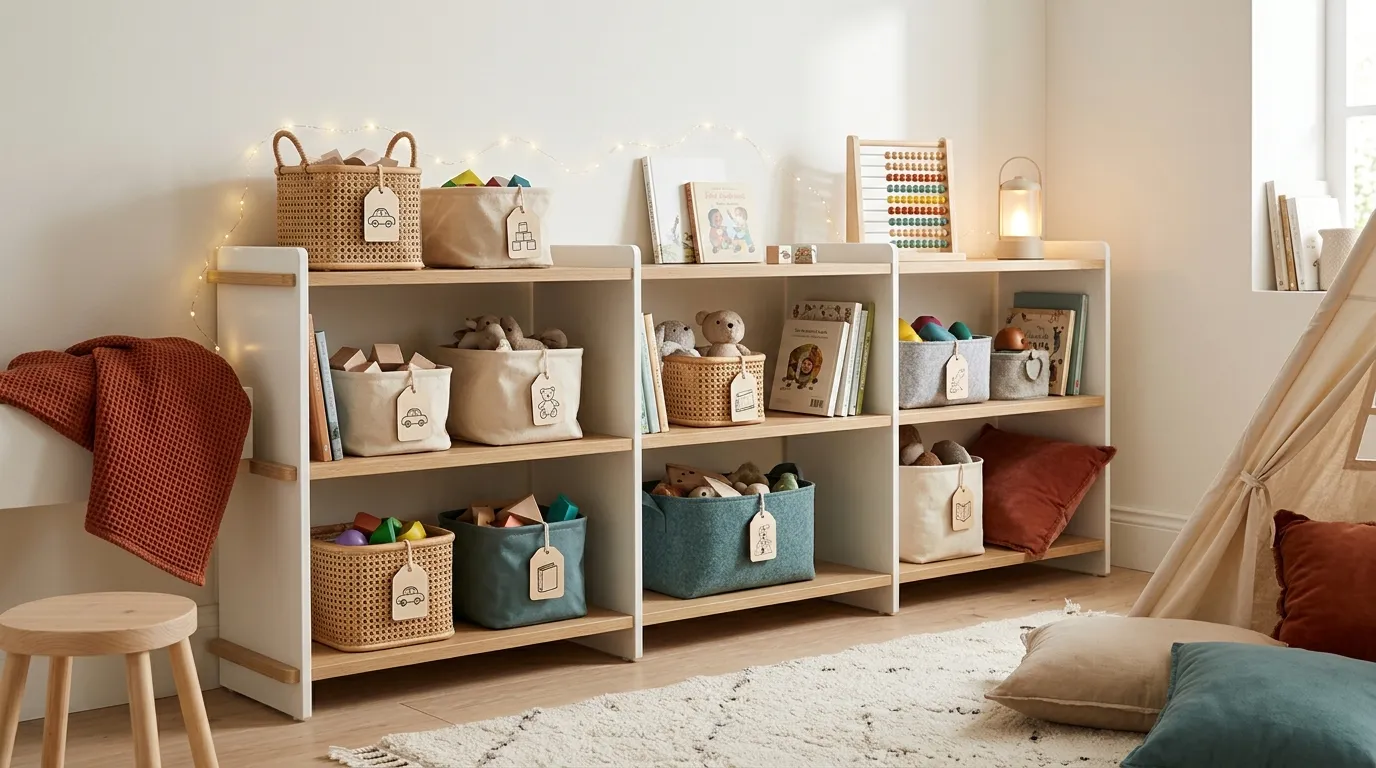
Toys tend to multiply: after birthdays and Christmas the children's room overflows – and in the end the kids still only play with three things. The solution is toy rotation: only some of the toys are accessible, the rest are put away and swapped regularly. It brings order – and means children play more and with more focus again.
Why rotation works
- Less choice, more play: research and experience from Montessori education show that children with fewer toys play longer and more creatively.
- Old becomes new again: something that's been away for a few weeks is exciting when it reappears.
- Less tidying: fewer items in the room means less chaos.
- Better overview: you see what actually gets played with and what doesn't.
How rotation works
- Gather everything: all the toys in one pile – it's often a shocking amount.
- Sort out: broken, incomplete and age-inappropriate toys go.
- Sort into categories: building (blocks, wooden bricks), role play (dolls, kitchen, figures), creative (drawing, play dough), movement (balls), books, puzzles and games, vehicles.
- Divide into boxes: three or four boxes, each with a mix from every category.
- One box is out, the others are stored out of sight – in the cellar, on top of the wardrobe or in a cupboard.
- Swap every two to four weeks.
Exceptions: favourites like the cuddly toy or a current favourite toy always stay available.
Order at child height
For children to tidy up themselves, the system has to be reachable and understandable for them:
- Low, open shelves: children see what's there and can reach it themselves.
- Baskets and boxes for each category – not too big, or everything gets thrown in.
- Picture labels: a photo or drawing on each box shows what goes in it – even for children who can't read yet.
- Books with covers facing out on a bookshelf or a wall ledge.
- A place for everything: whatever has no fixed home ends up lying around.
Tidy-up ritual
Tidying up is easier when it's part of the routine:
- A fixed time: for example before dinner or before bed.
- Keep it short: five to ten minutes are enough with fewer toys.
- Together: small children in particular prefer tidying up with an adult.
- A tidy-up song or a timer turns it into a game.
- Praise rather than scold.
Design
A tidy children's room can be beautiful too:
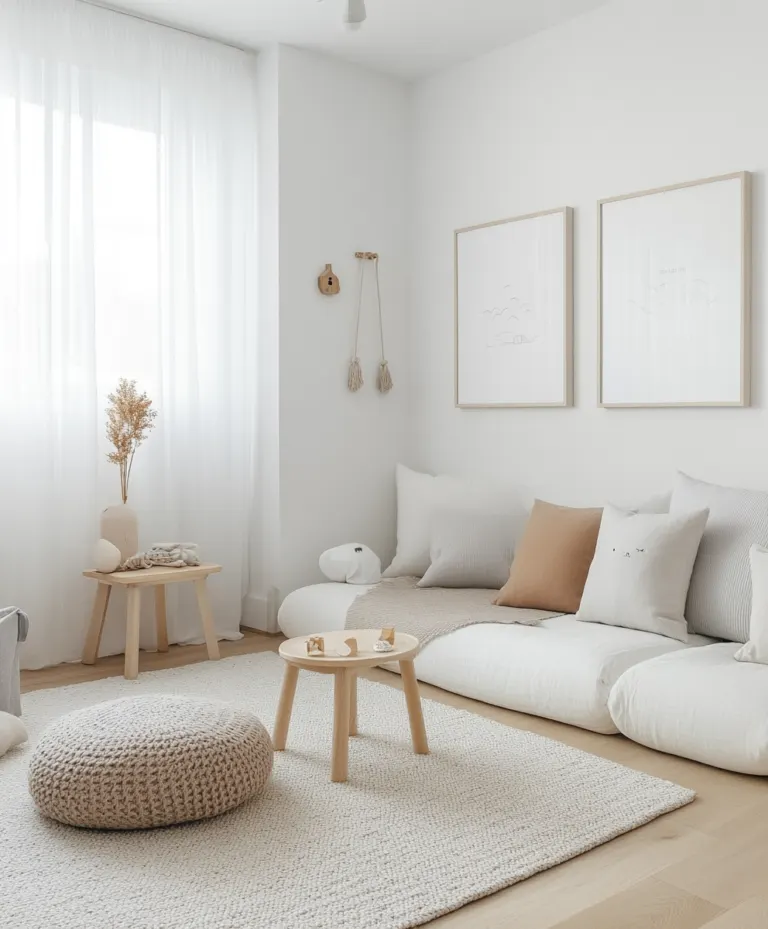
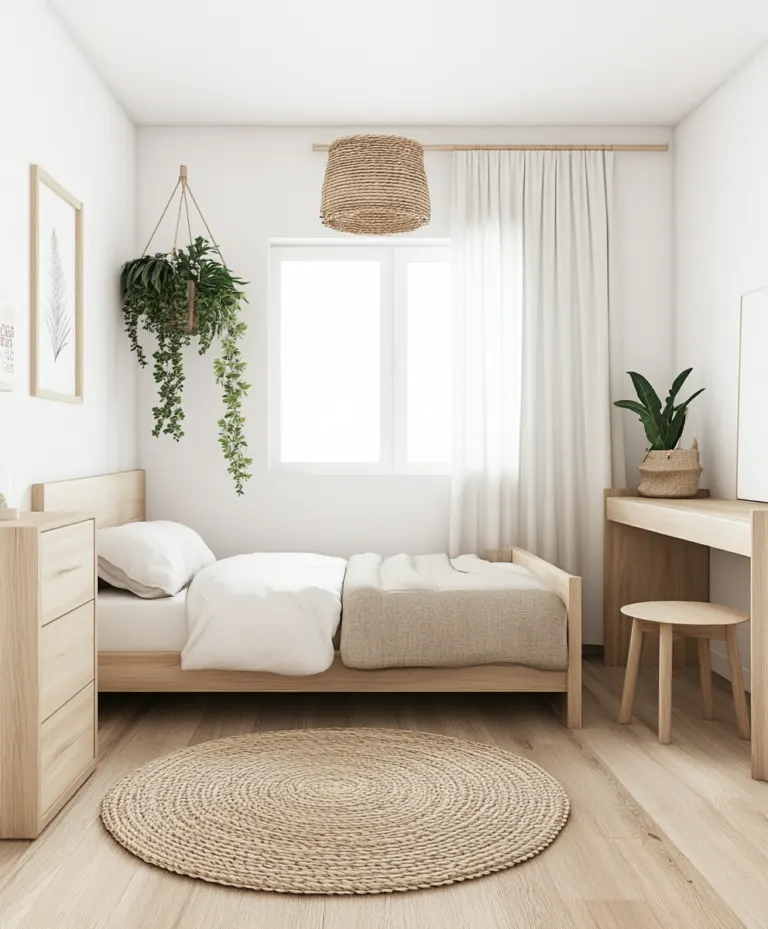
- Calm colours for furniture and walls, so the colourful toys don't add even more visual noise.
- Natural materials: seagrass baskets, wooden shelves, fabric boxes.
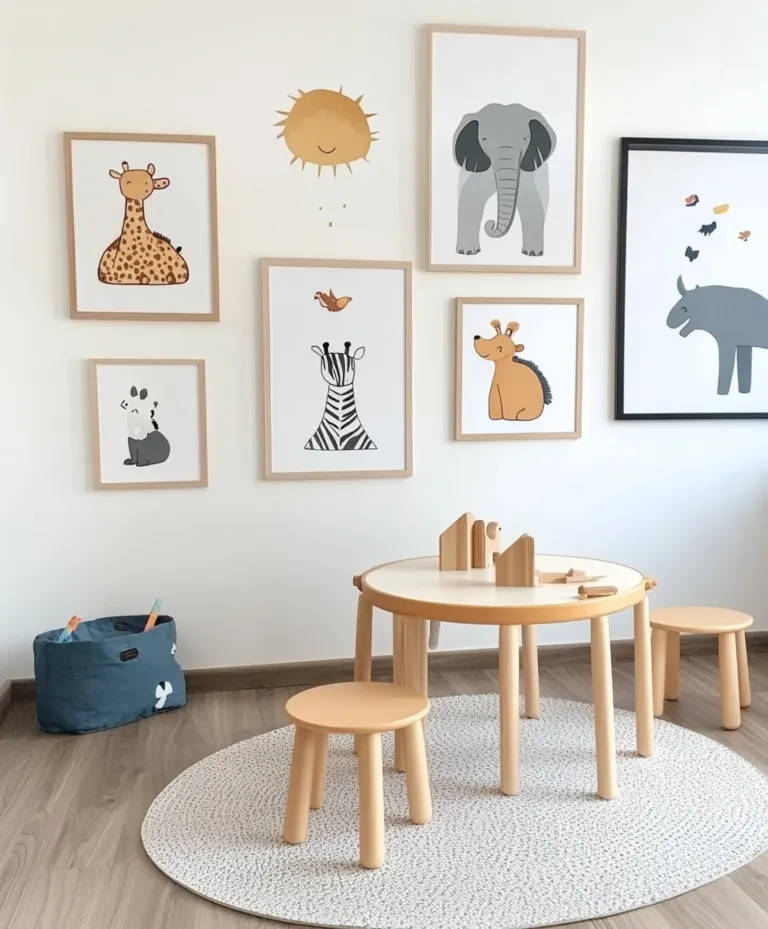
- Zones: a play corner with a rug, a reading nook, a drawing table.
- Artwork on a ledge or string, changed regularly.
More ideas for a pared-back style: minimalist kids' room decor.
After Christmas
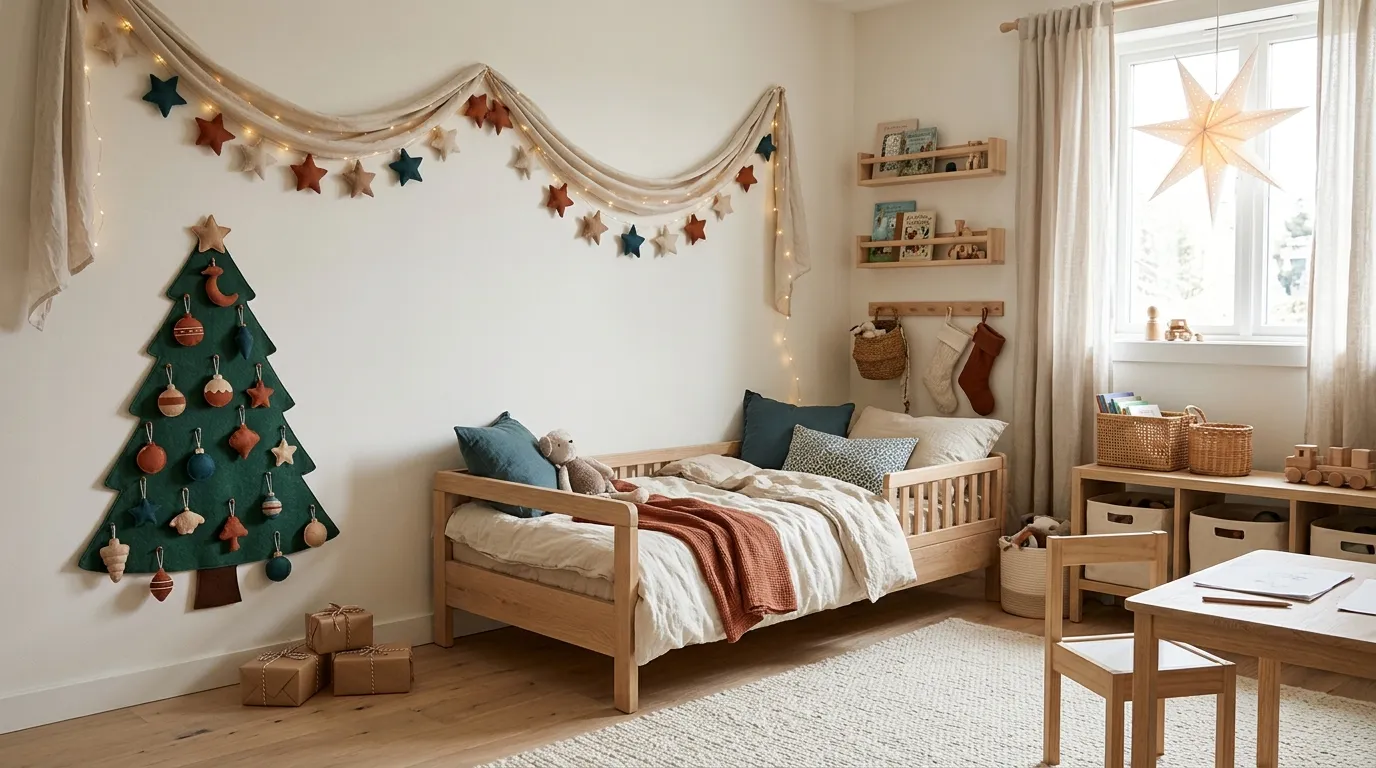
The holidays are the ideal moment to start rotating: new presents go into the first box, older toys get divided up. That way the children's room doesn't turn into a toy warehouse in January.