Sustainable Christmas Decor: No Plastic, No Glitter
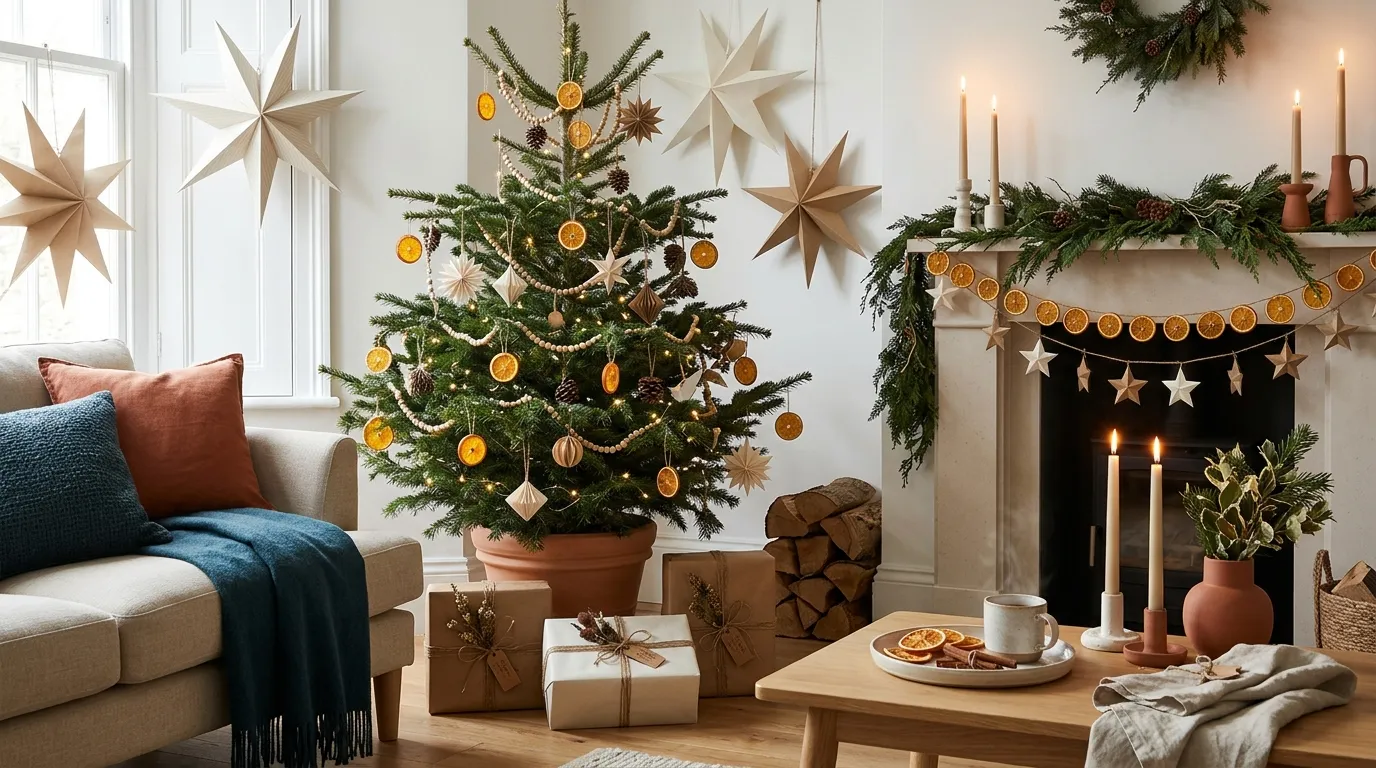
Plastic glitter baubles, tinsel, fake snow – much of what comes into the home at Christmas ends up in the bin after a few years. Sustainable Christmas decor relies on natural materials, durability and reuse. And it's no less beautiful – on the contrary: it feels calmer, warmer and more personal.
What's genuinely sustainable
- Decor that lasts for years. A good glass bauble that hangs on the tree for twenty years is more sustainable than an "eco" bauble that breaks after one season.
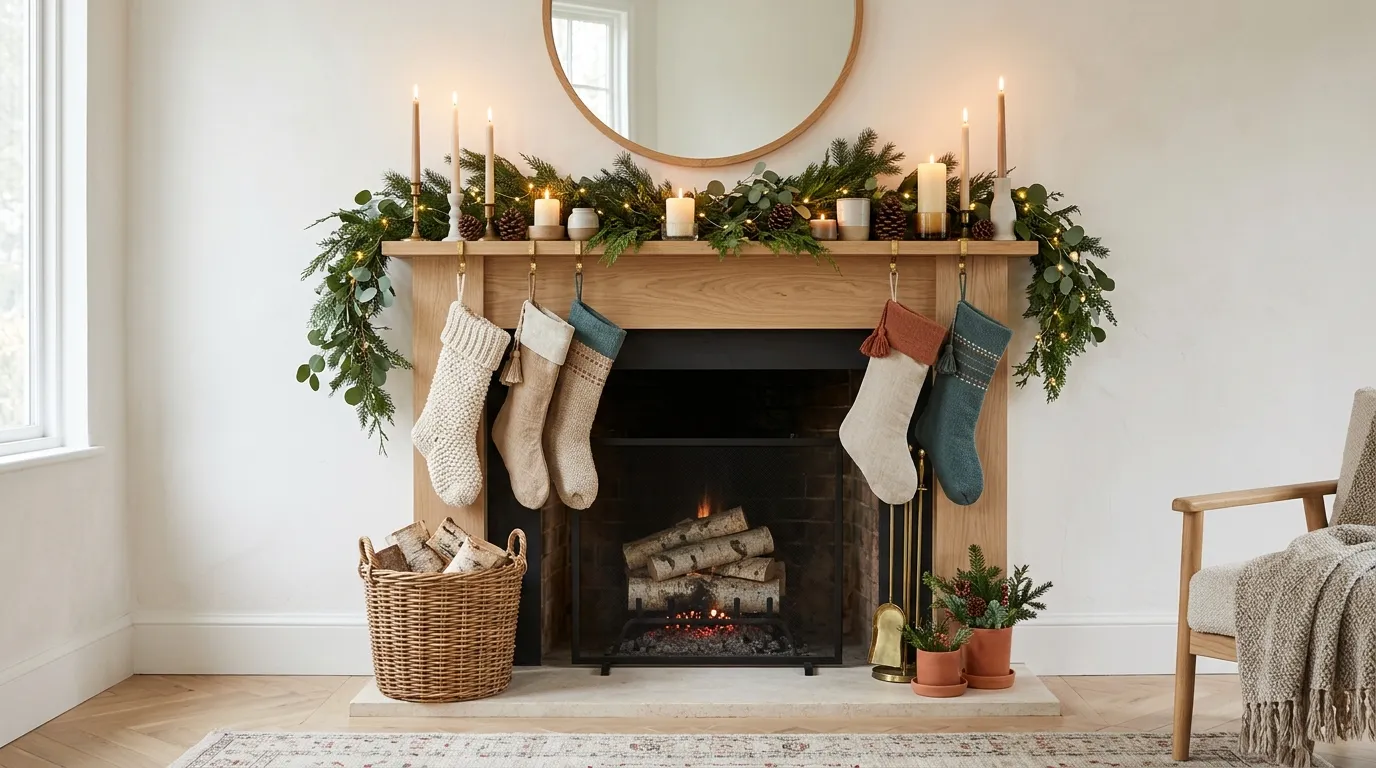
- Local natural materials: branches, pine cones, moss, rose hips, nuts – free and compostable.
- Homemade: paper stars, salt dough, dried oranges, wood slices.
- Second hand: flea markets, classifieds and grandma's attic are full of tree decorations.
- Rapeseed or beeswax candles instead of paraffin – or long-lasting rechargeable LED candles.
- LED fairy lights with a timer use only a fraction of the electricity of old incandescent sets.
What only looks sustainable
Watch out for products that look natural but aren't:
- Plastic "natural look": fake pine cones, fake berries, flocked branches.
- Glitter and fake snow: microplastics that end up in the environment.
- Cheap decor in bulk packs: very inexpensive sets usually don't last long.
- Single-use decor like napkins with glitter print or coated wrapping paper.
- Trend colours that will be out next year – timeless colours last longer.
Ideas
For the tree: straw stars, wooden ornaments, dried orange slices, cinnamon sticks, paper stars and a few good glass baubles you'll keep for a long time.
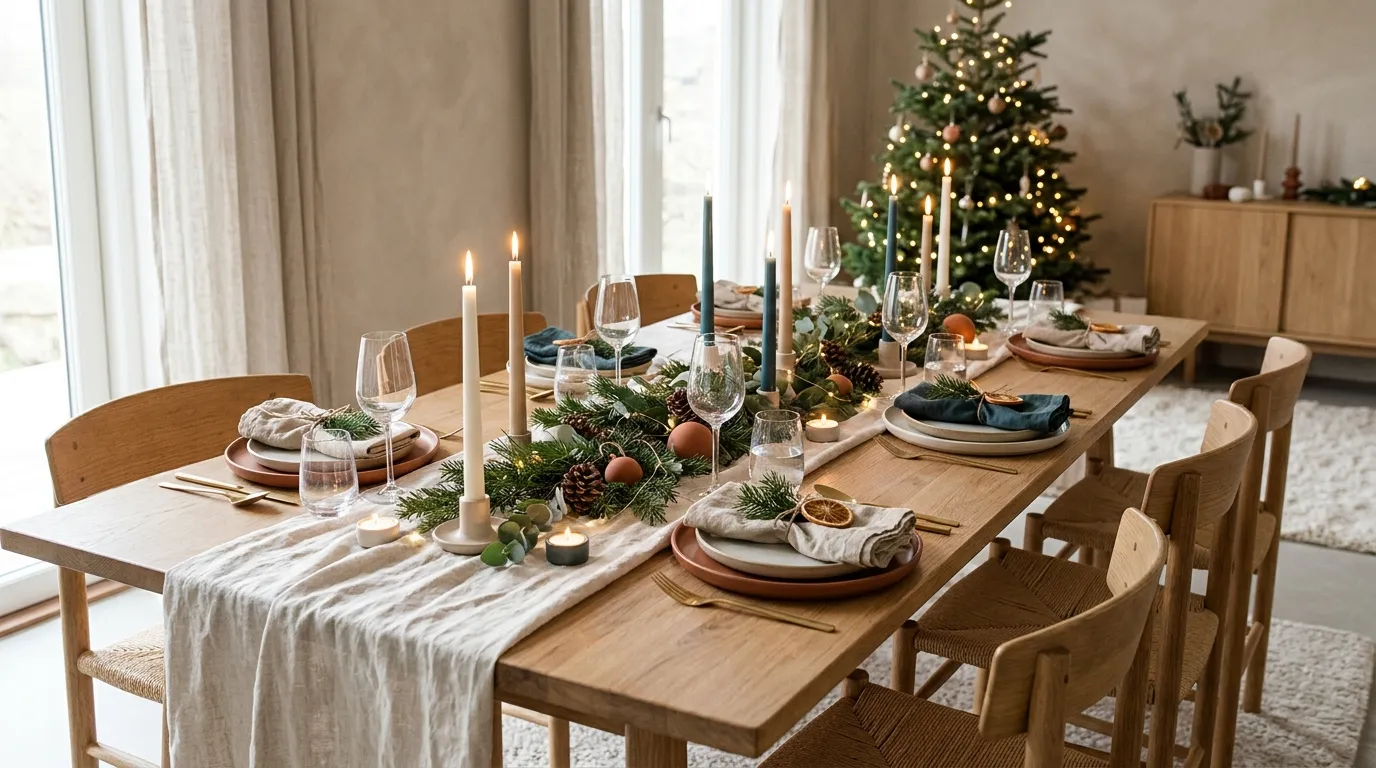
For the table: branches laid straight on the table, rapeseed wax candles, linen napkins and wood-slice place cards.
For windows and walls: baking-paper stars, a branch wall tree, a garland of dried oranges.
For the wreath: a straw or willow base and fresh greenery from the garden or market – compost it after the holidays and keep the base.
For gifts: furoshiki cloths, kraft paper, ribbons from fabric scraps. How to do it: sustainable gift wrapping.
The tree
The most sustainable option is debated. Roughly speaking:
- A local organic tree is a good choice – no pesticides, short transport, then compost or mulch.
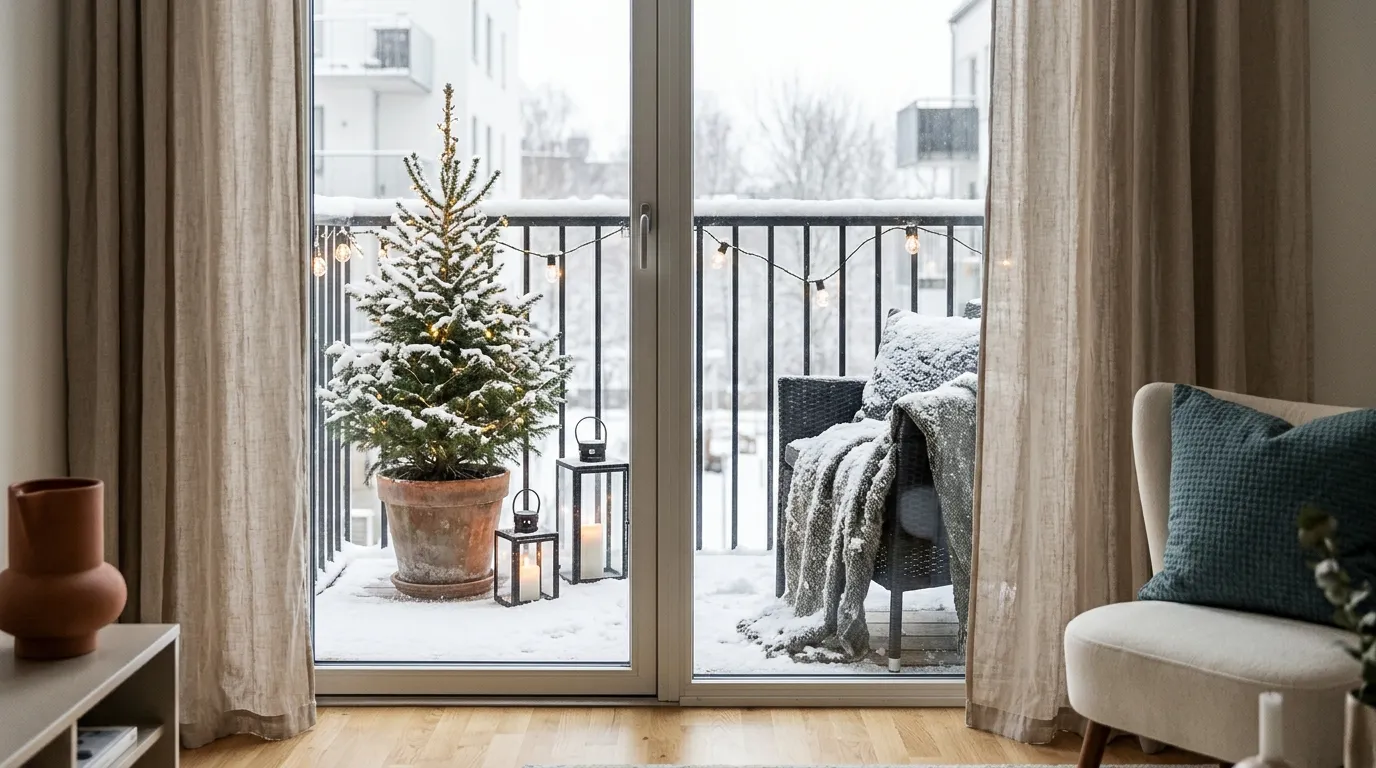
- A potted tree can go on the balcony or in the garden after the holidays – but only survives if it's slowly acclimatised to warmth and cold.
- An artificial tree only pays off ecologically after around ten to twenty years of use.
- A branch alternative is the most economical solution – ideas in Christmas tree alternatives.
When buying
- Quality over quantity: a few special pieces each year.
- Look for labels: FSC for wood, organic labels for trees, GOTS for textiles.
- Local and handmade: Christmas markets, small shops, crafts.
- Repair rather than discard: fairy lights can often be repaired, ornaments rethreaded.
After the holidays
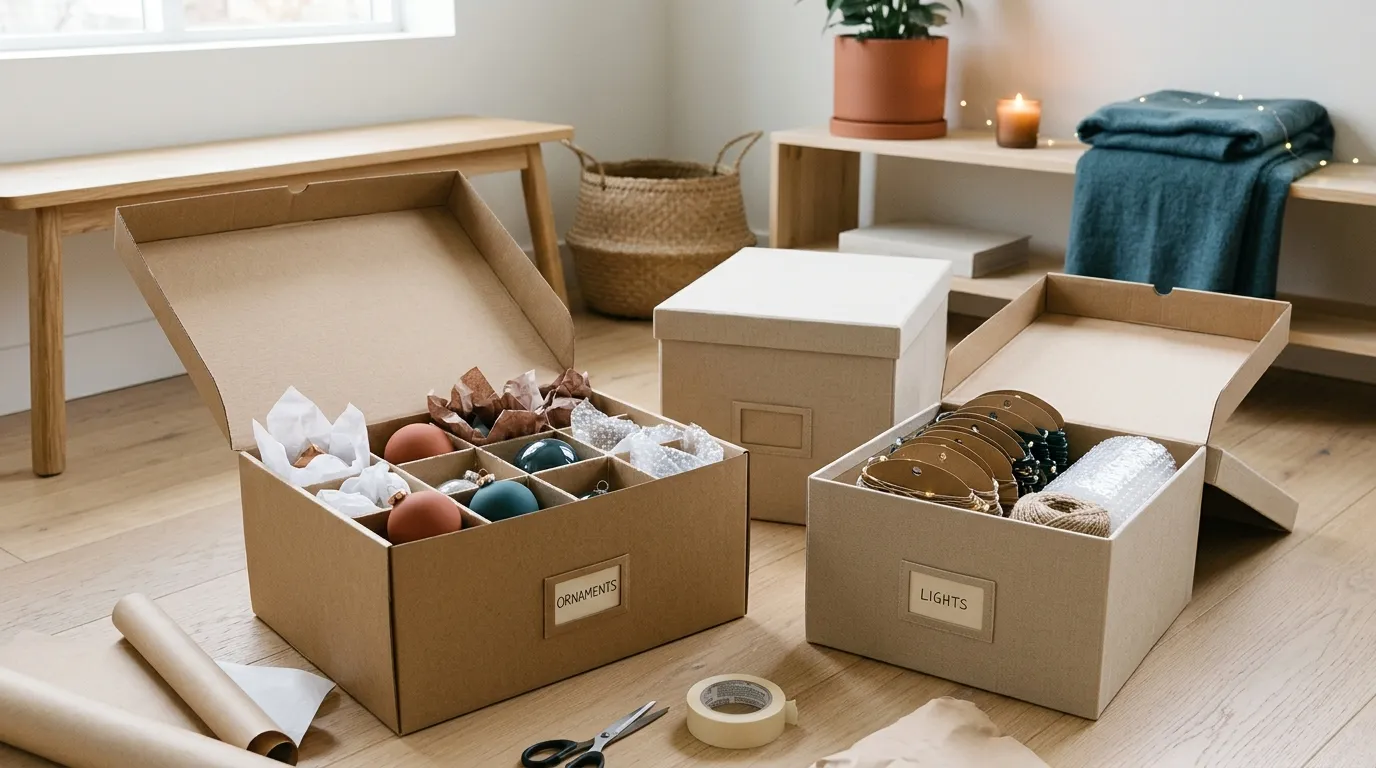
Good storage is sustainability: if you pack your decorations carefully, you'll enjoy them for years. Tips in storing Christmas decorations. And what to look for when furnishing in general: eco labels for furniture.