Room Divider Ideas: Create Zones Without Walls
Open-plan layouts, studio flats, a workspace in the living room or a shared children's room: often there are no walls where you'd like them. Room dividers create zones without building work – and many can be removed again, making them ideal for rented homes. Here are the best solutions and their strengths.
Why zones matter
A room without zones often feels restless: sleeping, working, eating and relaxing blur together. Zones help your mind switch off – the bed is no longer right next to the desk, the sofa isn't in the middle of the dining area. At the same time, the room should stay open and bright. Room dividers are the compromise.
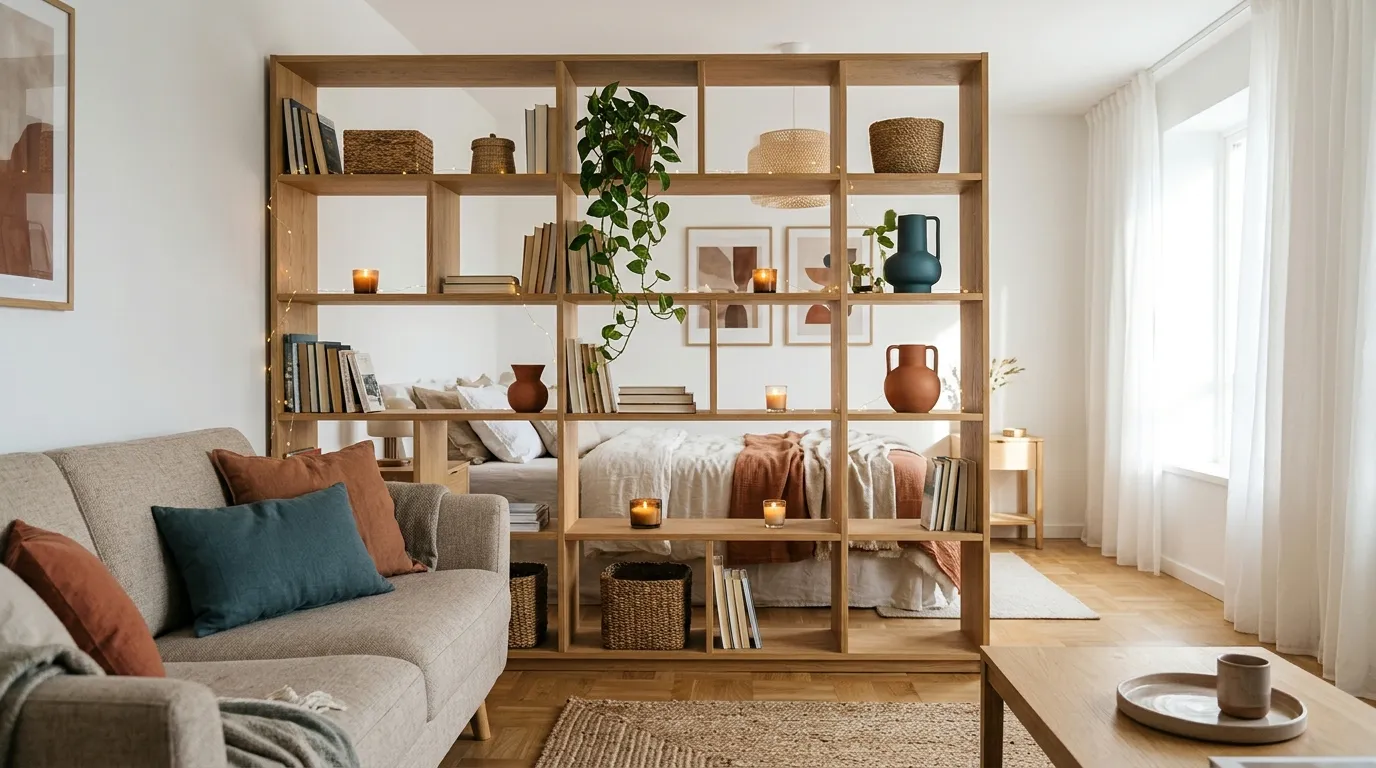
Open shelving
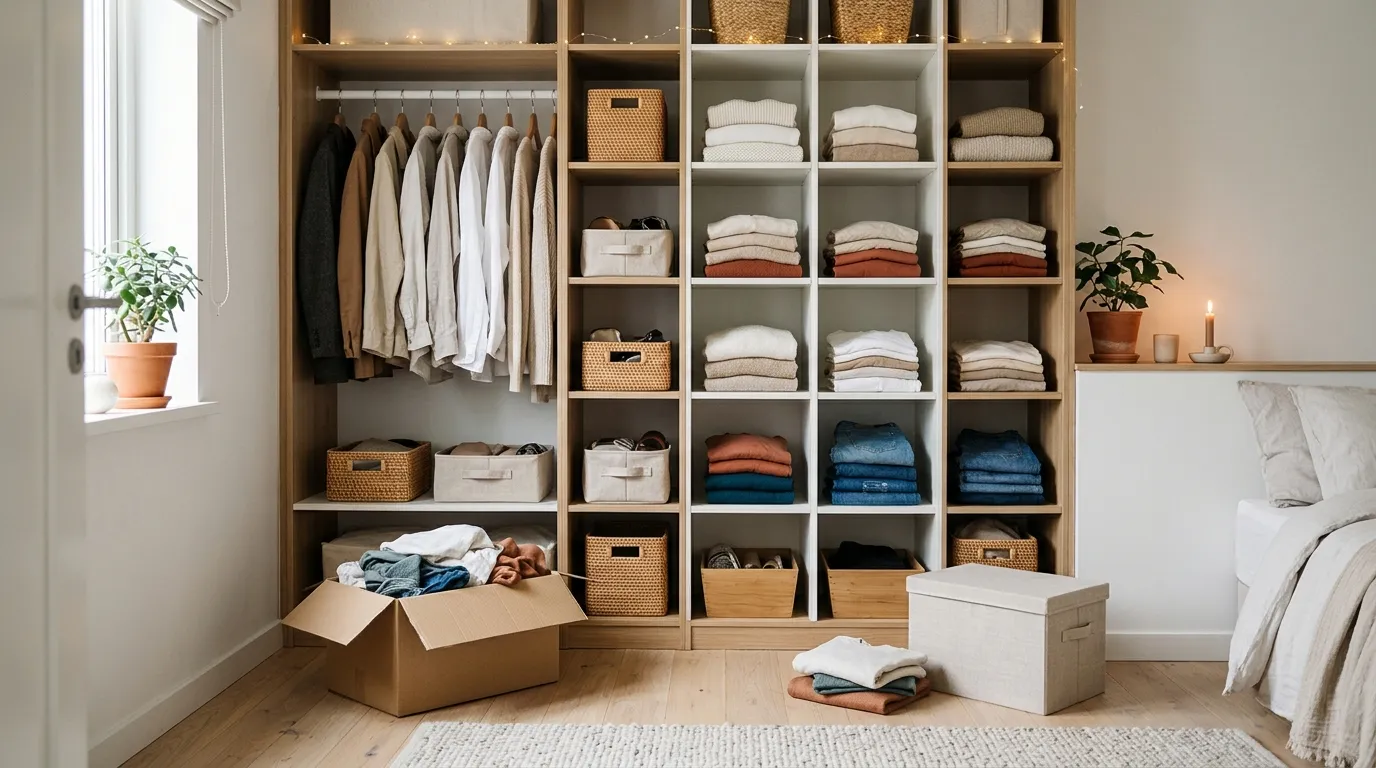
An open shelf is the classic room divider:
- It separates without closing off: light and views pass through.
- It creates storage – usable from both sides.
- It can be decorated with books, plants and baskets.
Shelves without a back panel, such as cube shelves, work well. Important: secure freestanding shelves to the ceiling or floor so they can't tip. A lighter version is a half-height shelf (about 1 metre) that structures the room without blocking the view.
Curtains
Curtains are the most flexible solution:
- A ceiling track with a floor-length linen or voile curtain separates, for example, the sleeping area.
- Open by day, closed at night – the room stays big and bright.
- Light fabrics let light through; heavy fabrics like velvet also dampen noise.
Ceiling tracks can be fitted with a few screws and removed again. There are also tension systems without drilling.
Plants
A row of large plants is a living room divider:
- Tall plants like banana plant, bird of paradise, monstera or bamboo in large pots.
- A plant shelf with lots of small pots.
- Trailing plants hanging from a rail on the ceiling.
Plants also improve the room climate. Downside: they need light and care.
Rugs and light
Sometimes no physical separation is needed at all:
- A rug defines a zone – for example one under the sofa for the living area and another under the dining table.
- A pendant light above the dining table marks the eating area.
- Different lighting moods – warm light in the sofa corner, brighter at the desk – separate areas in the evening.
- Furniture as a divider: a sofa with its back to the sleeping area or a sideboard behind the sofa creates a boundary.
Folding screen
A folding screen is quick to set up and put away again:
- In wood, rattan, fabric or paper – to suit your interior style.
- Ideal for temporary separation: when guests stay over or to hide the workspace after hours.
- Folds away compactly.
Glass walls and sliding doors
For permanent solutions, there are industrial-style glass walls with black frames, or sliding doors. They separate acoustically but let light through. In rented flats you'll need the landlord's permission – but there are also systems that clamp between floor and ceiling.
Which solution suits you?
- Studio flat, separating the bed: curtain or shelf.
- Home office in the living room: folding screen or shelf.
- Shared children's room: shelf or curtain.
- Open kitchen: rug, lighting, sideboard.
More on studio flats: separating living and sleeping areas in style.