
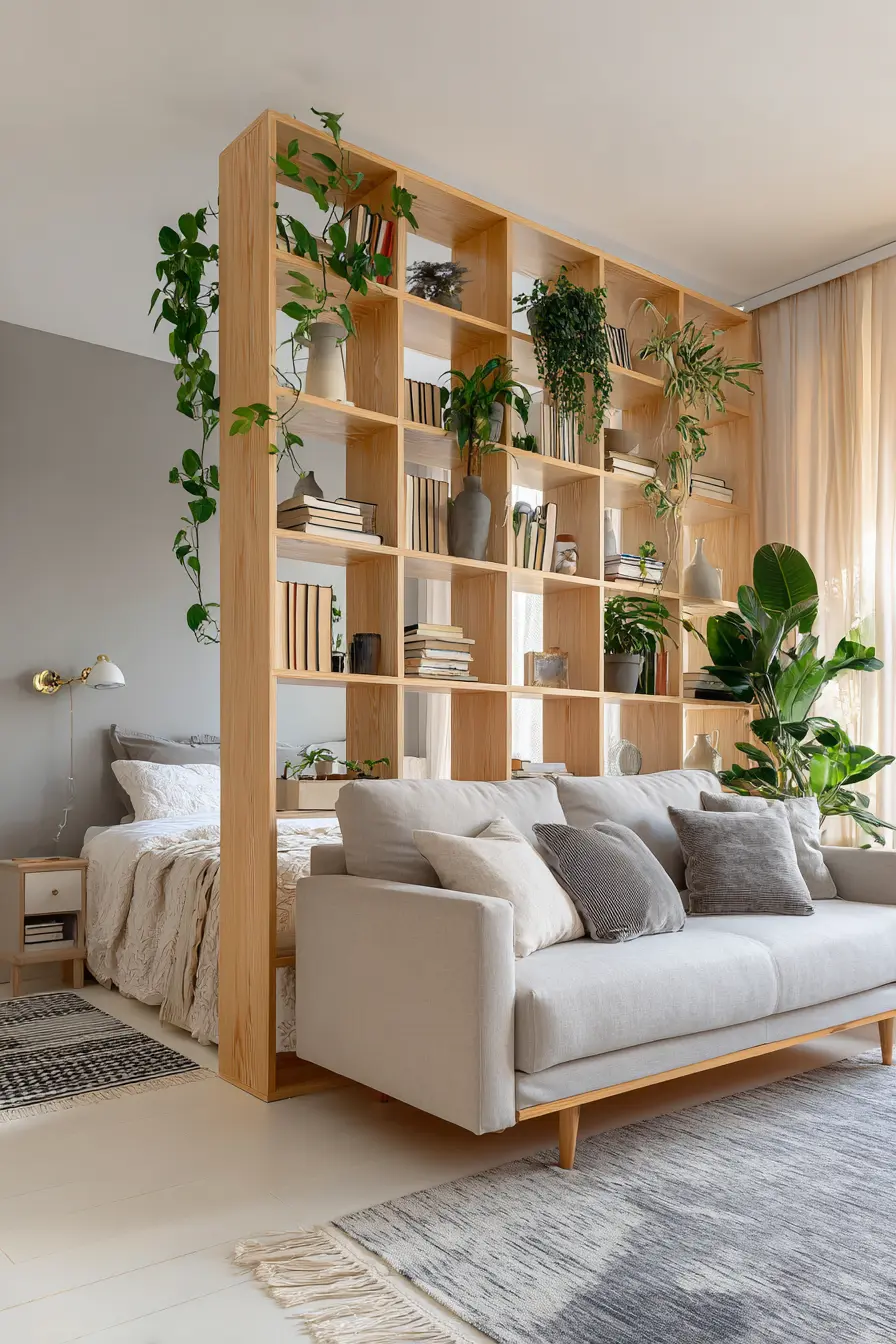
The Challenge of Studio Living: One Room, Many Functions
Living in a one-bedroom apartment, often referred to as a studio, is no longer just a compromise in modern metropolises; it is an expression of an urban lifestyle. However, the greatest challenge remains: how do you establish a clear structure on a limited number of square meters without the ambiance feeling cluttered? One room must simultaneously function as a bedroom, living room, home office, and often a dining area. The psychological importance of spatial separation should not be underestimated. Anyone looking directly from their desk to their bed or constantly seeing unfinished laundry in the sleeping area during a movie night will find it harder to relax. In this comprehensive guide, you will learn how to separate your living and sleeping areas using creative solutions, clever planning, and stylish elements to create a harmonious unit.

Strategic Space Planning: The First Step to the Perfect Layout
Before you move furniture or buy room dividers, you need to analyze the floor plan. Pay attention to the light, the position of radiators and sockets, and the walking paths. Zoning is the magic word. Consider which area needs the most natural light. Usually, this is the living or working area, while the sleeping nook can be a bit darker and more protected.
Visual Zoning Through Colors and Materials
Separation does not always have to be physical. Often, an optical demarcation is enough to signal to the brain: a new area begins here. Use different wall colors or wallpapers. A soft sage green or a calming dark blue behind the bed clearly sets this area apart from the mostly neutral living area. The use of textiles also plays a role. A generous rug in the living room defines the “island” of relaxation, while another flooring or a smaller runner lies under the bed.
Classic Room Dividers: Functionality Meets Design
Room dividers are the most popular method for creating privacy. There are solutions for every budget and every style.
Shelving as Open Partitions
Open shelving systems (like the classic IKEA Kallax or high-quality solid wood modular systems) offer the advantage of letting light through while providing storage space for books, plants, and decorative objects. Be careful not to overstuff the shelf so that the lightness is maintained. Tip: Use baskets in the lower compartments for small items and keep the upper compartments more airy.
Screens and Folding Walls
The screen is a timeless classic. It is mobile, flexible, and available in countless designs – from Viennese cane to Japanese rice paper to modern velvet. A screen is ideal if you only need the separation temporarily, such as when guests visit.
Curtains for Textile Coziness
One of the most cost-effective and effective methods is installing ceiling tracks for curtains. Heavy velvet curtains look luxurious and also absorb sound, which improves sleep quality. Light linen or voile curtains, on the other hand, look airy and allow natural light to diffuse gently into the sleeping nook.
Innovative Furniture Placement
Sometimes the furniture itself is the best room divider. Instead of placing all the furniture against the wall, move it into the room.
The Sofa as a Barrier
Place your sofa with its back to the bed. This creates a clear physical boundary. If the back of the sofa is not particularly attractive, you can place a flat sideboard or a console behind it. This provides additional space for lamps or books.
Sideboards and Chests of Drawers
Low pieces of furniture separate the room without restricting the line of sight. This makes the apartment feel larger. A sideboard can simultaneously serve as a TV bench for the living area, while the back discreetly shields the sleeping area.
Structural and Permanent Solutions
If you are the owner or the landlord agrees, structural measures can be a huge upgrade.
Industrial-Style Glass Walls
Glass walls with black metal struts are currently extremely trendy. They separate the room acoustically and in terms of smell (if the kitchen is close), but let 100% of the light through. For the necessary intimacy in the bedroom, additional internal curtains can be attached.

Platforms: Vertical Separation
A platform for the bed creates a new level. The area under the platform can also be used as huge storage space in the form of drawers. Due to the height difference, the sleeping nook is perceived as an independent “room within a room.”
Lighting Concepts for Different Zones
Light is crucial for the atmosphere. Avoid a single, bright ceiling light. Instead, rely on layered lighting:
- Living area: A combination of floor lamps for indirect light and accent lighting for pictures or shelves.
- Sleeping area: Warm white, dimmable light. Bedside lamps with shades that diffuse the light softly.
- Working area: A focused desk lamp with cooler light to promote concentration.
Psychological Aspects and Order
In a one-bedroom apartment, clutter is the greatest enemy of aesthetics. An unmade bed affects the entire sense of space. Invest in high-quality bedspreads and pillows to transform the bed into a decorative element during the day. Use closed storage space to create visual calm.
Summary
Designing a one-bedroom apartment requires creativity and discipline. Whether through physical barriers like shelves and curtains or through optical tricks like colors and light – the goal is a clear structuring that meets your individual needs. A well-separated living and sleeping area not only increases living comfort but also the quality of life in everyday urban life.
Frequently Asked Questions
How do I maintain natural light in a dark studio apartment?
Use transparent materials like glass, cane, or light, thin fabrics. Mirrors opposite windows also help to throw light deep into the room.
What are the most budget-friendly room divider solutions?
Curtains on a ceiling track or a used, open shelf are very budget-friendly. Also, the clever placement of existing furniture (sofa back to the bed) costs nothing at all.
Can I install partitions in a rental apartment?
Permanently anchored walls (drywall) usually need to be approved by the landlord. Mobile solutions like screens, shelves, or tension rods for curtains are always allowed.
How do I create privacy when guests come over?
Opaque curtains or foldable screens are best for this. They make the private sleeping area disappear in no time.
Which furniture pieces are best as room dividers?
Sideboards, open shelves, and sofas are ideal. Even a dining table placed across the room can draw a boundary between the kitchen and living area.
How can I separate visually without losing space?
Work with different wall colors, different rugs, or targeted lighting design. These methods do not take up any physical space.
Does a rug really help with room separation?
Yes, absolutely. A rug acts like a visual anchor. It defines an area as belonging together and sets it apart from the surrounding floor surface.
What is the biggest mistake in room separation?
The most common mistake is to “fragment” the room too much. If too many high and massive room dividers are used, the apartment quickly feels cramped and oppressive. Always pay attention to sightlines.

- Minimalist Kitchen Decor: Less is More for Your Kitchen – 13. January 2026
- Modern Kitchen Decor: 7 Stylish Ideas for Your Kitchen – 12. January 2026
- Living Room Decor for Rental Apartments: Creative and Stylish Ideas – 7. January 2026

0 Comments