The Challenge: The Narrow Hallway as Your Home’s Business Card
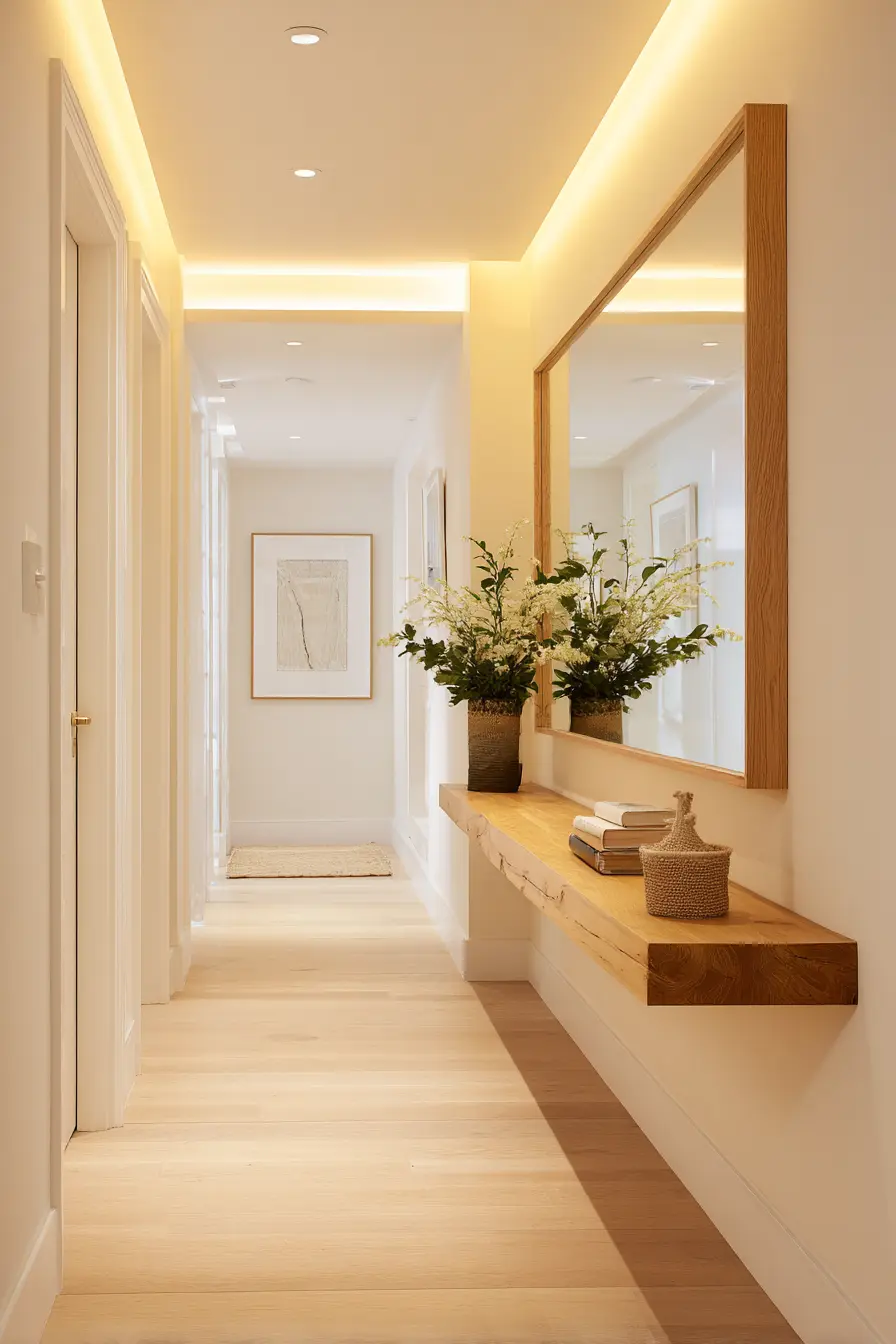
The hallway is the first room we step into when we come home and the last one we leave. It serves as our home’s calling card and sets the tone for the entire living experience. However, architectural design often presents us with a challenge: a long, narrow “corridor” that feels dark and cramped. In this comprehensive guide, you will learn how to transform your narrow hallway into a welcoming transition area using targeted design choices, optical illusions, and functional furniture.
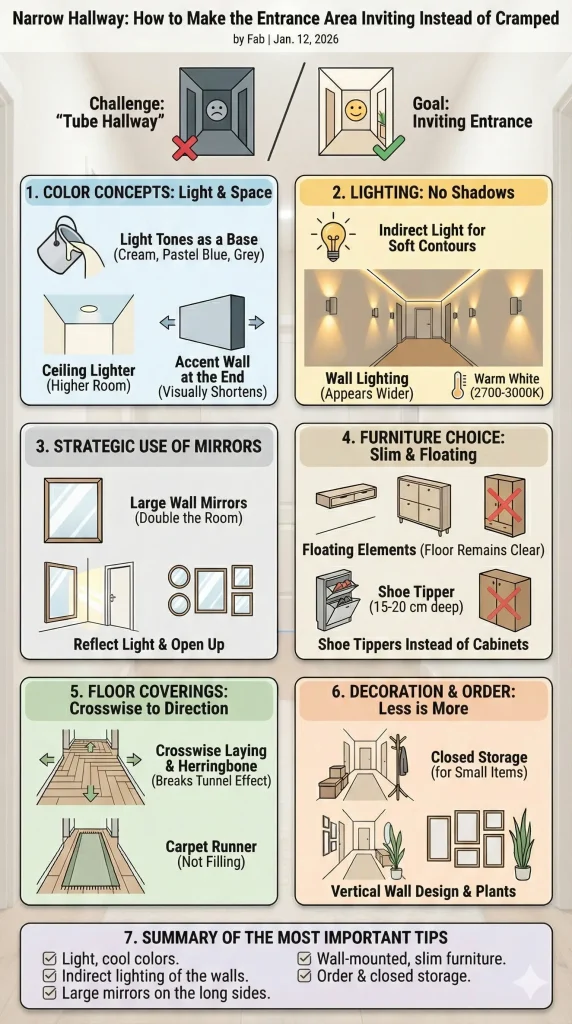
1. Color Concepts: Creating Light and Space
Colors have a massive impact on human perception of room size. In cramped spaces, the primary goal is to make the walls visually “recede.”
Light Tones as a Foundation
It’s no secret: light colors reflect more light. While white is the classic choice, it can sometimes feel sterile. Instead, opt for nuances such as:
- Off-White or Cream: Feels warmer and more inviting.
- Pastel Blue or Cool Gray: Cool colors visually recede into the background, making the room appear wider.
- Soft Sage Green: Adds a touch of nature without being overwhelming.
Involving the Ceiling
An often underestimated technique is ceiling design. Painting the ceiling in an even lighter shade of white than the walls makes the room feel taller. In contrast, for extremely high ceilings in old buildings, it can be useful to paint the ceiling a shade darker or wrap the wall color slightly onto the ceiling to mitigate the “shaft effect.”
Accent Walls at the End
A long hallway often feels endless. To visually shorten it and add interest, you can paint the end wall (the narrow wall at the far end) in a bolder or darker color. This draws the eye inward and makes the hallway feel less like a tunnel.
2. Lighting: Giving Shadows No Chance
Narrow hallways usually lack windows. Therefore, thoughtful lighting is essential to eliminate the feeling of confinement.
Indirect Light for Soft Contours
Harsh shadows make rooms look smaller. Instead, rely on indirect light. LED strips behind a ceiling cove or behind a wall mirror allow the walls to glow softly and add depth to the space.
Combining Multiple Light Sources
Don’t rely on a single ceiling light. Use a track system or several wall sconces to distribute light evenly. Important: Aim spotlights at the longitudinal walls, not the floor. When the walls are illuminated, the space feels wider.
Consider Light Temperature
Choose bulbs with a warm white color temperature (approx. 2700 to 3000 Kelvin). This creates a cozy atmosphere that invites people to enter.
3. Strategic Use of Mirrors
Mirrors are the most powerful tool in an interior designer’s repertoire when it comes to small spaces. They visually double the room and reflect existing light.
- Large Wall Mirrors: A large mirror on one of the long walls immediately makes the hallway look twice as wide.
- Opposite Placement: Placing a mirror opposite a door or a light source maximizes the brightness effect.
- Mirror Galleries: Several small mirrors in different frames can act like artwork while opening up the space.
4. Furniture Choice: Slim, Floating, and Functional
In a narrow hallway, every centimeter counts. Massive cabinets are out of place here.
Floating Elements
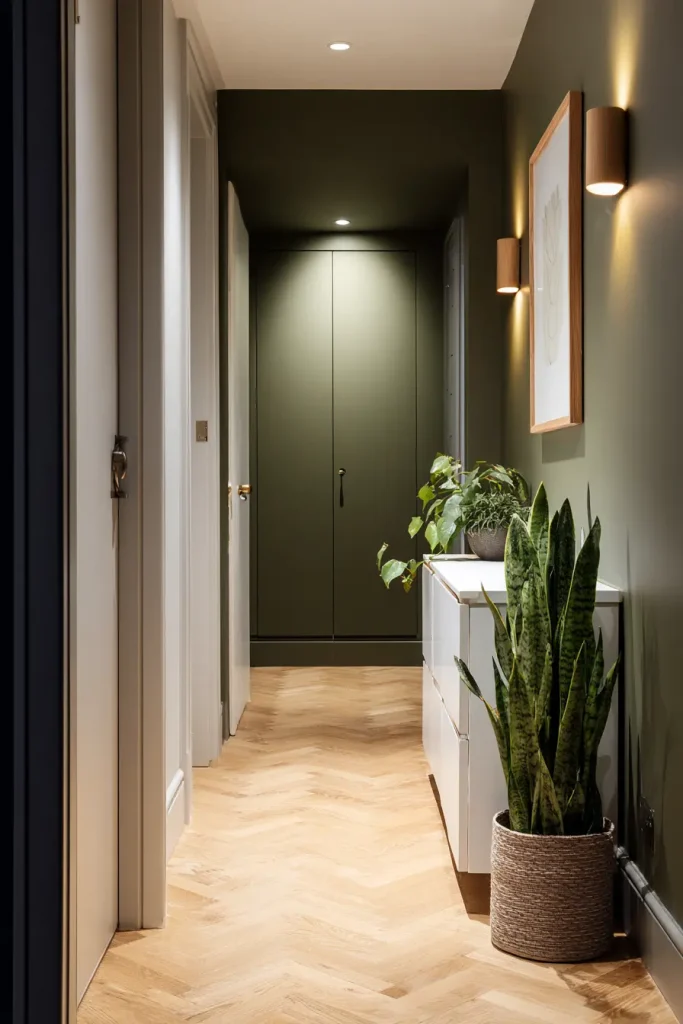
Wall-mounted furniture that doesn’t touch the floor leaves the floor area clear. The more floor you see, the larger the room appears. Use floating sideboards or simple wall shelves for keys and mail.
Shoe Tilters Instead of Cabinets
Classic shoe cabinets are often 40 cm deep or more. Shoe tilters, however, use height and are often only 15 to 20 cm deep—ideal for narrow passages.
Multifunctional Wardrobes
Instead of a bulky wardrobe, opt for delicate hook racks. Be careful not to overload the coat rack. Too many hanging jackets create visual clutter and a sense of tightness.
5. Flooring: Direction Matters
How you lay the flooring massively influences the perception of depth.
Laying Patterns
When laying parquet, laminate, or tiles, the planks should lie perpendicular to the direction of travel. This breaks the tunnel look and makes the hallway appear wider. A herringbone pattern is also ideal as it guides the eye diagonally.
Smart Use of Runner Rugs
A runner rug adds color and coziness. Make sure the runner doesn’t fill the entire hallway. A strip of the flooring should remain visible at the edges to avoid “stopping” the space visually.
6. Decoration and Order: Less is More
A cluttered hallway always looks smaller than it is. Organization is key.
- Closed Storage: Small items like gloves or scarves should disappear into boxes or drawers.
- Vertical Wall Design: Use the height. Picture galleries should be placed at eye level or slightly above. Use consistent frame colors to avoid visual noise.
- Plants: A narrow, tall plant (like a snake plant) in a corner brings life to the room without taking up much space.
7. Summary of Key Tips
- Use light, cool colors for the walls.
- Focus on indirect lighting and illuminate the walls.
- Use large mirrors on the long sides.
- Choose wall-mounted, slim furniture (shoe tilters, console tables).
- Avoid clutter through closed storage systems.
Frequently Asked Questions
What wall color is best for a dark, narrow hallway?
Light tones like cream white, pastel gray, or a very light ice blue are ideal. These colors reflect artificial light optimally and make the walls appear to recede.
How can I make a windowless hallway brighter?
Combine different light sources: bright ambient lighting on the ceiling, supplemented by indirect light (e.g., LED strips) and wall lamps. Mirrors also help guide available light into every corner.
Are dark floors a no-go in a narrow hallway?
Not necessarily, but they require lighter walls and excellent lighting. A dark floor can provide grounding but should be broken up by a light-colored runner rug.
How much furniture can a narrow hallway handle?
Generally: as little as possible, as much as necessary. A narrow console table and a delicate coat rack are often enough. Ensure the walkway remains at least 80-90 cm wide.
What can be done about the “tunnel effect”?
Paint the end wall of the hallway in a darker accent color or hang a striking piece of art there. This visually shortens the room. Flooring laid crosswise also helps.
Do vertical stripes on the wall help?
Vertical stripes make the room look taller, which is good for low ceilings. To make the hallway look wider, horizontal elements or a horizontally emphasized wall design (e.g., two-tone walls) are more effective.

- Minimalist Kitchen Decor: Less is More for Your Kitchen – 13. January 2026
- Modern Kitchen Decor: 7 Stylish Ideas for Your Kitchen – 12. January 2026
- Living Room Decor for Rental Apartments: Creative and Stylish Ideas – 7. January 2026

0 Comments