Introduction: The Magic of Reflection
Mirrors are far more than just functional objects for checking your appearance. In the world of interior design, they are considered the ultimate tool for breaking architectural boundaries. A strategically placed mirror can fundamentally change the perception of a room: it can brighten dark corners, widen narrow hallways, and visually double the size of small rooms. In this comprehensive guide, you will learn everything about the art of mirror placement.

The Basic Principles of Visual Expansion
Before we dive into specific rooms, we need to understand why mirrors work. It comes down to two main factors: light reflection and depth perception.
Light as a Space Creator
Mirrors bounce both natural and artificial light back into the room. A bright room automatically feels larger and more inviting. By placing a mirror opposite a light source, you maximize the light output without having to install additional lamps.
The Illusion of Depth
Our brain interprets the reflection in a mirror as a continuation of the room. This effect becomes particularly strong when the mirror covers large areas or extends strategically important lines of sight. It creates the feeling that you can “see through the wall.”
Strategic Placement by Room Type
1. The Hallway: Widening Narrow Passages
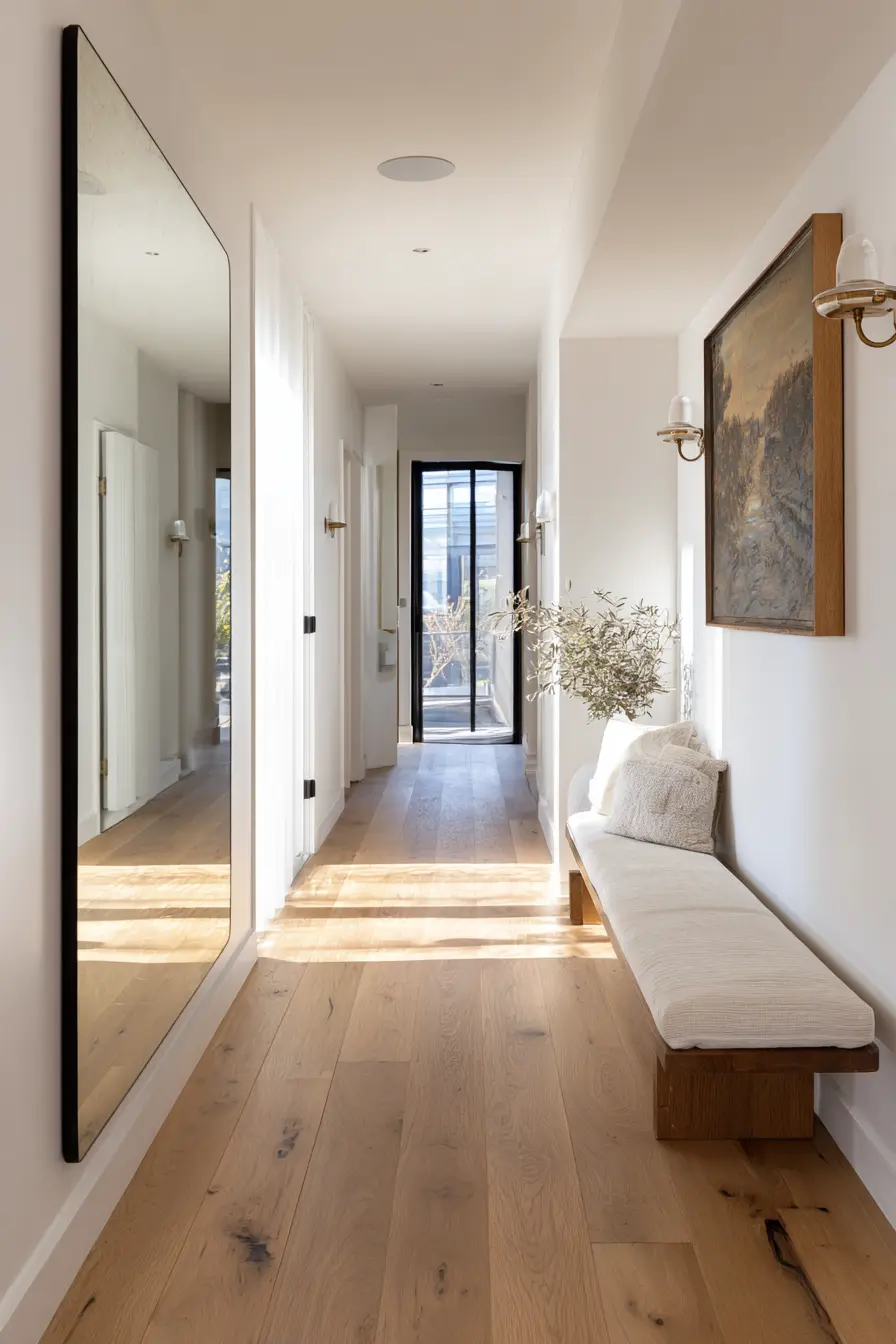
Hallways are often narrow, windowless, and can feel cramped. Here, mirrors can work wonders:
- Use the Long Sides: A large mirror on one of the long walls makes the hallway appear wider.
- End of the Tunnel: A mirror at the end of a long hallway can make it seem endless, though this can sometimes be disorienting. Lateral placement is usually better.
- Full-Length Mirrors: These are not only practical in the hallway but also open up the space from floor to ceiling.

2. The Living Room: Creating Space and Focus
In the living room, you have the most creative freedom. Here, mirrors often serve as statement pieces.
- Opposite Windows: This is the most important tip. A mirror opposite a window brings the garden or city view indoors and acts like a second window.
- Above the Fireplace: A classic move. It adds symmetry to the room and reflects ceiling lighting, emphasizing room height.
- Behind the Sofa: A large horizontal mirror behind the sofa can visually “push back” the wall.

3. The Dining Room: Festivity and Abundance
In many cultures, a mirror in the dining room is considered a symbol of good luck because it doubles the food on the table, symbolizing prosperity.
- Reflecting the Table: Position the mirror so it shows the set table and the guests. This creates a lively, dynamic atmosphere.
- Sideboard Combination: A mirror above a sideboard is an elegant solution that adds depth without dominating the room.
4. The Bedroom: Calm and Spaciousness
Caution is advised in the bedroom, as too many reflections can disturb the sense of peace.
- Wardrobe Doors: Mirrored wardrobes are the most effective way to make a small bedroom feel twice as large.
- Beside the Bed: Mirrors above bedside tables give the room a luxury hotel aesthetic and added depth.
- Avoid Direct View from the Bed: Many people find it unsettling to see themselves in the mirror directly from the bed (also a key aspect of Feng Shui).
Pro Tricks for Maximum Impact
Window Mimicry
Use mirrors with window-pane frames. These look like real windows and trick the eye into seeing an opening in the wall where there is actually just solid masonry. This is especially effective in basement apartments or windowless rooms.
Using Mirror Walls Correctly
Mirroring an entire wall might sound like an 80s throwback, but in modern design, it can be extremely chic. Use tinted glass (e.g., smoked glass or antique mirrors) to make the effect more subtle and luxurious.
The Importance of Frames
A frame defines the style:
- Frameless Mirrors: Look modern, minimalist, and almost invisibly blend into the wall – ideal for maximum spatial expansion.
- Opulent Gold Frames: Act like pieces of art and draw the eye, distracting from the actual room size.
- Wooden Frames: Bring warmth and nature into the space.
Common Mistakes in Mirror Placement
- Reflecting Clutter: A mirror doubles everything – unfortunately, including chaos. Pay attention to what is located opposite the mirror.
- Hanging Too High: A mirror should be hung at eye level (approx. 145-155 cm from the floor to the center of the mirror). Mirrors that are too high often only reflect the ceiling or the tops of cabinets.
- Wrong Size: A mirror that is too small on a large wall looks lost and achieves no expansion effect. When in doubt, always choose the larger version.
Summary
Mirrors are the secret weapon of interior design. By strategically placing them opposite light sources, using window-style designs, and considering lines of sight, you can transform even the smallest apartments into bright, airy oases. Experiment with positions before you start drilling – often a few centimeters make the decisive difference in how a room feels.
Where should I place a mirror in a hallway?
Ideally on one of the long walls to visually stretch the width of the hallway. A full-length mirror near the door is also functionally ideal.
Can I hang a mirror opposite a window?
Yes, this is highly recommended! It reflects natural light and the view, making the room feel brighter and more open.
How large should a mirror be to enlarge a room?
To achieve a noticeable effect, the mirror should take up at least two-thirds of the wall space or the piece of furniture it hangs above.
Are mirrors in the bedroom good according to Feng Shui?
According to Feng Shui, mirrors in the bedroom should not hang directly opposite the bed, as they can reflect energy and disturb sleep. Placed to the side, however, they are perfectly fine.
At what height should a mirror be hung?
The center of the mirror should be roughly at eye level, which on average is between 150 cm and 160 cm above the floor.
How do I clean large mirror surfaces without streaks?
Use a microfiber cloth and warm water with a splash of vinegar or a specialized glass cleaner. Wipe in circular motions and polish with a dry cloth afterward.

- Minimalist Kitchen Decor: Less is More for Your Kitchen – 13. January 2026
- Modern Kitchen Decor: 7 Stylish Ideas for Your Kitchen – 12. January 2026
- Living Room Decor for Rental Apartments: Creative and Stylish Ideas – 7. January 2026
0 Comments