The Fascination of Sloped Ceilings: Challenge and Opportunity
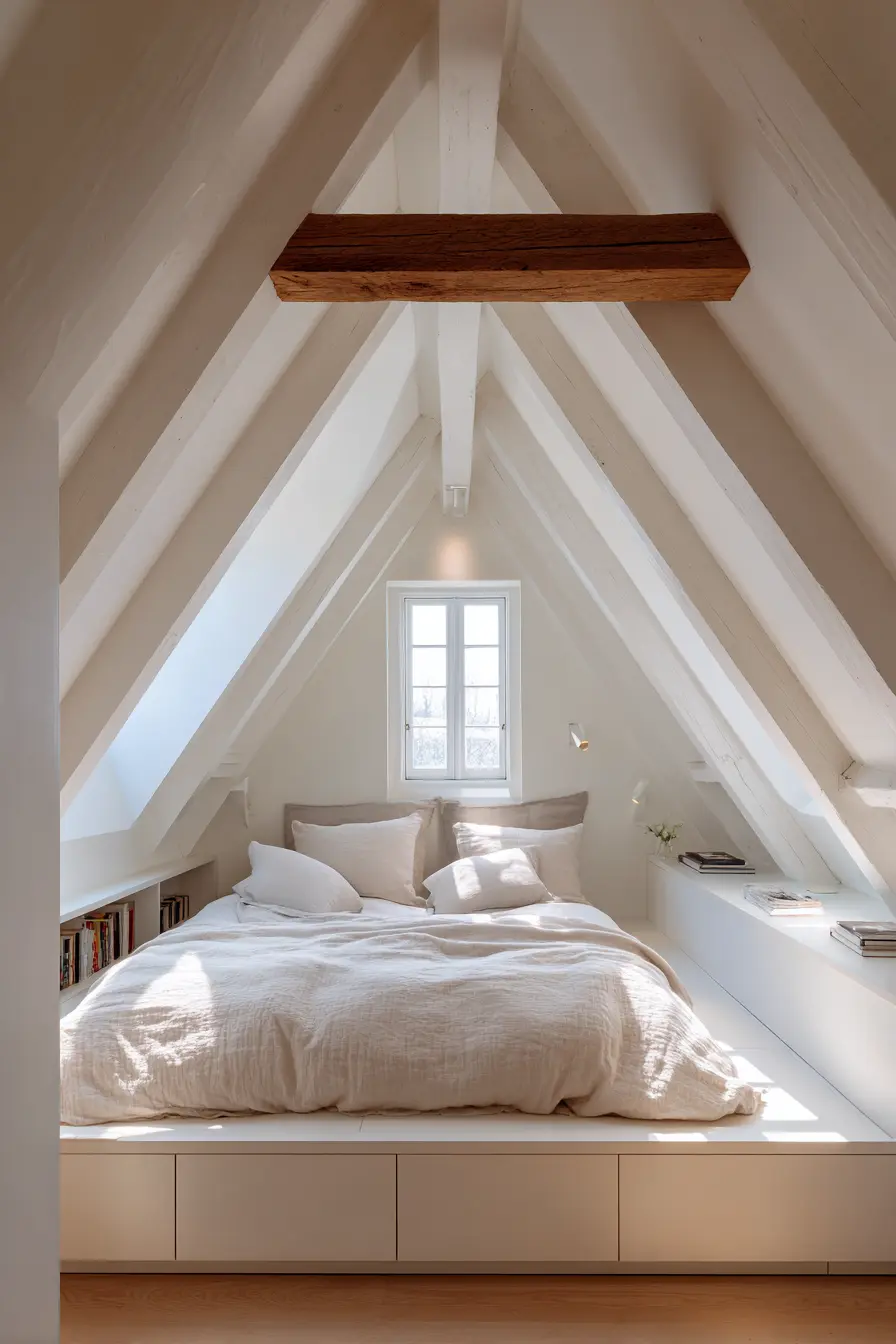
Living under the roof has a very special appeal. Cozy niches, wide views over the rooftops, and a sense of seclusion from street noise make attic apartments highly sought-after retreats. However, as charming as the architecture may be, it presents residents with significant interior design challenges. Standard furniture often doesn’t fit, the space can quickly feel cramped, and valuable square footage seems lost due to low ceiling heights. In this comprehensive guide, you will learn how to exploit the full potential of your attic apartment, create visual width, and make sensible use of every difficult angle.

The Basics: Measuring Correcty and Understanding the Space
Before you buy new furniture or pick up a paintbrush, a precise assessment is essential. With sloped ceilings, every inch counts. Two terms are particularly important: the knee wall (also called a dwarf wall) and the angle of inclination.
Measuring the Knee Wall
The knee wall is the vertical wall upon which the roof structure rests. The higher this wall, the more floor space you have for conventional furniture. Measure the height exactly. A knee wall under 24 inches (60 cm) is usually only suitable for custom sideboards or storage baskets, while a knee wall from 35 inches (90 cm) already offers space for desks or chests of drawers.
Headroom and Freedom of Movement
Mark the areas on the floor where you can stand upright (usually from a room height of 6.5 feet / 2 meters). These zones are your main traffic paths. Areas under 5 feet (1.50 meters) in height should be primarily reserved for seating, beds, or storage.
Color Impact and Lighting Design: Creating Visual Space
Sloped ceilings can visually “crush” a room if designed incorrectly. With the right choice of colors and a well-thought-out lighting concept, you can reverse this effect.
Bright Colors as Space Wonders
The golden rule for small rooms with slopes is: Bright tones dominate. White, cream, light gray, or pastel shades reflect incoming light and blur the boundaries between wall and ceiling. If you paint the slope and the ceiling in the same light tone, the room as a whole appears higher and airier.

Setting Accents
Do you still want to bring color into play? Focus on the gable walls (the straight walls). A bold color on the front side gives the room depth without visually pushing the slope down. However, avoid dark colors directly on the slope unless you are aiming for an extremely cave-like, cozy look.
Clever Placement of Light Sources
A single ceiling light is often insufficient in attic apartments as it casts harsh shadows into the corners. Instead, rely on a multi-level lighting concept:
- Indirect Light: LED strips along the knee wall or behind beams let the slope visually recede.
- Variety of Light Islands: Floor lamps, table lamps, and wall spots distribute light evenly and emphasize coziness.
- Utilize Natural Light: Keep window areas clear. Transparent pleated blinds offer privacy without swallowing valuable natural light.
Furniture for Difficult Angles: Custom Work vs. Creativity
Standard wardrobes are the natural enemy of the sloped ceiling. This is where rethinking is required.

Using Low Furniture
Lowboards, sideboards, and modular shelving systems are ideal. They use the width of the wall under the slope without colliding with the ceiling. Modular systems have the advantage that they can be arranged like stairs, thus adapting to the angle of the slope.
Custom-Made Solutions
A built-in wardrobe that is exactly fitted into the slope offers the maximum amount of storage space. Although the initial cost is higher, it pays off in the long run as no inch is wasted. A cheaper alternative is rolling containers or DIY shelves that you can make visually disappear with sliding doors.
Room-Specific Tips: Living, Sleeping, Working
The Bedroom Under the Slope
Place the bed under the slope to create a secure sleeping cave. However, make sure there is enough headroom when getting up. A low bed frame (futon style) is often the best choice here.
Setting Up the Home Office Efficiently
A desk under the skylight provides perfect working light. Make sure the monitor is placed so that no glare occurs. Use the area under the slope behind the desk for rolling carts with documents.
Common Mistakes to Avoid
- Bulky Furniture: A huge solid wardrobe makes the room look tiny.
- Dark Ceilings: These act like a lid and create an oppressive feeling.
- Cluttering Walls: Keep the floor area in the middle of the room as free as possible to keep the walkways open.
Frequently Asked Questions
What is the best way to paint a sloped ceiling?
Use light colors and paint the slope and the adjacent ceiling in the same tone to avoid hard edges. This makes the room appear larger.
Which curtains are suitable for skylights?
Specially made pleated blinds or roller blinds guided in tracks are ideal. They don’t slip and offer optimal heat and light protection.
Can you hang pictures on slopes?
Yes, it is possible. Use special gallery rails or fastening systems that also fix the picture at the bottom of the wall so it doesn’t tilt away from the slope.
How do I create storage space with a very low knee wall?
Use custom-made pull-outs or boxes on wheels. Low bookshelves that run across the entire width can also provide a lot of storage without visually shrinking the room.
How do I prevent heat buildup in summer?
External heat protection awnings for skylights are most effective as they stop the sun’s rays before they heat the glass. Internal blackout blinds also help.
What lighting makes sense for low ceilings?
Avoid large pendant lights. Instead, use flat ceiling spots, wall washers, or indirect LED lighting to visually stretch the room.

- Minimalist Kitchen Decor: Less is More for Your Kitchen – 13. January 2026
- Modern Kitchen Decor: 7 Stylish Ideas for Your Kitchen – 12. January 2026
- Living Room Decor for Rental Apartments: Creative and Stylish Ideas – 7. January 2026

0 Comments