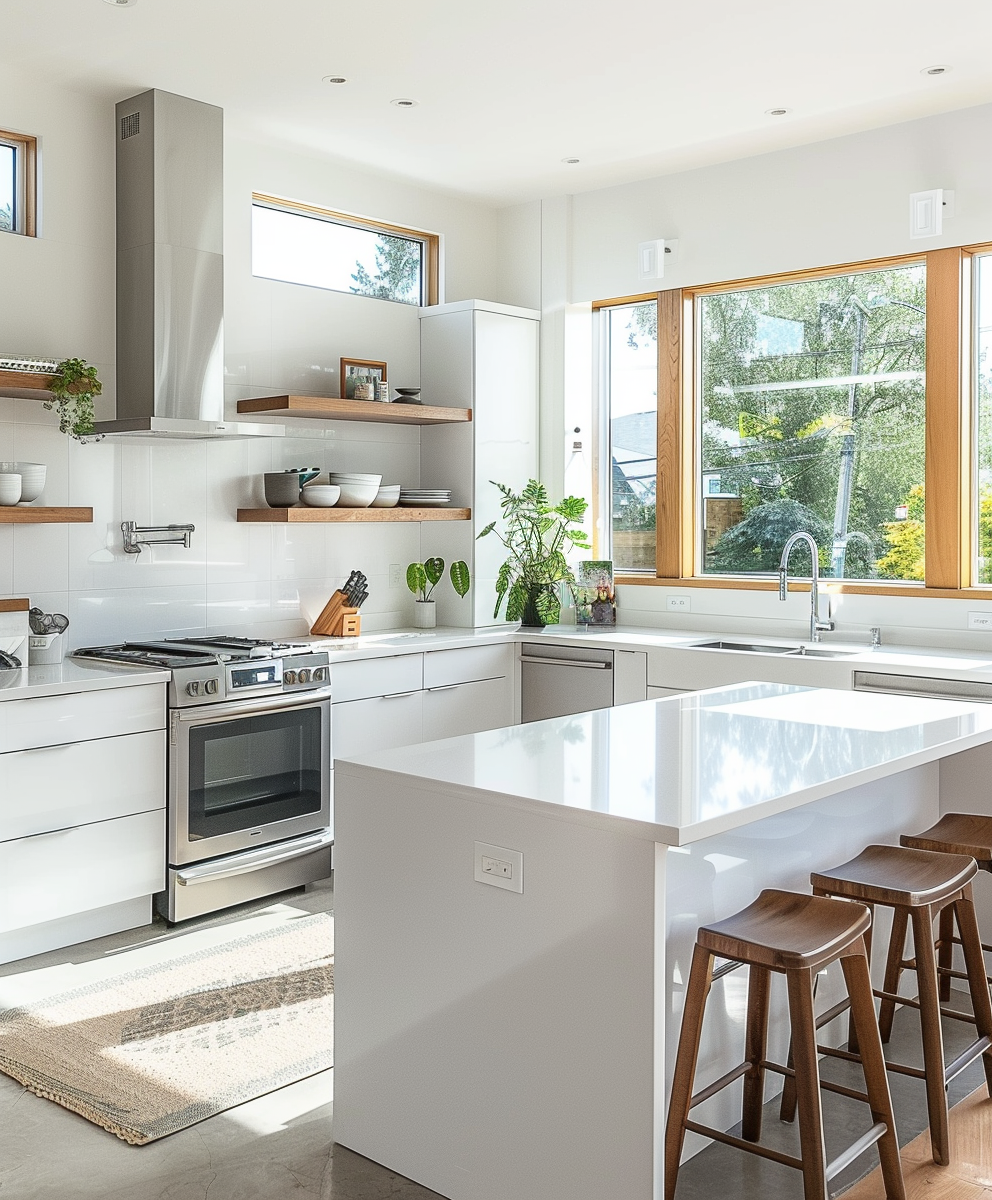
In today’s hectic world, many long for a quiet retreat at home. A minimalist kitchen can offer you exactly that. Through clear lines, few but thoughtful decorative elements, and an orderly arrangement, you create a space that is both functional and aesthetically pleasing. But how do you best implement these principles? Here are some tips and tricks on how to design your kitchen minimalistically yet practically.
Why minimalist kitchen decor?
Minimalist kitchen decor is more than just an interior design trend. It represents a way of life that values simplicity, clarity, and functionality. By reducing to the essentials, you can not only save space but also create a relaxing and inspiring environment. And honestly, who doesn’t want a tidy and stylish kitchen?
The basics of minimalist kitchen design
Color and materials: The basis of minimalist kitchen decor
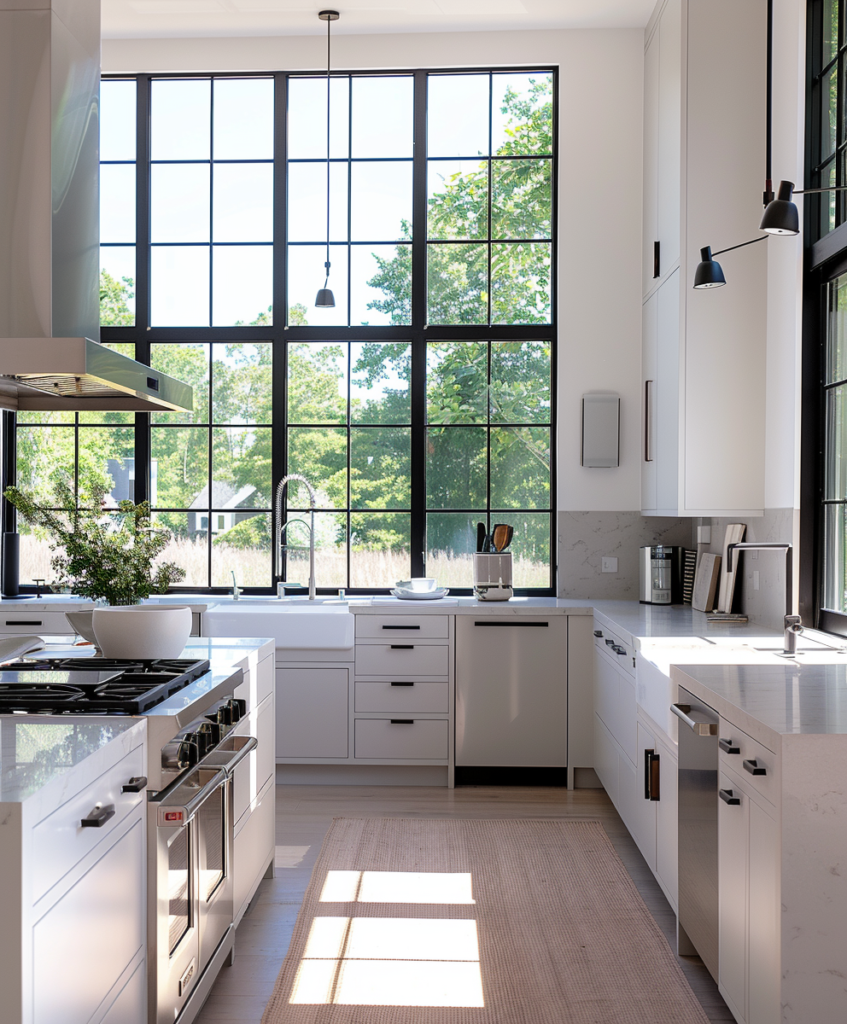
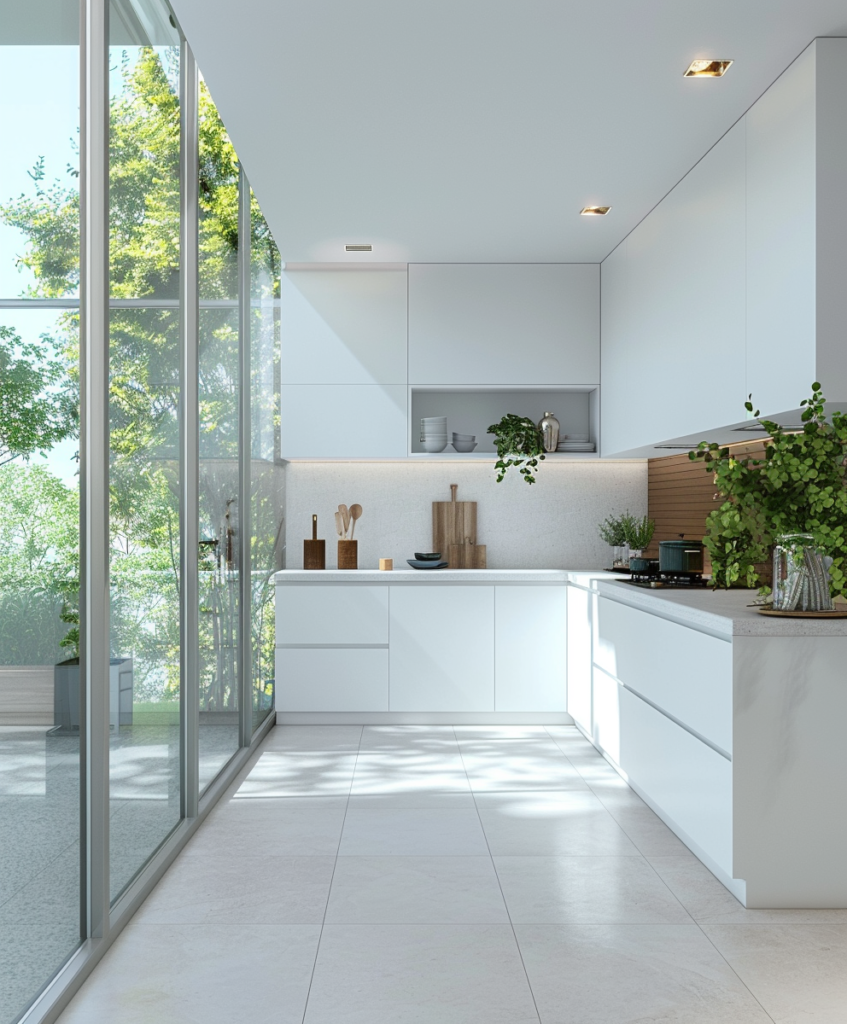
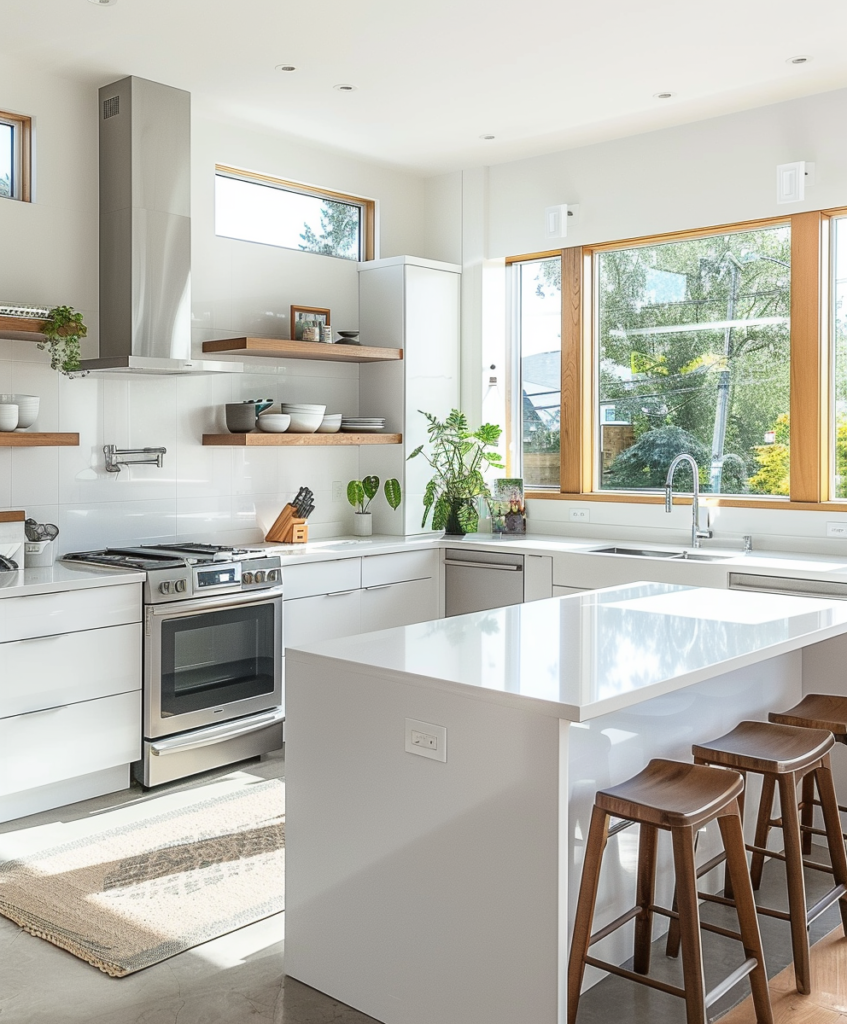
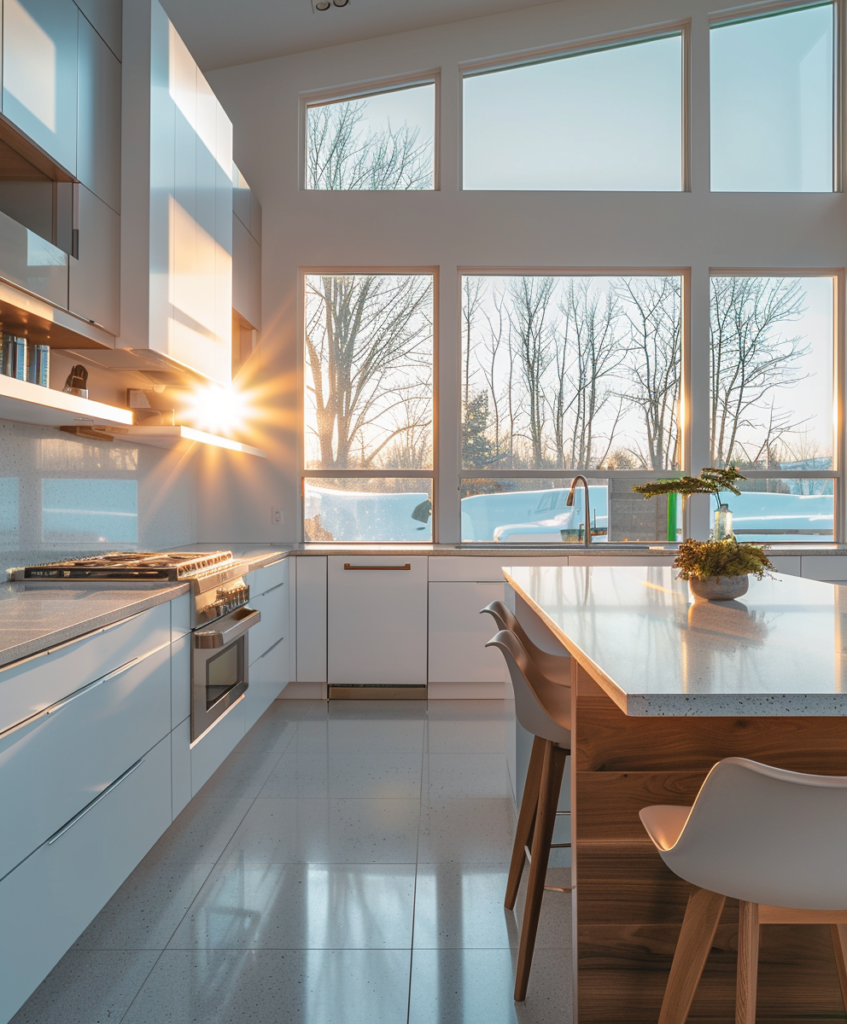
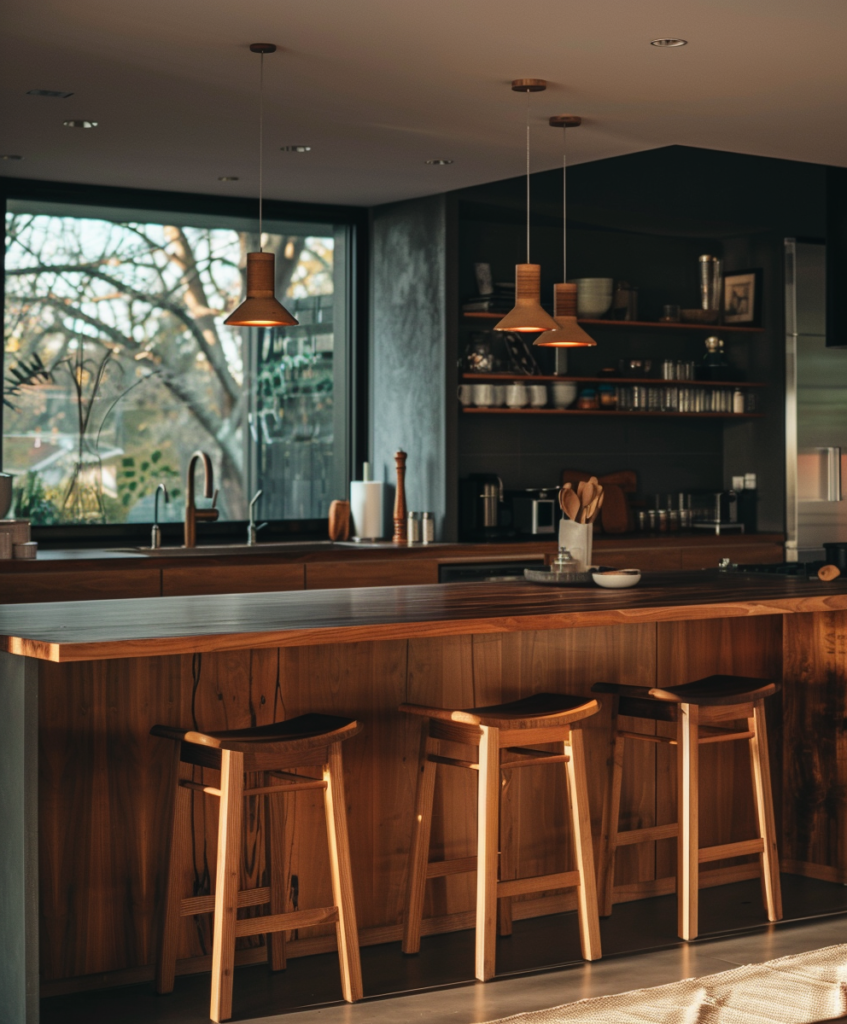
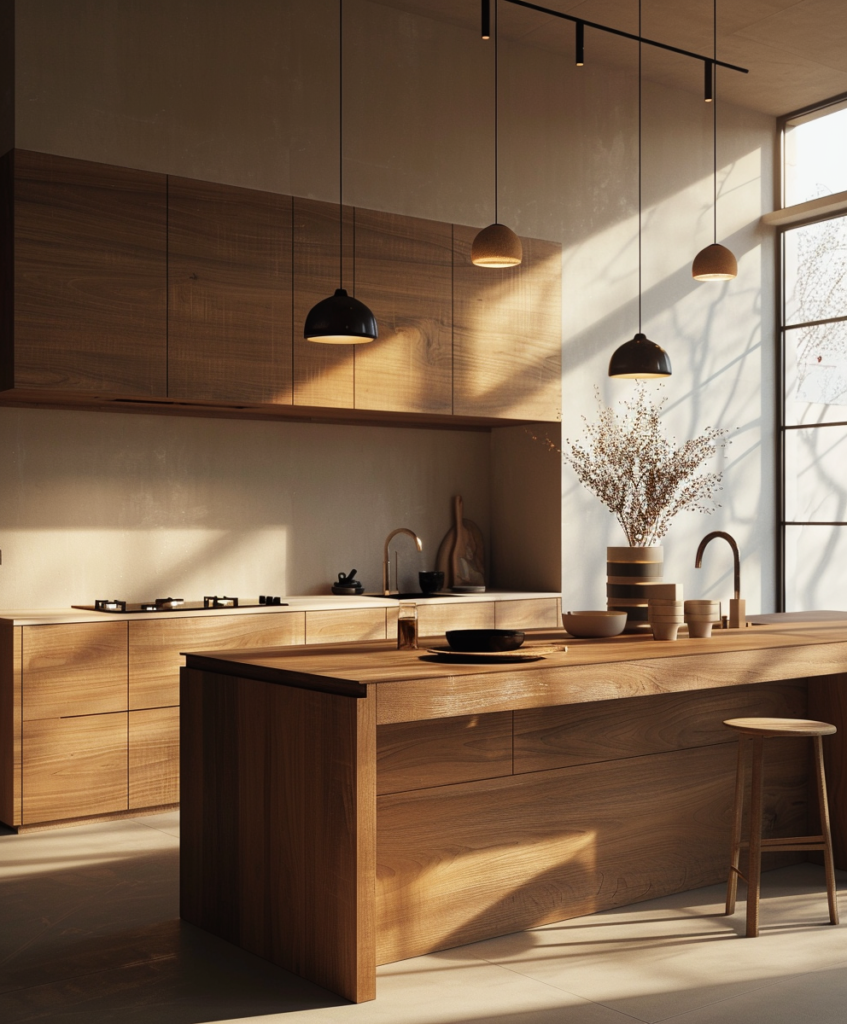
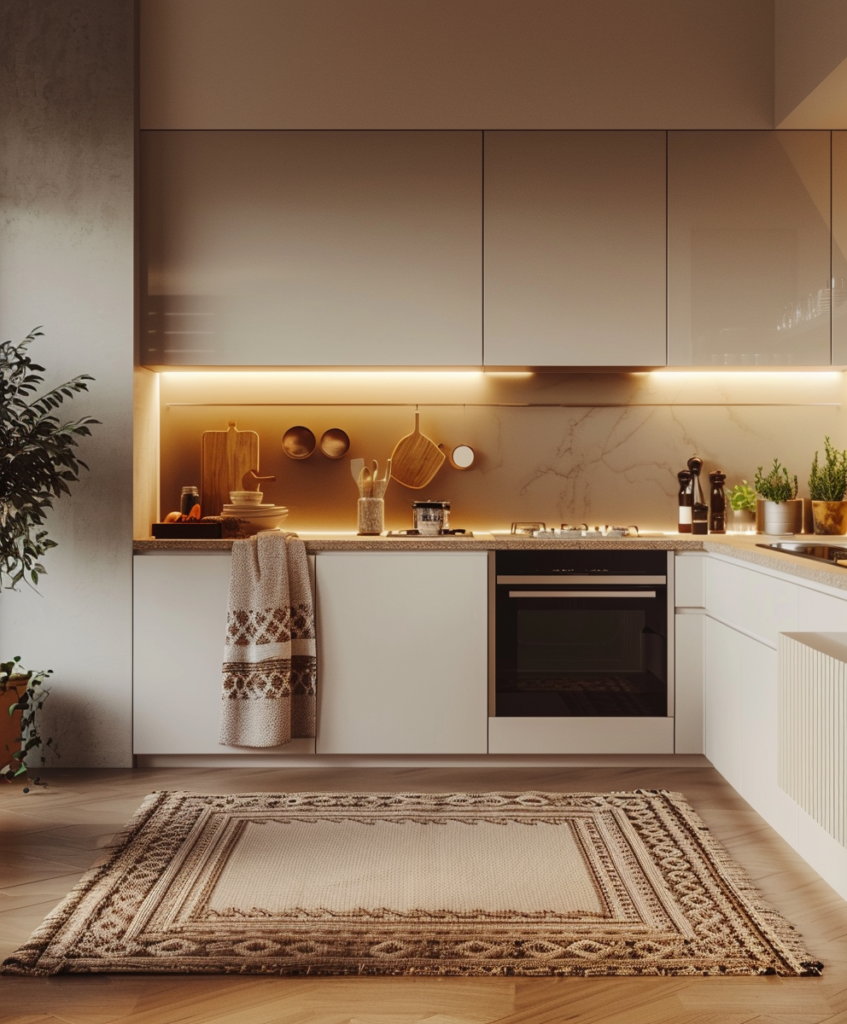
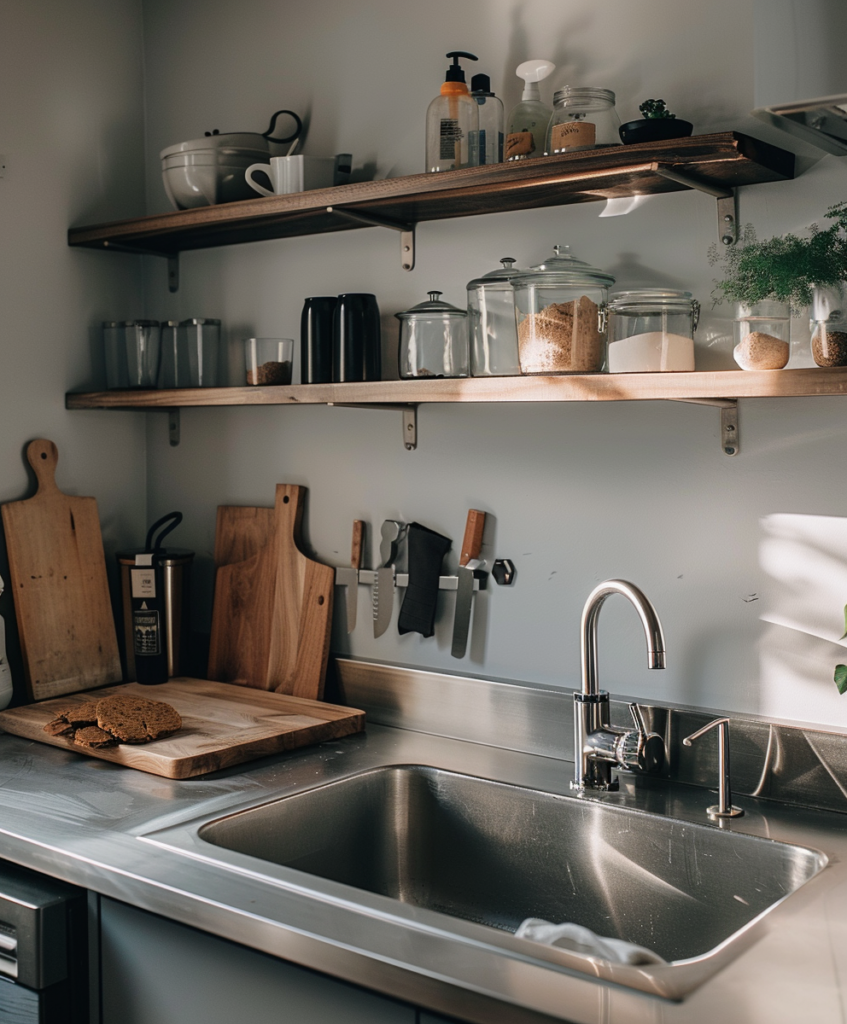
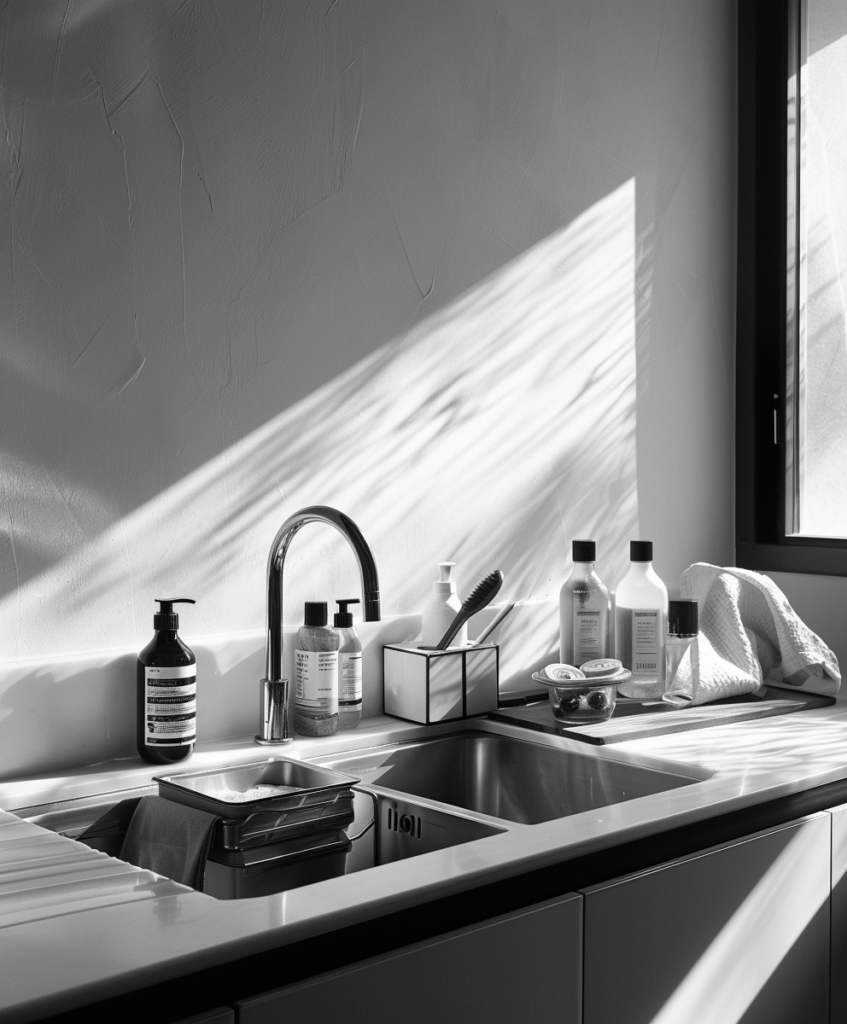
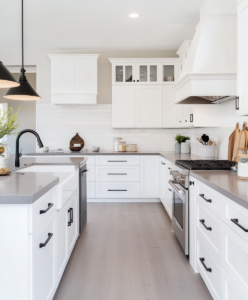
A minimalist kitchen is characterized by a neutral color palette. White, gray, black, and natural wood tones dominate here. These colors make the room appear larger and brighter. Be sure to choose high-quality and durable materials that give your kitchen a timeless look.
Order and structure: The key to a minimalist kitchen
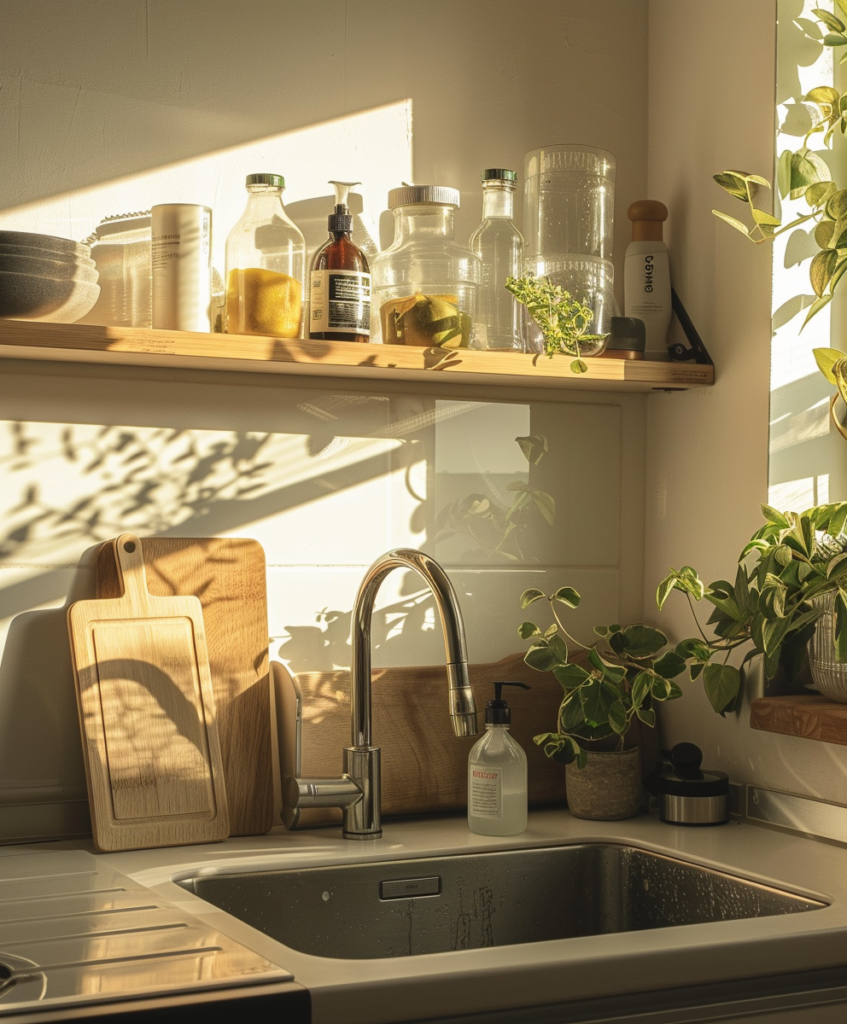
A central aspect of minimalist decor is order. Use storage solutions that are both functional and aesthetic. Simple shelves, hidden drawers, and hanging systems can help maintain a tidy look.
Decorative elements for the minimalist kitchen
Plants: Freshness and naturalness
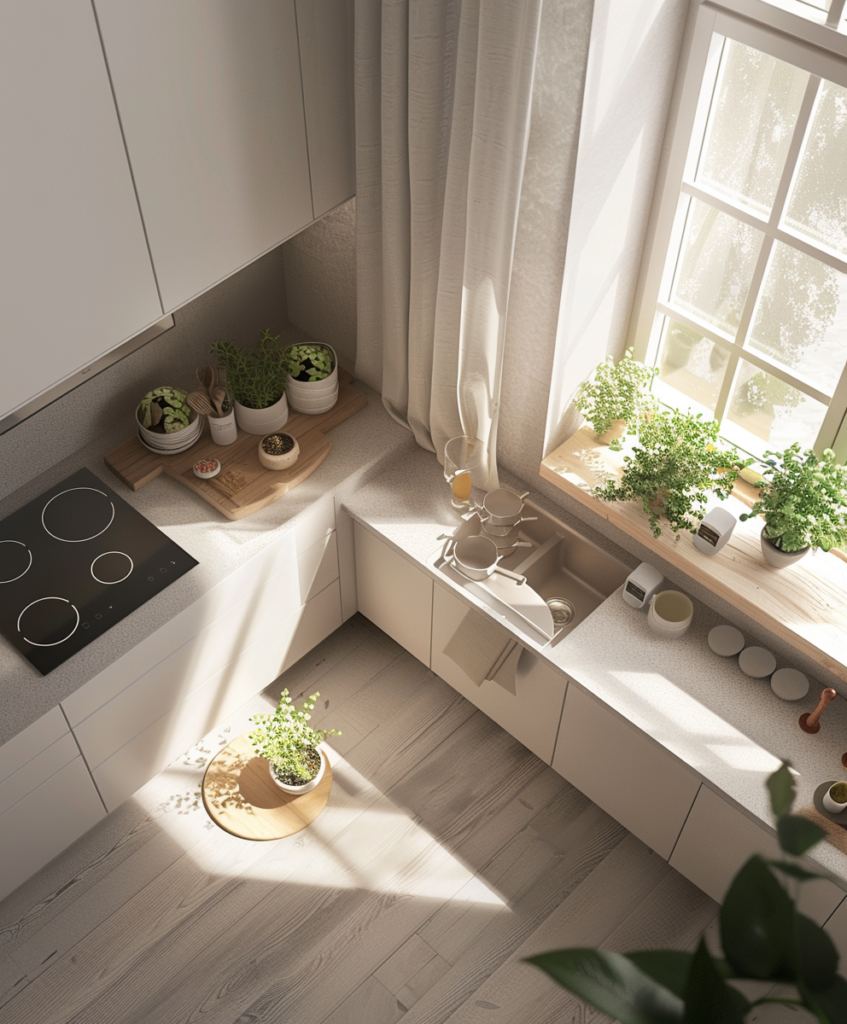
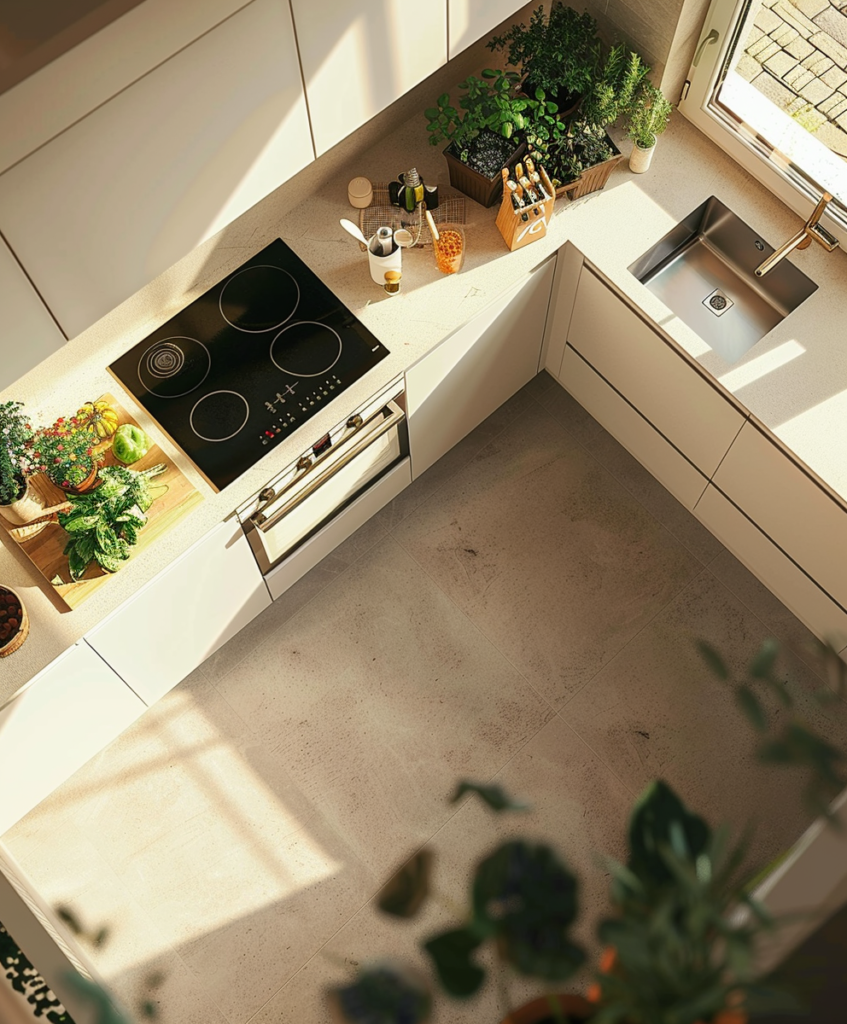
Plants bring life to your kitchen without overloading it. Choose simple, green plants like succulents or herbs that you can also use for cooking. A small herb garden on the windowsill is not only decorative but also practical.


Lighting: Setting accents
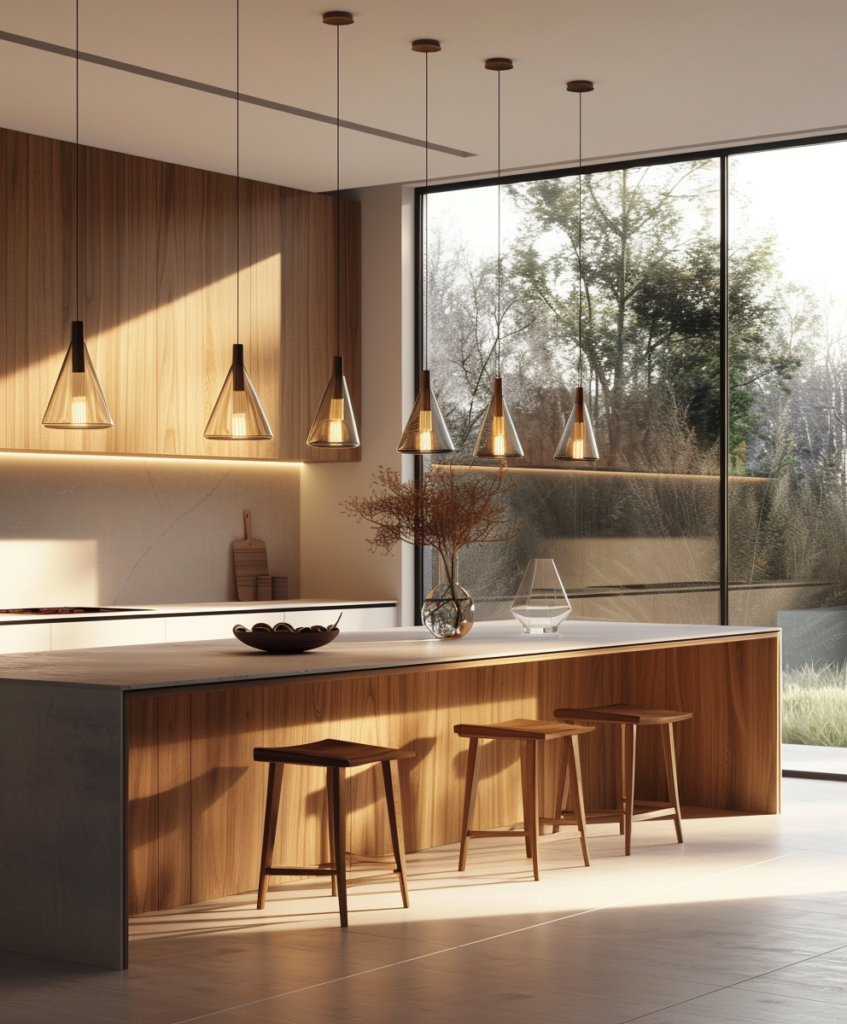
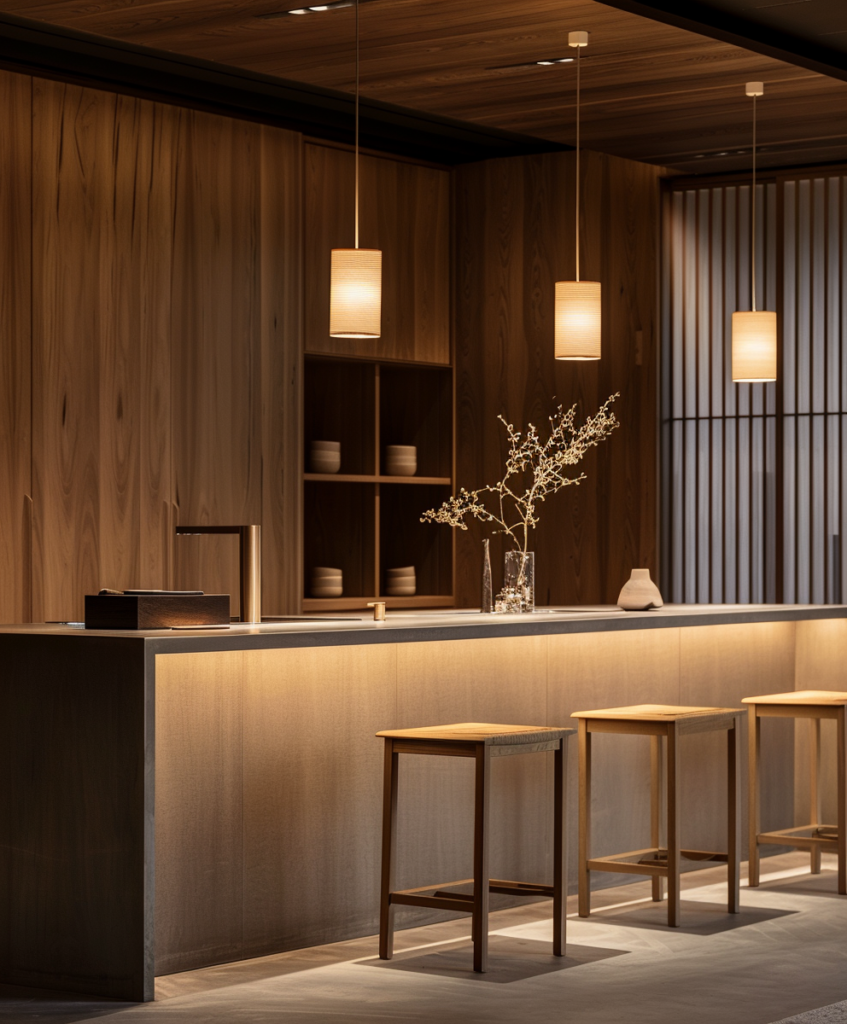
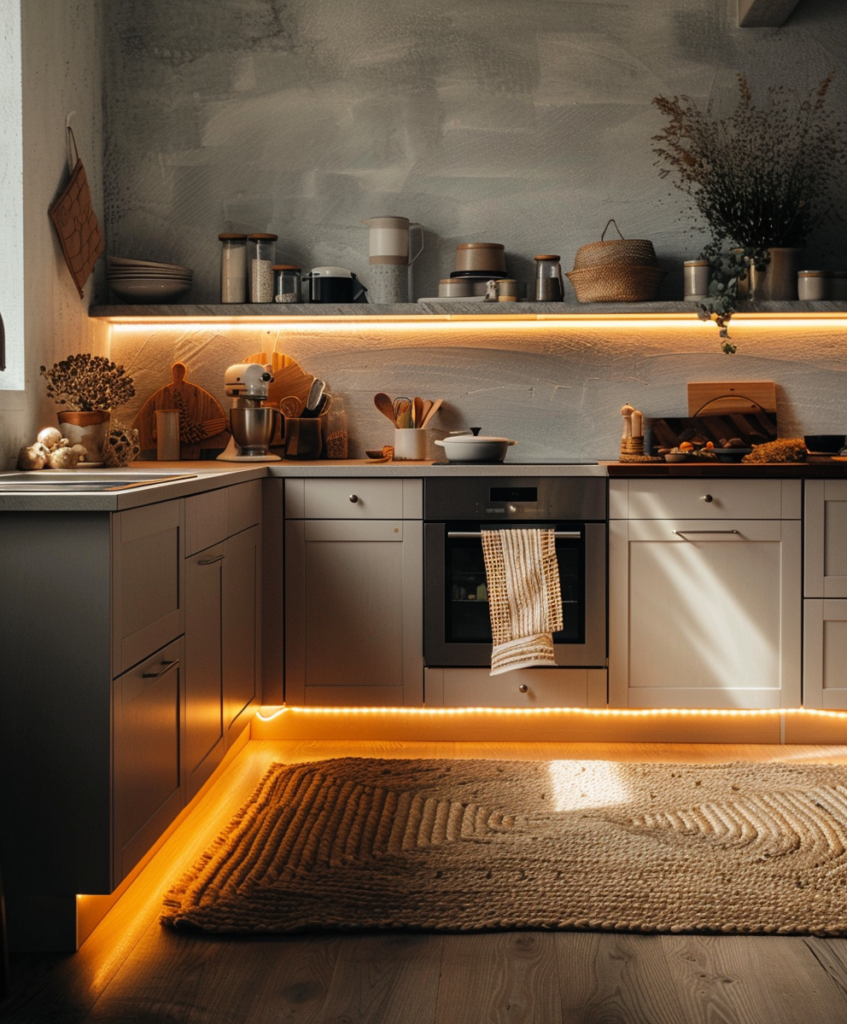
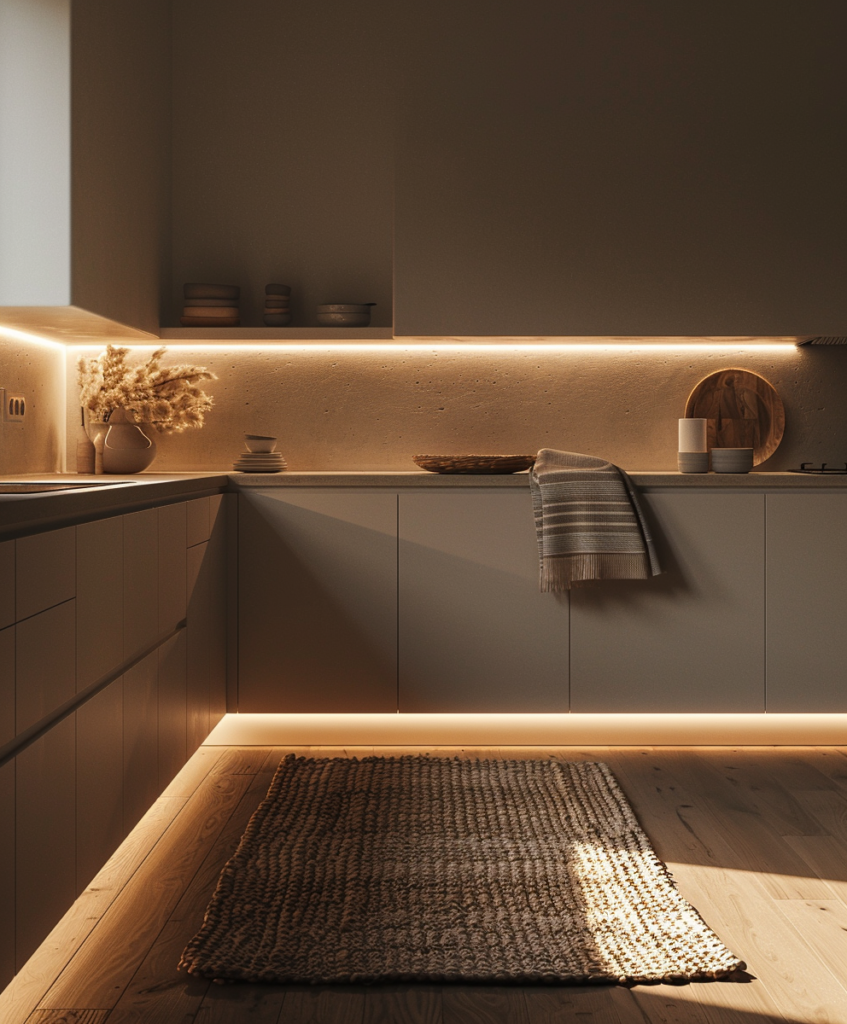
The right lighting can emphasize the minimalist style of your kitchen. Opt for simple lamps with clear lines. A pendant light over the dining table or LED strips under the cabinets provide a modern ambiance.
Functionality meets style
Multifunctional furniture and appliances
In a minimalist kitchen, space is often at a premium. Therefore, multifunctional furniture and appliances are an ideal solution. An extendable table that also serves as a work surface, or a kitchen cart on wheels, provides additional workspace and can be easily stowed away when needed.
Storing kitchen utensils cleverly
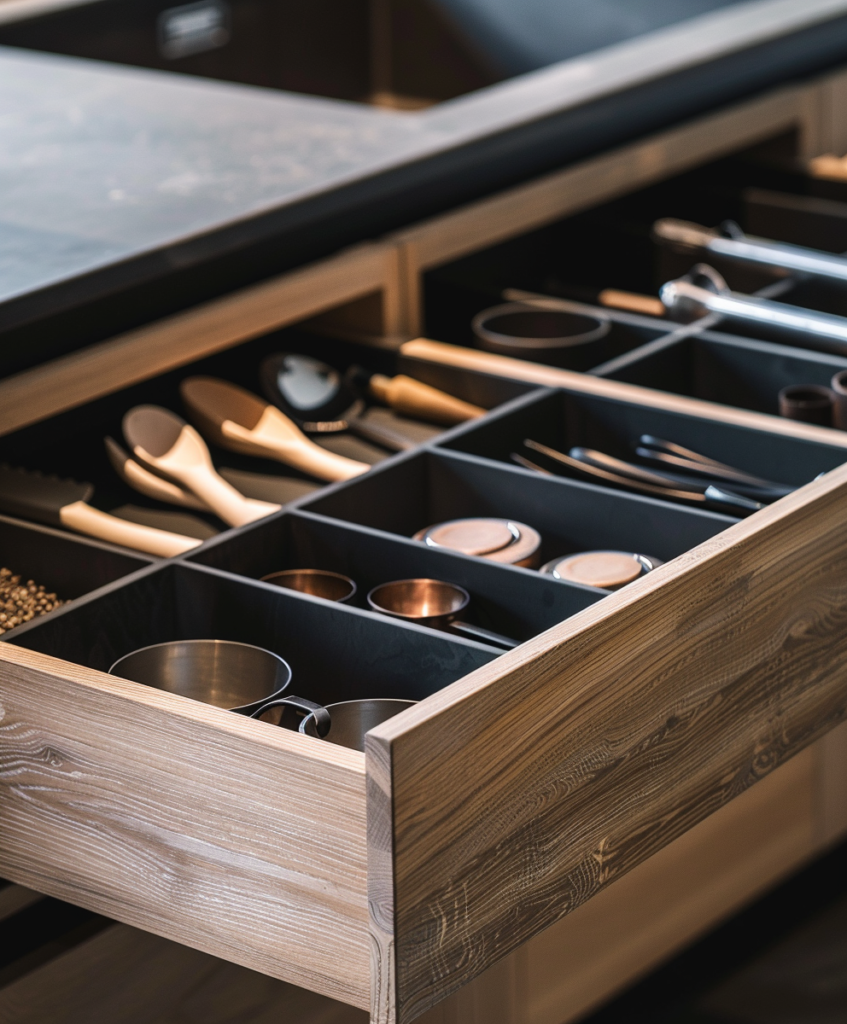
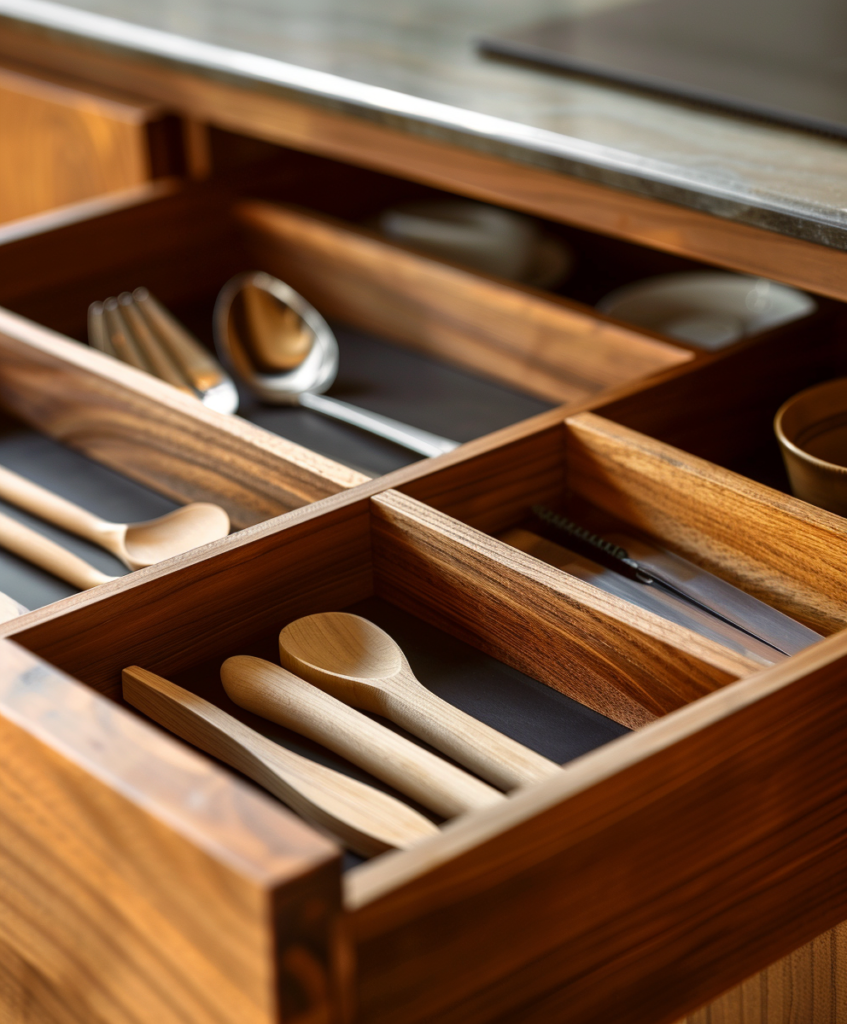
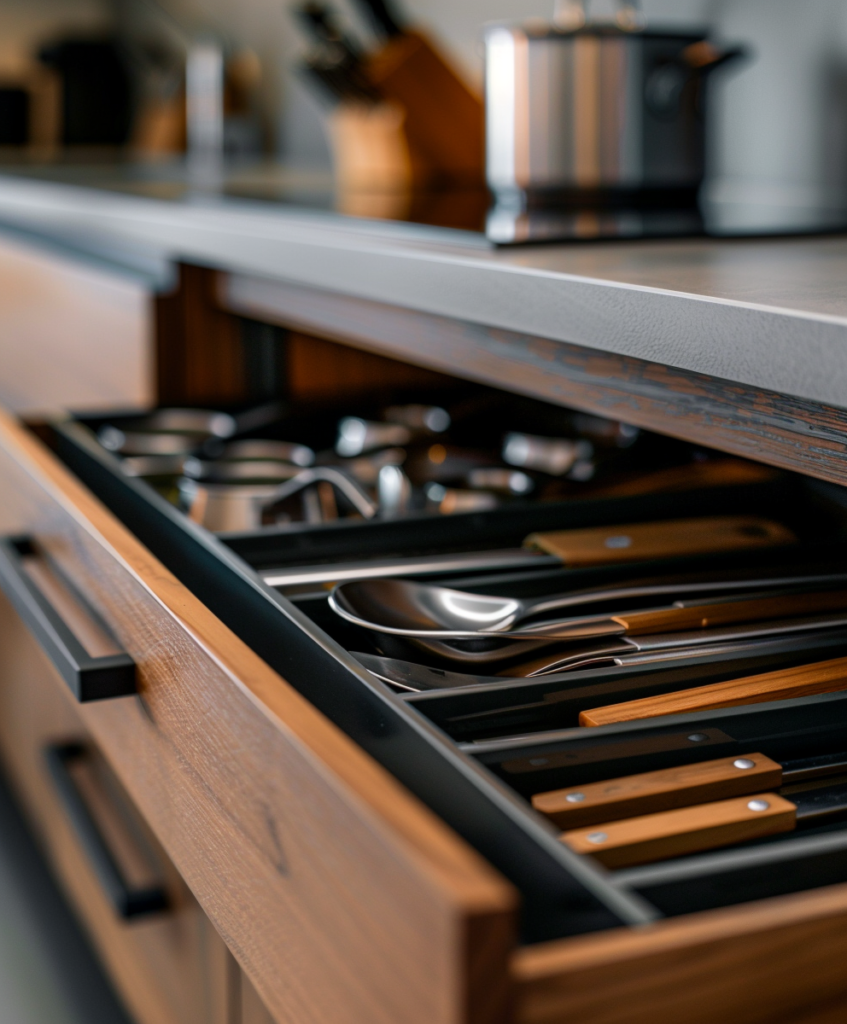
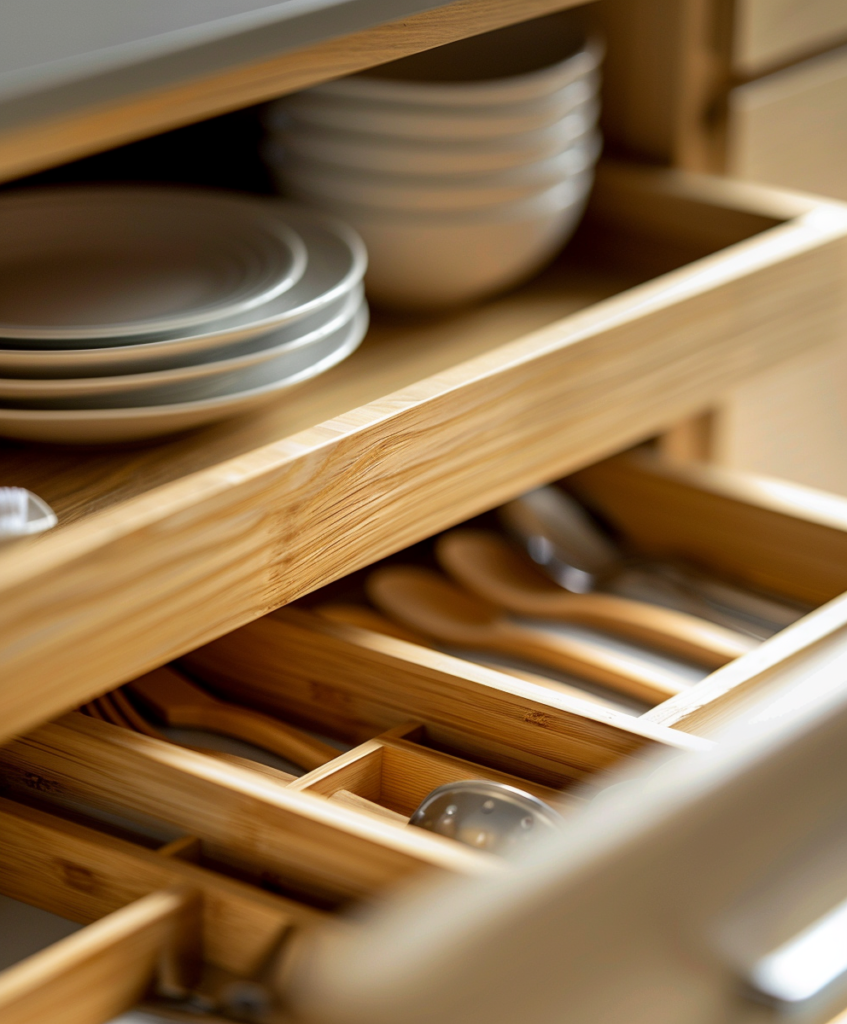
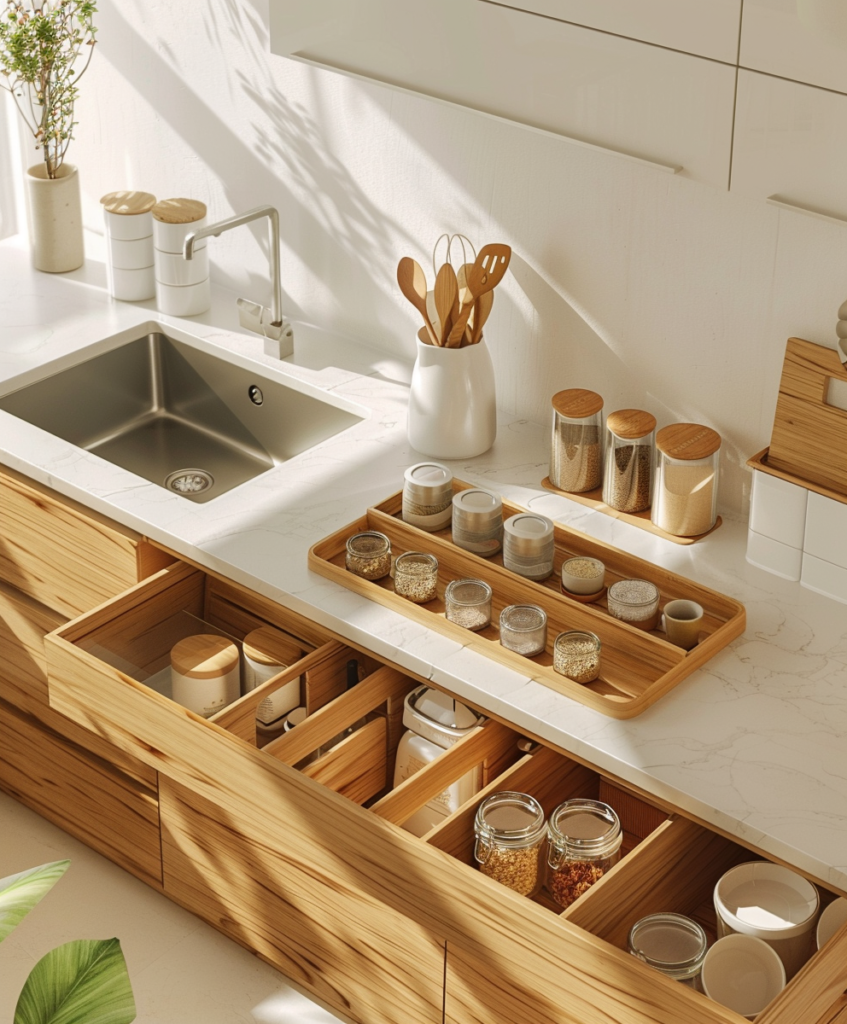
Less is more – this also applies to your kitchen utensils. Reduce your equipment to the essentials and store rarely used appliances in cabinets. Use drawer inserts and organizers to sort cutlery and kitchen tools clearly.
Personal touch in the minimalist kitchen
Art and accessories
Even in a minimalist kitchen, personality shouldn’t be missing. Choose one or two pieces of art or photos that are particularly close to your heart. Make sure the frames are simple and match your color palette.
Textiles: Few but effective accents
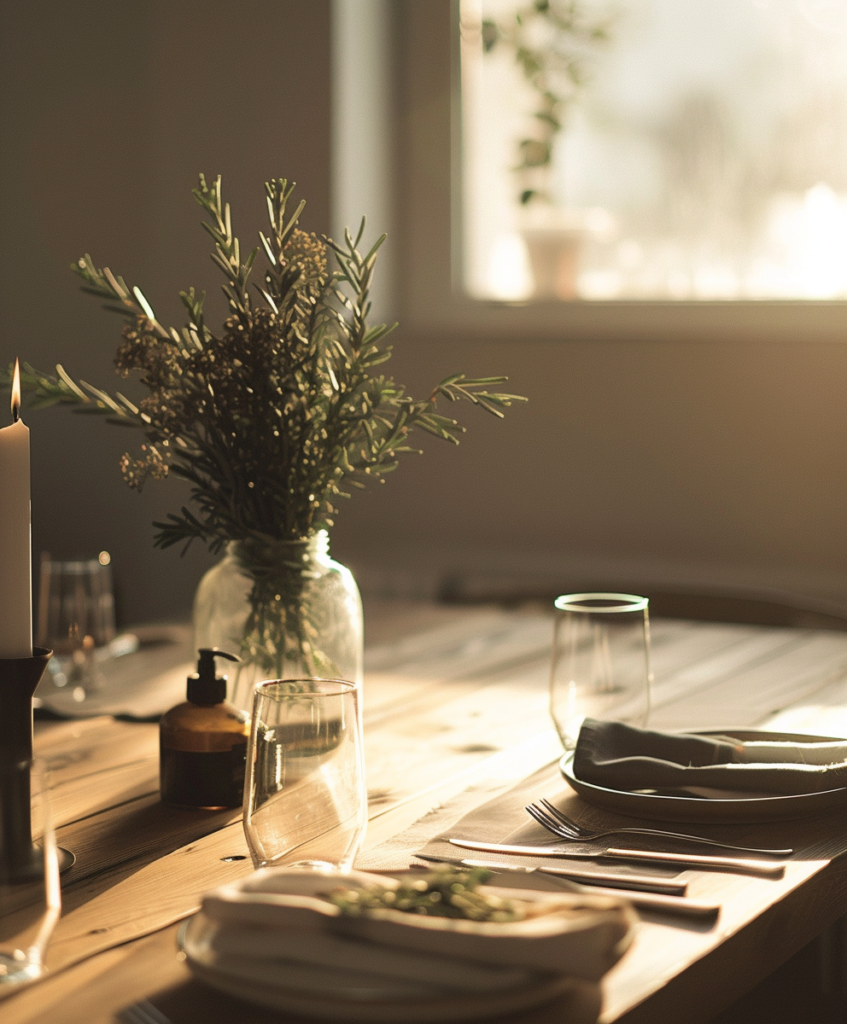
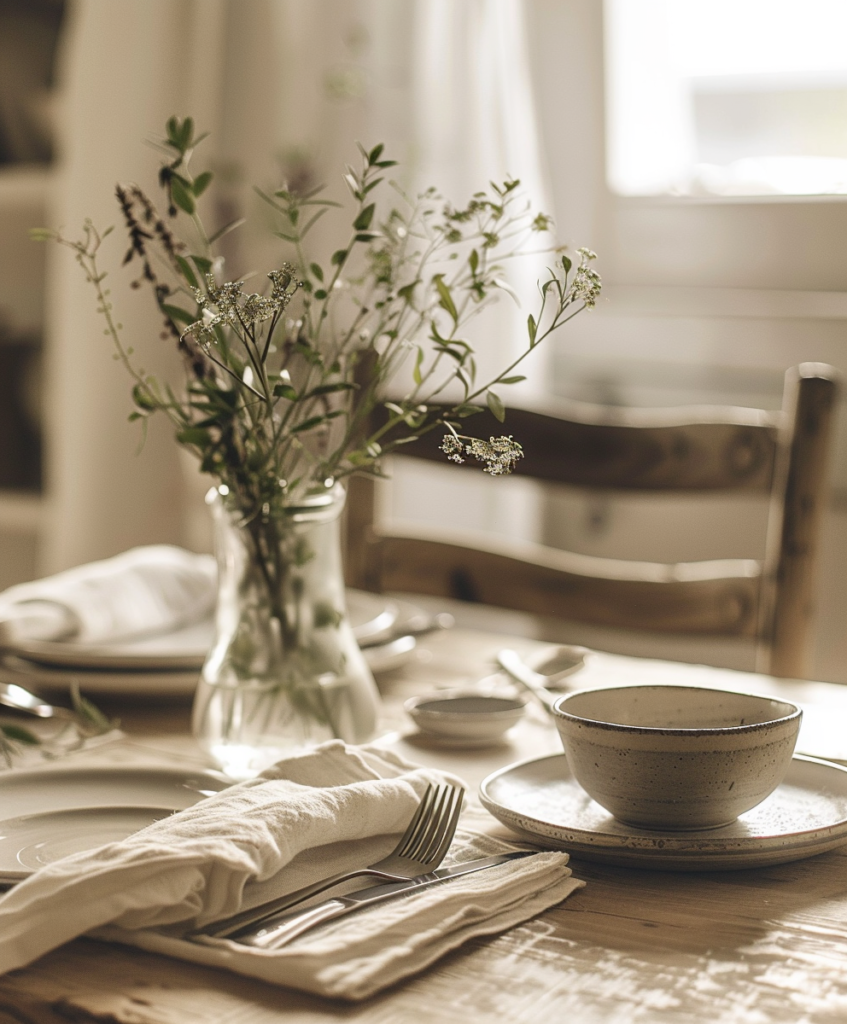
Textiles like dish towels, rugs, or seat cushions can set a warm accent. Choose simple patterns and colors that blend harmoniously into the overall picture of your kitchen.


Sustainability in the minimalist kitchen
Sustainable materials and products
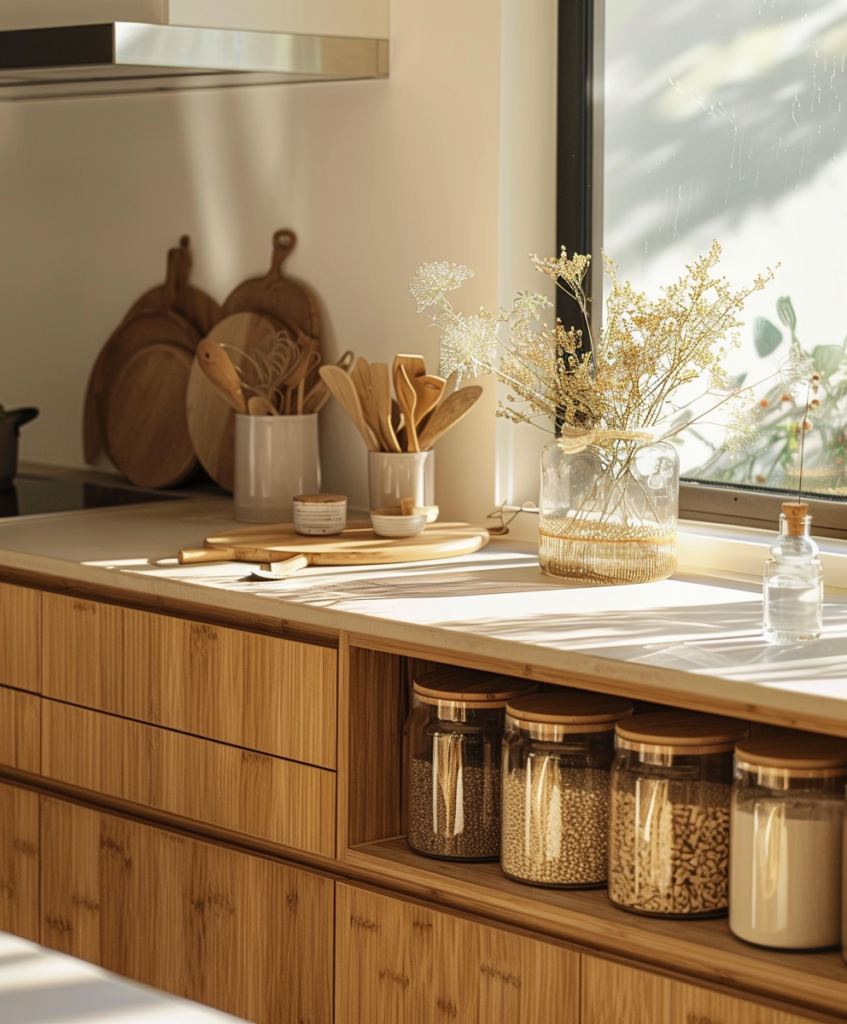
A minimalist kitchen is not only visually appealing but can also be designed sustainably. Choose products made from sustainable materials like bamboo or recycled glass. Ensure your kitchen appliances are energy-efficient.
Avoiding plastic
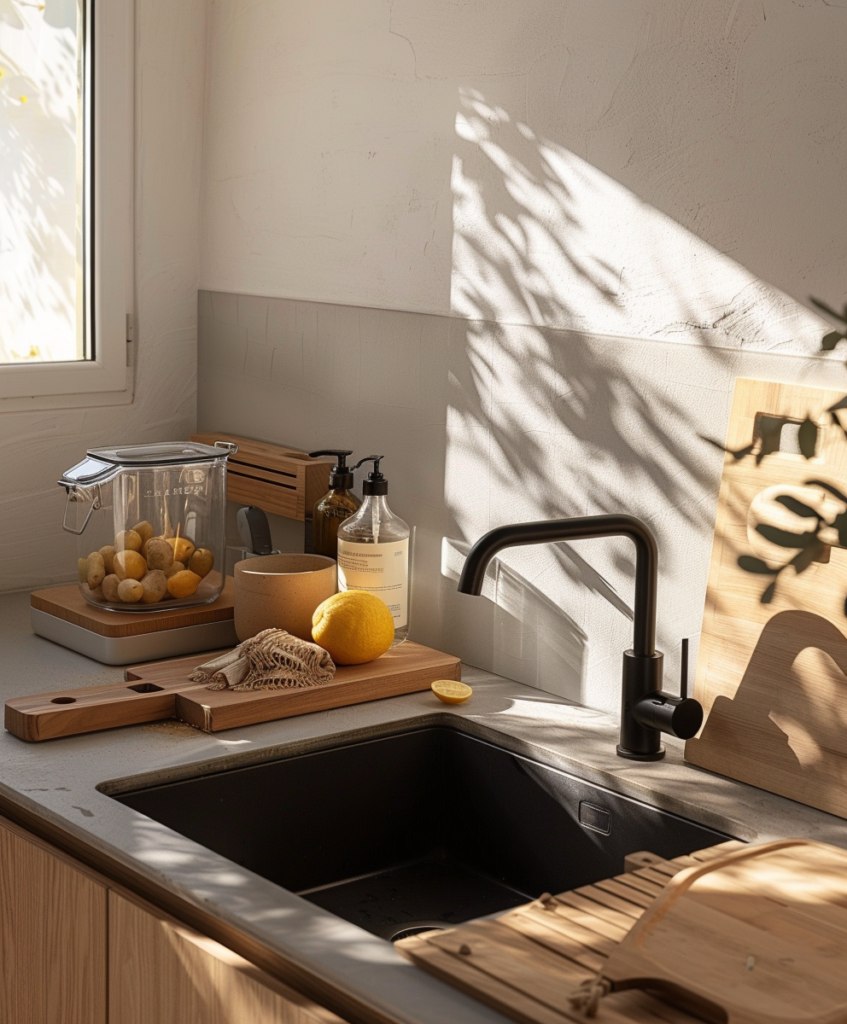
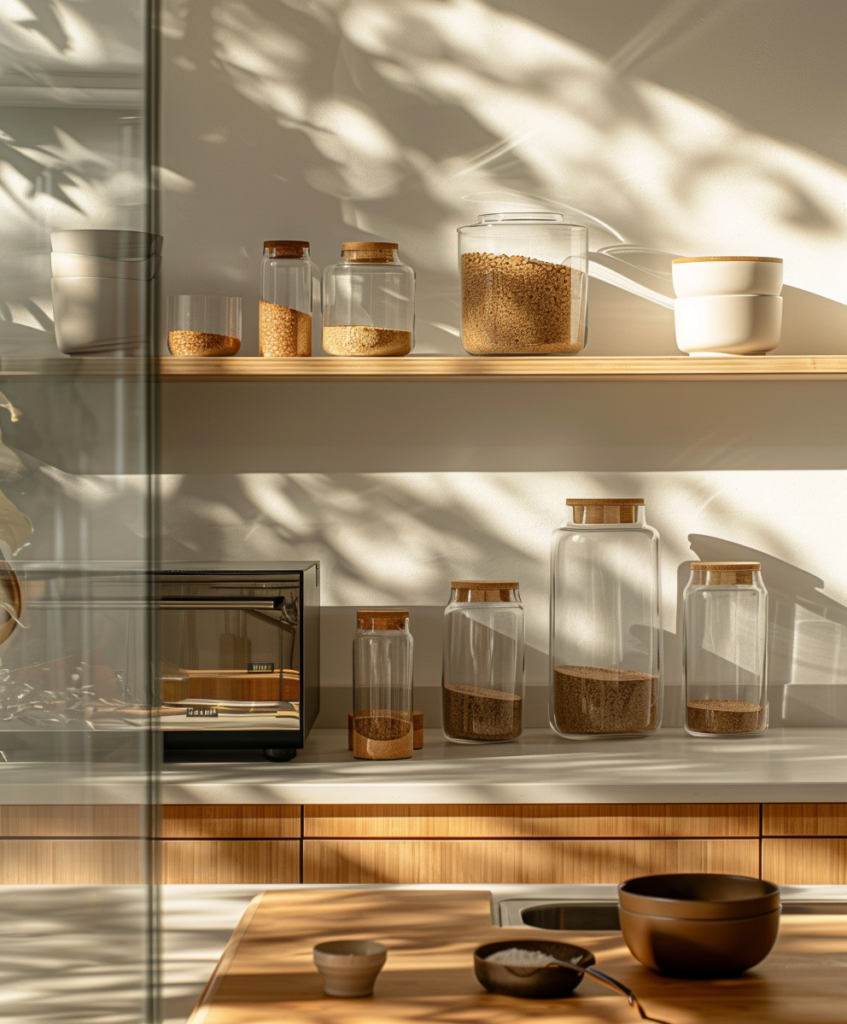
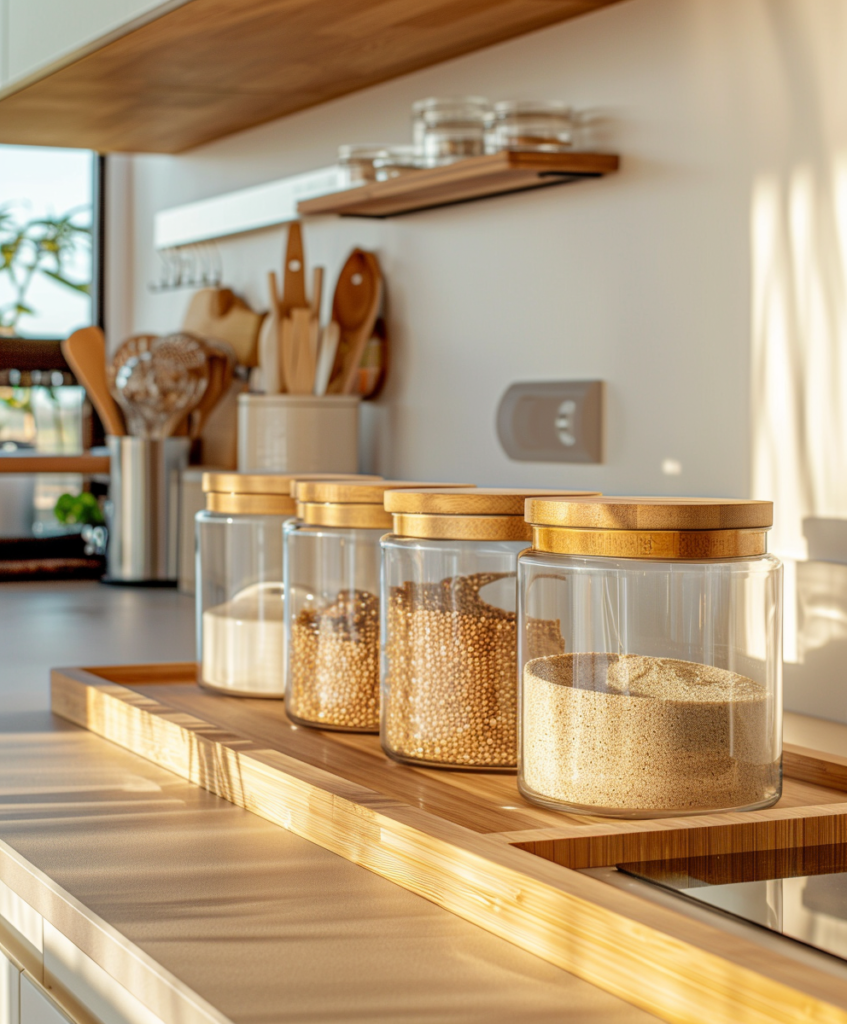
Avoid plastic wherever possible. Instead, use glass or metal containers for food storage. Wooden cutting boards and kitchen utensils are also an environmentally friendly alternative.
Frequently Asked Questions
What are the advantages of a minimalist kitchen?
A minimalist kitchen offers several advantages. It is easy to clean and organize, appears tidy and stylish, and can create a calming atmosphere. Additionally, you save space and resources by concentrating on the essentials.
How do I start designing my kitchen minimalistically?
Begin with a thorough decluttering. Remove everything you don’t use regularly. Then choose a neutral color palette and ensure all decorative elements are functional. Opt for high-quality materials and clever storage solutions.
Which colors are suitable for a minimalist kitchen?
For a minimalist kitchen, neutral colors like white, gray, black, and natural wood tones are suitable. These colors make the room appear larger and brighter and create a calming atmosphere.
Which decorative elements fit a minimalist kitchen?
Simple decorative elements like green plants, simple lamps, and functional furniture fit a minimalist kitchen. Choose a few but carefully selected accessories that round off the overall look without overloading the room.
How can I personalize my minimalist kitchen?
Even in a minimalist kitchen, personality shouldn’t be missing. Choose one or two personal pieces of art or photos, simple textiles, and accessories that are particularly close to your heart. Make sure they match the color palette and don’t overload the room.

- Creative Color Schemes in the Kitchen: Ideas for Different Styles and Moods – 5. February 2026
- Scandinavian Hallway Decor: Minimalist Interior Design Tips – 5. February 2026
- Minimalist Hallway Decor: 7 Simple Ideas for Your Entryway – 5. February 2026
0 Comments