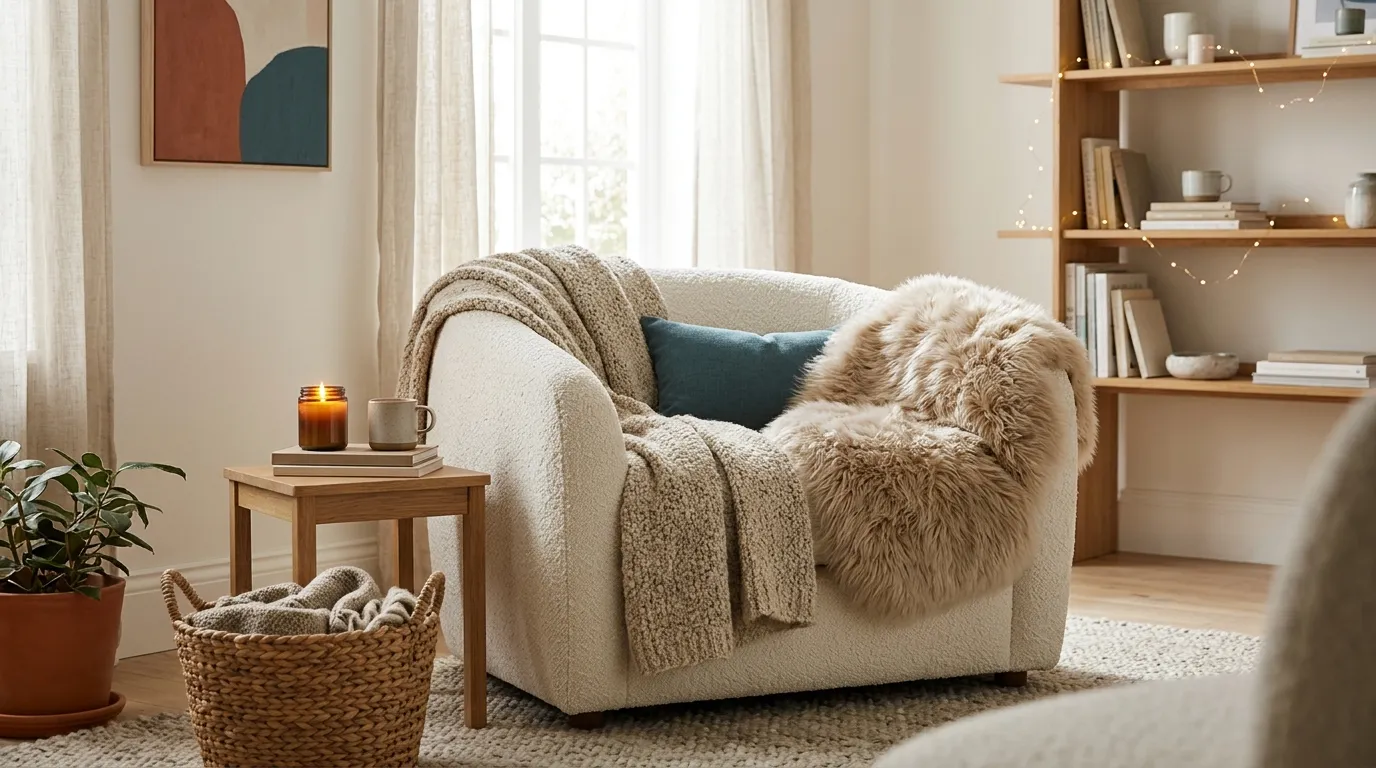
How to Mix and Match Cushions: Sizes, Patterns and Colours
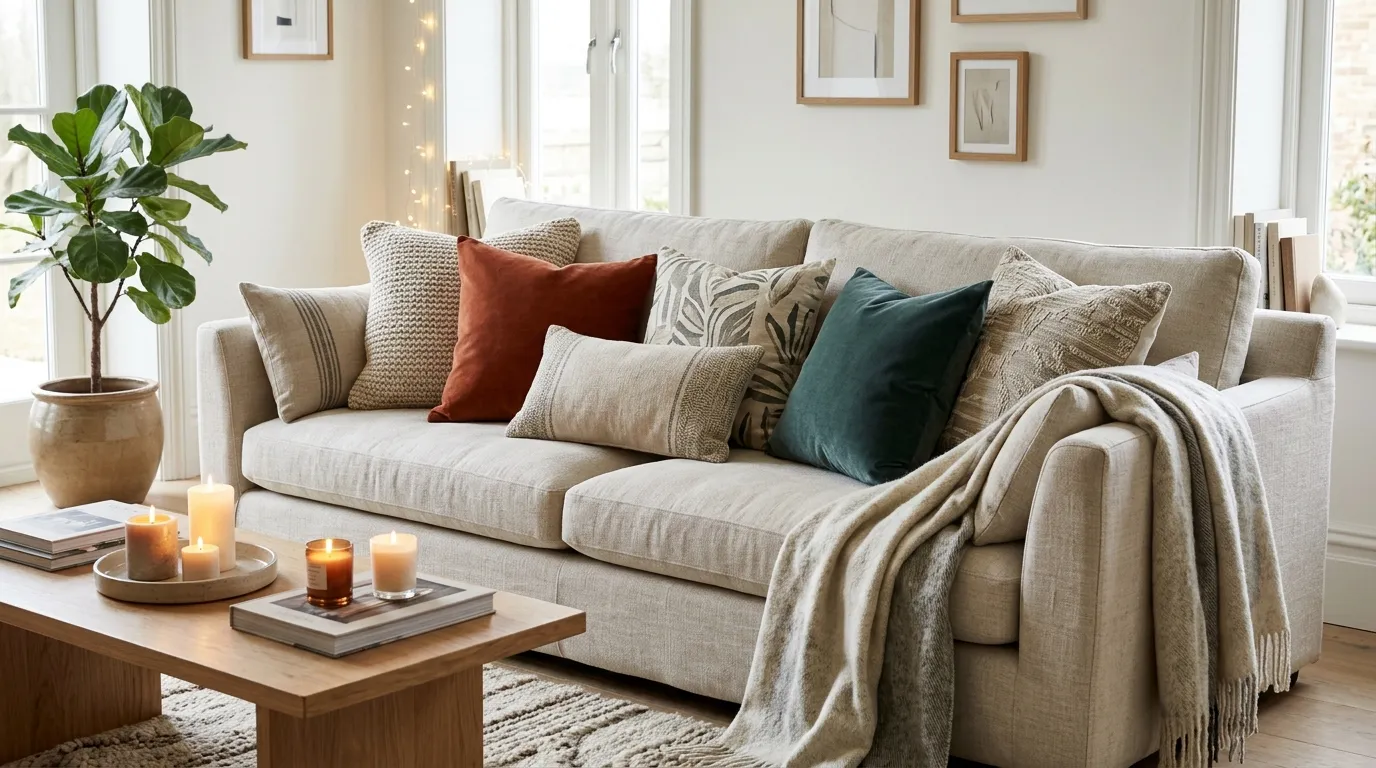
Cushions are the easiest way to change a sofa – and at the same time a science of their own. Which sizes, how many, which patterns and colours? If you know a few basic rules, you can combine cushions so they look intentional and harmonious rather than random.
Sizes
The size of the cushions depends on the size of the sofa:
- 50 × 50 cm is standard for normal sofas.
- 60 × 60 cm suits large, deep sofas and works as a back row.
- 40 × 40 cm for armchairs and small sofas, or as a front row.
- 30 × 50 cm (rectangular) as an accent in front of large square cushions.
- Round or bolster as a special shape.
The classic arrangement: large at the back, smaller in front. For example, two 60 cm cushions in the back corners, two 50 cm ones in front and a rectangular one in the middle.
How many?
- Two-seater: two to three cushions.
- Three-seater: three to five cushions.
- Corner sofa: five to seven cushions.
Odd numbers look more relaxed, even numbers more symmetrical and classic. Important: there still needs to be room to sit.
Mixing patterns
Combining patterns is easier than it sounds. The rule: three types of pattern in three scales.
- One large pattern – for example florals, a large check or a graphic motif.
- One medium pattern – stripes, a small check, geometric shapes.
- One small pattern or texture – dots, herringbone, knit.
Add one or two plain cushions for calm. For the patterns to go together, they should share at least one colour.
Colours
- Connect with the room: at least one cushion colour should recur in the room – in the rug, a picture or the curtains.
- Three colours are enough: a base colour (often matching the sofa), a complementary colour and an accent.
- Tone on tone looks elegant: different shades of one colour, such as cream, sand and caramel.
- Contrast looks lively: a grey sofa with mustard and petrol.
Material
Especially when the colours are calm, different materials make the difference:
- Linen – natural, slightly crumpled, for spring and summer.
- Velvet – elegant and warm, especially in autumn and winter.
- Knit and wool – cosy, for the cold season.
- Bouclé – modern, soft and textured.
- Cotton – easy-care, for everyday.
A combination of smooth (velvet), textured (bouclé) and natural (linen) looks especially rich, even in a single colour.
Filling
- Feathers or down are soft and can be shaped with the famous "karate chop".
- Polyester is cheaper, allergy-friendly and washable, but holds its shape less well.
- Tip: choose an insert one size larger than the cover (50 cm cover, 55 cm insert) – the cushion then looks plump and full.
Seasonal changes
Covers are cheap and quick to swap. With two sets – linen and cotton for spring and summer, velvet and knit for autumn and winter – the living room changes twice a year without new furniture.
More ideas for cushions and throws in the living room: living room decor with cushions and throws. And which winter materials work especially well: fur, wool, bouclé.