
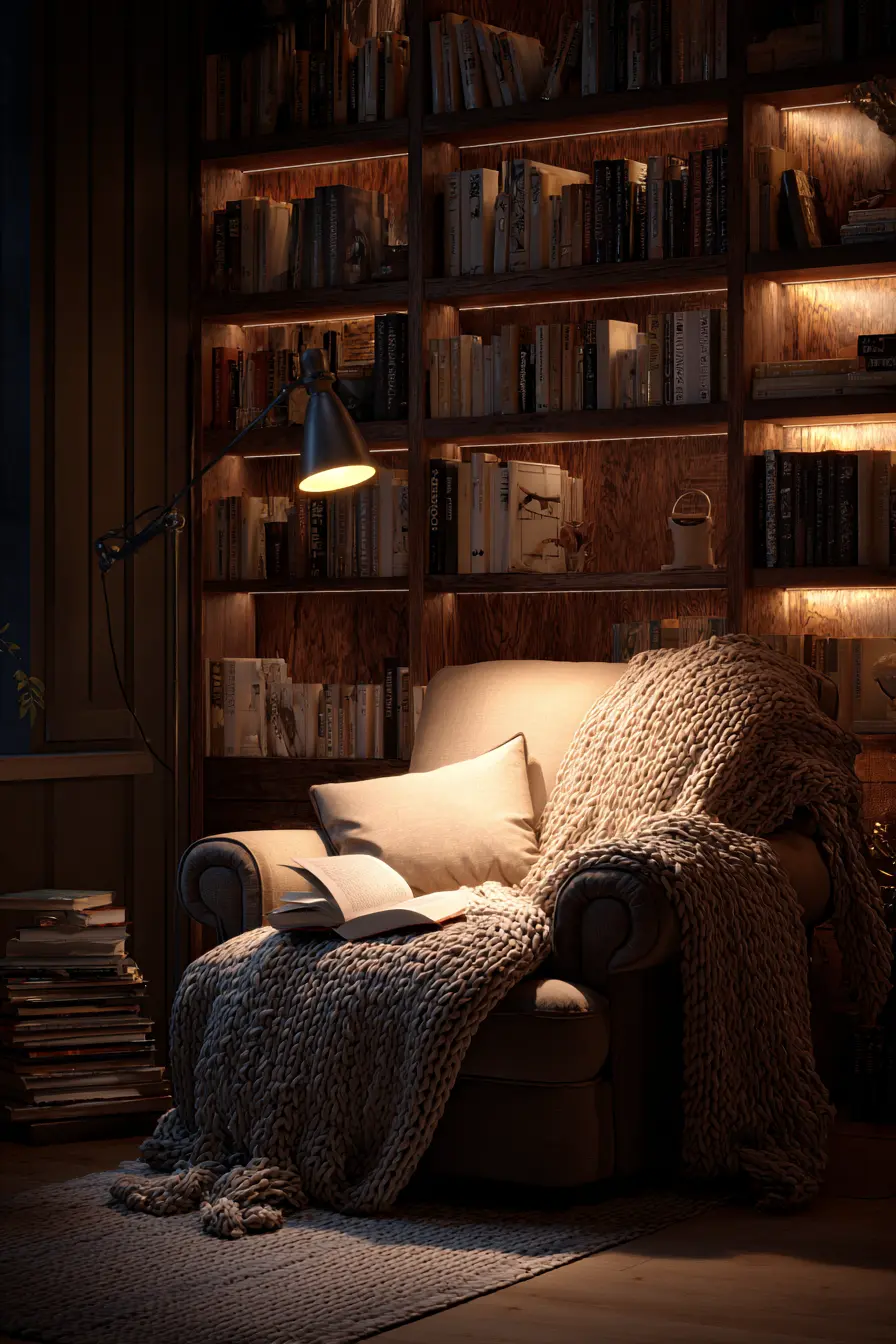
The Magic of the Perfect Reading Nook
There is hardly anything better than retreating with a good book on a rainy afternoon or a late evening. But while the choice of book and armchair are often the focus, one crucial factor is frequently neglected: the light. A poorly lit reading corner not only leads to faster fatigue but can also cause headaches and strain your eyesight in the long run. In this comprehensive guide, you will learn how to plan the ideal lighting for your reading sanctuary.

Why Proper Lighting is So Important
Our eyes work incredibly hard while reading. They must recognize tiny contrasts between letters and paper and constantly adjust. Insufficient light forces the eye muscles to work at peak performance, leading to burning eyes and loss of concentration. The right lighting, on the other hand, promotes relaxation and allows you to dive deeper into the worlds of your favorite authors.
The Three Pillars of Lighting Design
A professional lighting concept for your reading nook consists of three different levels that should work together harmoniously:
- Ambient Lighting: This provides general brightness in the room and prevents excessive contrast between the bright book page and a dark environment.
- Accent Lighting: This light sets visual highlights, such as illuminating the bookshelf or a beautiful plant next to the armchair.
- Task Lighting: This is the most important light for readers. It illuminates the book page directly and purposefully.
Technical Basics: Lumens, Kelvin, and CRI
To choose the right bulb or LED, you need to know three technical values:
1. Brightness (Lumens)
Forget wattage – today, luminous flux in lumens (lm) is what counts. For relaxed reading, a light source with about 400 to 600 lumens directly at the reading spot is recommended. As you get older, your eyes often need more light; up to 800 lumens can be useful here.
2. Color Temperature (Kelvin)
Light color influences our mood and alertness:
- Warm White (2,700 to 3,000 Kelvin): Ideal for cozy evening hours. It has a calming and cozy effect.
- Neutral White (3,300 to 5,300 Kelvin): Promotes concentration and is ideal for non-fiction or studying during the day.
Tip: Use dimmable lights or smart home systems to adjust the color temperature depending on the time of day.
3. Color Rendering Index (CRI/Ra)
A high CRI value (above 90) ensures that colors look natural. This is essential, especially for illustrated books or art volumes, so that the artworks look as the artist intended.
The Best Lamp Types for Your Reading Nook
Not every lamp is suitable as a reading lamp. Here are the best options:
Floor Lamps with Reading Arms
These classics often offer two lights in one: an uplighter provides ambient lighting, while a flexible, swivel arm directs the light directly onto the book.
Arc Lamps
Arc lamps are a design statement. They allow the light to be brought down from above without a lamp base getting in the way. However, make sure the shade is opaque so the light doesn't glare.
Wall Lights with Swivel Arms
If space is limited, wall lights are ideal. They keep the side table free for tea and cookies. Models with articulated arms can be perfectly adjusted to the seating position.
Clip-on Lights
For minimalists or readers who like to read in bed, clip-on lights are a flexible solution. They can be attached directly to the headboard or the shelf.
Ideal Positioning: Where Should the Light Come From?
The position of the light source determines shadow casting and glare. Here are the golden rules:
- Avoid Shadows: Right-handed people should have the light come from the left (and vice versa) to avoid casting shadows with their hand on the page when turning pages or taking notes.
- Prevent Glare: The light source should be below eye level or shielded by a shade so that you don't look directly into the bulb.
- Use Indirect Light: Never point the light directly at glossy magazine pages, as this leads to unpleasant reflections.
Creating Coziness: Materials and Atmosphere
Light is not just physics, but also a feeling. Textile shades scatter light gently and create a warm atmosphere. Metal shades, on the other hand, bundle the light strongly, which is technically more precise but can feel cooler. Combine your reading lamp with natural materials like wood or wool (e.g., a cozy blanket on the armchair) to create the perfect hygge feeling.
Digital Reading: E-Readers and Tablets
Modern E-Ink displays (like the Kindle) also require an external light source unless they have integrated backlighting. With tablets, the problem is blue light, which inhibits melatonin production. If you read digitally in the evening, be sure to use the "night mode" or a blue light filter on your devices so as not to jeopardize your sleep.
Frequently Asked Questions
How many lumens should a reading lamp have?
For normal reading, 400 to 600 lumens are recommended. For small print or older eyes, 700 to 800 lumens are better.
Is warm or cold light better for reading?
Warm white (3,000 K) is best for relaxation; neutral white (4,000 K) is better for focused concentration.
What role does the lampshade play?
Opaque shades focus light on the task, while fabric shades create a softer, diffused ambient light.
Where is the best place to position the lamp?
Side-back, behind the shoulder is best to prevent glare and minimize shadows on the page.
Are LED lamps good for the eyes?
Yes, high-quality, flicker-free LEDs with a high CRI provide excellent, steady light for reading.

- Creative Color Schemes in the Kitchen: Ideas for Different Styles and Moods - 5. February 2026
- Scandinavian Hallway Decor: Minimalist Interior Design Tips - 5. February 2026
- Minimalist Hallway Decor: 7 Simple Ideas for Your Entryway - 5. February 2026





0 Comments