
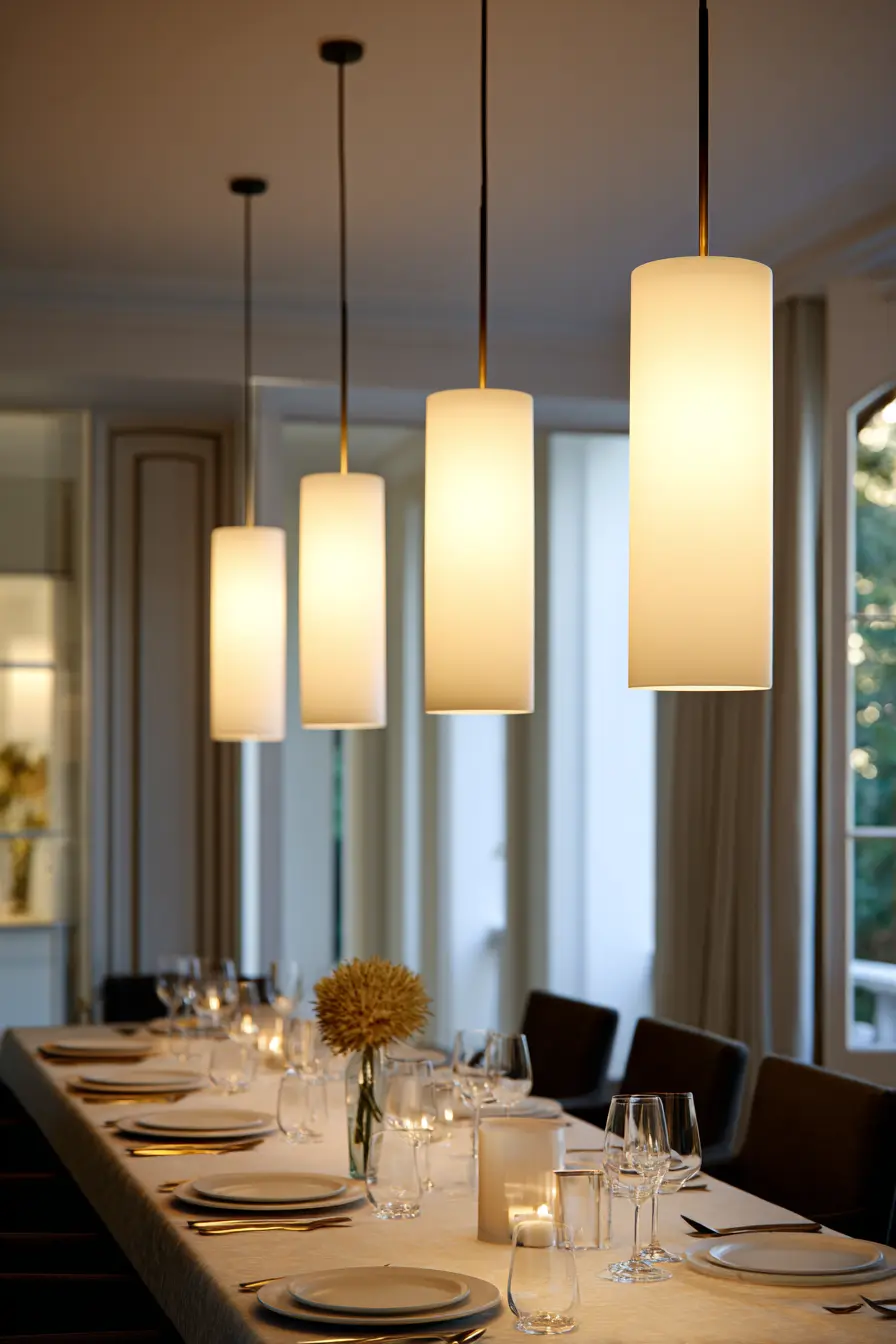
The Importance of Proper Dining Area Lighting
The dining table is often the heart of a home. It is where we don’t just eat, but laugh, work, do homework, and spend quality time with family and friends. Thoughtful lighting is therefore essential to create the right atmosphere for each of these activities. The pendant light plays a central role in this. It is not just a light source, but also a design element that significantly shapes the style of the room. But how do you find the perfect balance between aesthetics and functionality? In this guide, you will learn everything about the ideal height, the correct size, and the optimal placement of your dining area lighting.

The Ideal Height: How Low Should the Lamp Hang?
Probably the most frequently asked question when installing a pendant light is: How high above the table should it hang? A lamp hanging too low blocks the view of the person opposite, while a lamp hanging too high can cause glare or look lost in the room.
The Rule of Thumb: 60 to 75 Centimeters
The standard value for the distance between the table surface and the bottom edge of the lamp is between 60 and 75 centimeters (approx. 24 to 30 inches). This range ensures that:
- The visual connection between people at the table is not interrupted.
- The table is illuminated evenly.
- The light source does not glare directly into the eyes.
Individual Adjustments
While the 60-75 cm rule is an excellent starting point, you should consider the following factors:
- Body Height: If the residents are particularly tall, the lamp can be hung closer to the upper end of the range (75 cm).
- Lamp Shade Design: Closed shades that only cast light downwards can often hang a bit lower. Transparent or open shades that also emit light sideways should tend to be placed slightly higher to avoid glare.
- Table Function: Is the table often used for work or reading? Then a slightly higher position for a wider light spread is often more advantageous.
Choosing the Right Size of the Pendant Light
A lamp that is too small looks lost on a large table, while a lamp that is too massive can visually overwhelm the dining area. The right proportion is crucial for harmony in the room.
The Ratio to the Dining Table
A proven rule of thumb states that the diameter of the light should be about one-third to one-half of the table width. For a table with a width of 100 cm, a light with a diameter of 30 to 50 cm would be ideal.
Proportions in the Room
Also consider the ceiling height. In rooms with very high ceilings, lights can certainly be more voluminous to fill the vertical space. In low rooms, however, delicate designs often work better.
Table Shape vs. Lamp Shape
The shape of your dining table often dictates which type of pendant light harmonizes best.
Round and Square Tables
A single, central light that reflects the shape of the table is usually recommended here. A round pendant light over a round table looks particularly harmonious and emphasizes the center of the action.
Rectangular and Oval Tables
For long tables, you have two main options:
- Multi-bulb Lights: An elongated light fixture with several light sources arranged side by side.
- Series Connection: Several individual pendant lights hung in a row. The distance between the lamps should be even to create a calm image.
Number of Light Sources: One or Many?
The decision between one large lamp or several small ones depends on the length of the table. For tables with a length of 2 meters or more, three or more pendant lights are often the better choice to guarantee uniform illumination across the entire surface. Make sure that the outer lamps do not hang too close to the edge of the table to prevent people from bumping into them when standing up.

Light Quality: Lumens, Kelvin, and CRI
It's not just the design of the lamp that counts, but above all the light it emits.
- Color Temperature (Kelvin): Warm white light is recommended for the dining area (approx. 2,700 to 3,000 Kelvin). It feels cozy and inviting.
- Brightness (Lumens): A guideline is about 200 to 300 lumens per square meter of table surface.
- Color Rendering (CRI): A high CRI value (above 90) ensures that the food on the table looks appetizing and in its natural colors.
Dimmability and Atmosphere
An absolute must for dining area lighting is a dimmer. While you need bright, clear light for breakfast or working, you want a dimmed, intimate atmosphere for dinner or a glass of wine. Modern smart home systems also allow the color temperature to be adjusted according to the time of day (HCL - Human Centric Lighting).
Common Mistakes in Dining Area Lighting
Avoid these classic mistakes to get the most out of your dining area:
- Mounting Too High: The lamp loses its connection to the table and acts like general room lighting.
- Wrong Bulb: Light that is too cold makes the room feel uncomfortable.
- Lack of Glare Protection: You should never have to look directly into the light source.
- Inappropriate Proportions: A tiny lamp over a massive oak table looks out of place.
Frequently Asked Questions
How high should a pendant light hang above the dining table?
The ideal height is between 60 and 75 centimeters (24-30 inches) measured from the table surface to the bottom edge of the lamp.
What size should the lamp be in relation to the table?
The diameter of the light should be approximately one-third to one-half of the table width.
What color temperature is ideal for the dining area?
Warm white light between 2,700 and 3,000 Kelvin creates a cozy atmosphere.
How many lamps are needed for a long table?
For a table length of 2 meters or more, two to three light sources are recommended.
Is a dimmer useful for the dining room lamp?
Yes, a dimmer is highly recommended to flexibly adjust the lighting mood for different situations (eating, working, partying).
What if the ceiling outlet is not above the table?
You can use a track system or a 'swag hook' (cable pull) to move the lamp to the correct position.

- Creative Color Schemes in the Kitchen: Ideas for Different Styles and Moods - 5. February 2026
- Scandinavian Hallway Decor: Minimalist Interior Design Tips - 5. February 2026
- Minimalist Hallway Decor: 7 Simple Ideas for Your Entryway - 5. February 2026

0 Comments