Introduction: Why Proper Lighting Makes the Difference
Lighting is much more than just a means to find your way in the dark. It influences our mood, our productivity, and the overall aesthetics of a room. Anyone who has ever sat in a room with a single, harsh ceiling light knows how uncomfortable lighting can be. This is where the 3-layer lighting design model comes into play. This proven concept from interior design divides lighting into three functional levels: ambient lighting, task lighting, and accent lighting. In this comprehensive guide, you will learn how to combine these layers to create the perfect atmosphere in every room.

The First Layer: Ambient Lighting
Ambient lighting, also known as general lighting, forms the foundation of your lighting concept. Its main task is to illuminate the room evenly so that you can navigate safely. It essentially replaces daylight after dark.
Characteristics of Ambient Lighting
- Uniformity: The light should flood the entire room without creating harsh shadows.
- Softness: It serves for orientation, not for detail. Therefore, diffuse light is ideal.
- Placement: It is usually mounted on the ceiling (ceiling lights, recessed spots, panels).
For ambient lighting, experts recommend a light intensity of about 100 to 300 lumens per square meter, depending on the room's use. Living rooms can be a bit cozier, while safety is the priority in hallways or staircases.
The Second Layer: Task Lighting
While ambient lighting provides general illumination, task lighting is dedicated to specific activities. Whether cooking, reading, working at a desk, or applying makeup in the bathroom – this is where focused, brighter light is needed.
Where is Task Lighting Used?
- Kitchen: Under-cabinet lights below wall units illuminate the countertop without shadows.
- Office: An adjustable desk lamp prevents eye fatigue.
- Living Room: A reading light next to the armchair protects the eyes while browsing.
- Bathroom: Light sources to the left and right of the mirror provide shadow-free facial illumination.
When it comes to task lighting, it is important to avoid glare and shadows cast by your own body. The light should be directed specifically at the work surface.
The Third Layer: Accent Lighting
Accent lighting is the finishing touch of lighting design. It is not for brightness but for aesthetics. With it, you set highlights, emphasize architecture or artworks, and give the room depth and character.
Creative Possibilities for Accenting
Accent light is often three to five times brighter than general ambient lighting to specifically guide the eye's focus. Popular methods include:
- Spotlights: To illuminate paintings or sculptures.
- LED Strips: In shelves or behind the TV for indirect light.
- Wallwashers: To highlight the texture of a stone wall.
- Table Lamps: Small decorative lamps on sideboards that create islands of light.
The 3-Layer Model Room-by-Room
Living Room: The Oasis of Well-being
Flexibility is key in the living room. Ambient lighting (dimmable ceiling light) is complemented by several accent lights. A floor lamp serves as task lighting for reading. Pro Tip: Use smart bulbs to save scenarios for 'movie night' (dimmed accent light) or 'game night' (bright ambient light).
Kitchen: Functionality Meets Design
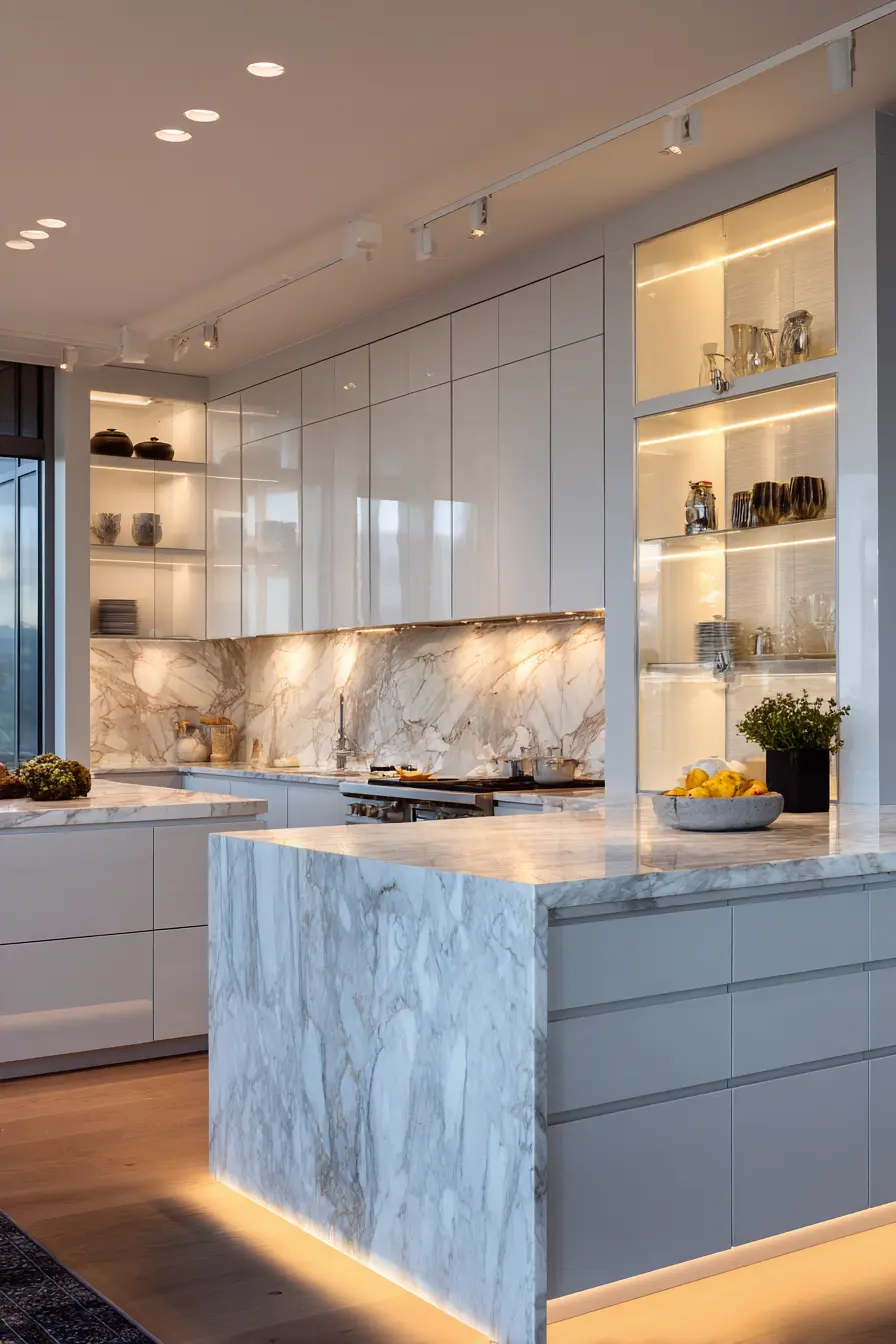
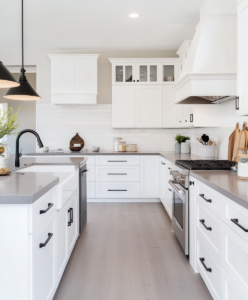
In the kitchen, task lighting takes center stage. Bright LEDs over the countertop are essential. Ambient lighting is often provided via track systems. Accent lighting can be achieved here by illuminating glass display cabinets or toe-kick lighting.

Bedroom: Rest and Relaxation
The ambient lighting here should be warm white (approx. 2700 Kelvin). Task lighting consists of bedside lamps. Accent light can be created by soft indirect lighting behind the headboard of the bed, which visually enlarges the room.
Technical Basics: Kelvin, Lumens, and CRI
To successfully implement the 3-layer model, you need to understand the technical parameters:
- Lumens (lm): Measures brightness. The higher the value, the brighter the lamp.
- Kelvin (K): Measures color temperature. 2700K-3000K is warm white (cozy), 4000K is neutral white (ideal for working).
- CRI (Color Rendering Index): Indicates how natural colors appear under the light. A CRI above 90 is ideal for living areas and kitchens.
Avoiding Common Lighting Design Mistakes
Many people make the mistake of placing only one single, very bright light source in the center of the room. This makes the room look flat and uncomfortable. Another mistake is the wrong color temperature: never mix cool white light (office atmosphere) with very warm light in the same layer. Also, pay attention to dimmability – it is the most powerful tool to adapt a layer to different times of day.
Conclusion
A well-thought-out lighting concept based on the 3-layer model significantly increases the quality of life. By combining ambient lighting for orientation, task lighting for function, and accent lighting for emotion, you create spaces that are both practical and inviting. Start small, complement existing lights, and experiment with islands of light.
Frequently Asked Questions
What is the most important part of the 3-layer model?
There is no 'most important' part, as all three layers work together. Without ambient lighting, it's too dark; without accent lighting, the room feels sterile; and without task lighting, it's impractical.
Can I apply the model in small rooms?
Yes, especially in small rooms, the model helps to suggest space through accent lighting and eliminate dark corners, which visually enlarges the room.
Which color temperature is best for the living room?
For the living room, warm white light (2700 to 3000 Kelvin) is usually recommended as it has a relaxing effect and creates a cozy atmosphere.
Are smart bulbs useful for this model?
Absolutely. Smart systems allow you to centrally control and dim all three layers and adjust color temperatures according to the time of day.
How many light sources does a room need on average?
For an average-sized living room (20-25 sqm), experts recommend about 5 to 7 different light sources to effectively represent the layers.
What is the difference between Lumens and Watts?
Watts indicate energy consumption, while Lumens describe the actual light output (brightness). With modern LEDs, the Lumen value is the decisive factor.

- Creative Color Schemes in the Kitchen: Ideas for Different Styles and Moods - 5. February 2026
- Scandinavian Hallway Decor: Minimalist Interior Design Tips - 5. February 2026
- Minimalist Hallway Decor: 7 Simple Ideas for Your Entryway - 5. February 2026


0 Comments